
After building software for 25 years and launching multiple niche SaaS products, I've watched countless founders burn through savings chasing the wrong ideas. They build first, validate later, then wonder why nobody's buying.
This article is part of our complete guide to SaaS MVP development.

Here's the thing: finding your SaaS niche isn't about having a brilliant idea. It's about systematic validation. At Dazlab.digital, we've refined this down to a repeatable framework that we use before touching any code.
This isn't another "follow your passion" article. This is the exact process we use to validate ideas for vertical SaaS products in markets like real estate software and HR tech. It's saved us from building products nobody wants, and it'll do the same for you.
Step 1: Start With a Problem You've Actually Experienced
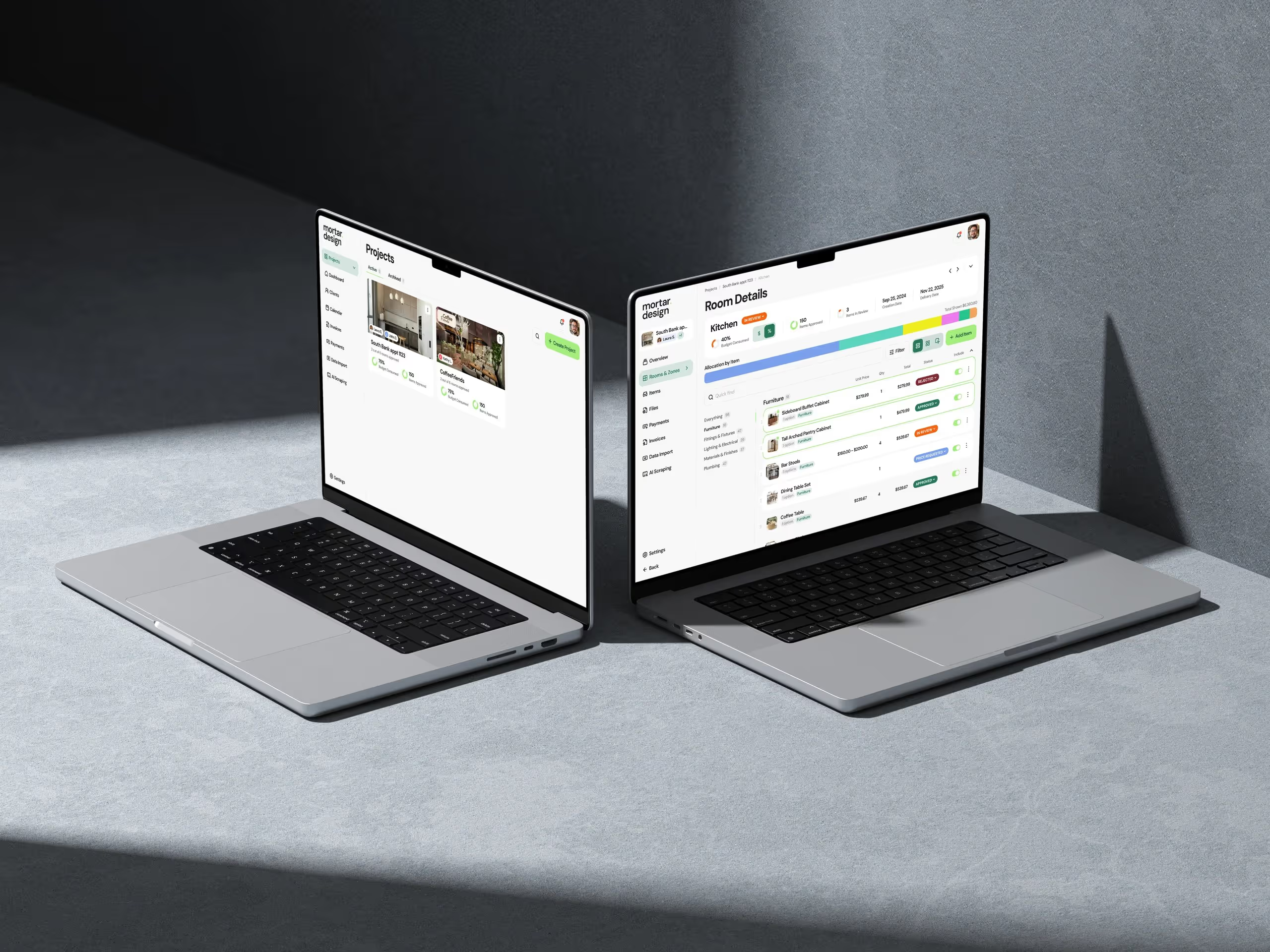
The best SaaS products come from founders who've lived the problem. When we built our interior design project management tool, it wasn't because we read a market report. It was because we'd watched designers struggle with the same workflow issues over and over.
Look at your work history. What processes made you want to bang your head against the wall? What tasks took 10 times longer than they should have? The problems that made you angry are usually the ones worth solving.
Write down every inefficiency you've encountered in the last two years. Don't filter yet - just brain dump. Include the small annoyances and the major bottlenecks. The goal is quantity, not quality. We typically aim for 20-30 problems in this initial list.

Step 2: Define Your Beachhead Market (Smaller Than You Think)
Everyone wants to build "Uber for X" or "the LinkedIn of Y." Stop it. Your first market should be so specific that it feels uncomfortably small. We're talking 500-5,000 potential customers, not 500,000.
When we started working on HR tech solutions, we didn't target "all HR departments." We targeted HR managers at digital agencies with 20-100 employees who were still tracking candidates in spreadsheets. That's specific enough to build for.
Here's how to narrow it down: Take your problem and add constraints until you can name 10 specific companies that would buy your solution tomorrow. Can't name 10? You're still too broad. This constraint forcing is painful but essential.
Industry estimates suggest that successful vertical SaaS companies often start with markets of just 1,000-2,000 potential customers. That's not a typo. Small markets let you dominate instead of compete.
Step 3: Talk to 20 People Before Building Anything
This is where the rubber meets the road. You need to have real conversations with people who live this problem daily. Not surveys. Not LinkedIn polls. Actual 30-minute conversations where you shut up and listen.
Here's the script we use: "I noticed you work in [specific role] at [type of company]. I'm researching how people handle [specific problem]. Could I buy you coffee and pick your brain for 30 minutes? I'm not selling anything - just trying to understand the real workflow."

During these conversations, dig into their current solution. What tools do they use? What's the workaround they've cobbled together? How much time does it waste? Most importantly: what have they already tried that didn't work?
Keep a spreadsheet tracking common phrases. When five different people use the same words to describe their pain, you've found your messaging. When 15 out of 20 would pay for a solution, you've found your niche.
Step 4: Validate Willingness to Pay (Not Just Interest)
Interest means nothing. "That sounds cool" doesn't pay the bills. You need to validate that people will actually pull out their credit cards. This is where most SaaS market validation falls apart.
We use what I call the "pre-order test." Once someone expresses strong interest, we say: "We're building this. It'll be ready in 3 months and cost $X per month. Can I put you on the early access list for a 50% lifetime discount?" Then we ask for a credit card to hold their spot.

No credit card? They're not really interested. It's harsh but true. Real customers put money where their mouth is. Aim for 10 pre-orders before you write any code. Can't get 10? Either your pricing is wrong or the problem isn't painful enough.
The pre-order test also reveals pricing sensitivity. Start high - you can always come down. We typically test at 3x what we think the market will bear. You'd be surprised how often businesses pay more than founders expect for real solutions to painful problems.
Step 5: Map the Competitive Landscape (Including Non-Software Solutions)
Your biggest competitor isn't other software. It's Excel. It's the intern manually copying data. It's the "we've always done it this way" mindset. You need to understand all the alternatives, not just the sexy SaaS ones.
Create a competitive matrix, but include the manual processes. When we analyzed the interior design market, our competition wasn't just other project management tools. It was WhatsApp groups, email chains, and physical binders. Each has strengths you need to beat.
Look for markets where the current solution is a dangerous cocktail of multiple tools. Association administrators using Mailchimp + Google Sheets + PayPal + Dropbox? That's a market screaming for vertical SaaS. The more tools they're duct-taping together, the bigger the opportunity.
Don't just list features. Understand why people chose their current solution. What job is it doing well? What sacred cows will you need to preserve? We've killed product ideas because we realized the "inefficient" current solution had hidden benefits we couldn't replicate.
Step 6: Build a Smoke Test (Not an MVP)
Forget building an MVP. Build a smoke test first. This is a landing page that looks like a real product but doesn't actually work yet. It's the fastest way to validate demand with real market behavior, not just conversations.
Your smoke test needs five elements: a clear headline stating the problem you solve, three specific benefits with numbers, pricing, a sign-up form, and screenshots of the solution (mockups are fine). That's it. No feature lists, no about page, no blog.
Drive traffic through the channels where your customers hang out. LinkedIn ads for B2B, Facebook groups for communities, direct outreach for enterprise. Aim for 1,000 targeted visitors. If you can't get a 5% sign-up rate, something's wrong with your positioning or problem selection.
The smoke test isn't just about conversion rates. Read every form submission. Follow up with everyone who signs up. Their questions reveal what's unclear. Their objections show what features actually matter. This feedback is gold - it'll save you months of building the wrong thing.
Step 7: Define Success Metrics Before You Build
Before writing any code, define what success looks like. Not vanity metrics like users or downloads. Real business metrics that determine if this is worth pursuing. Be ruthless here - it's easier to kill an idea on paper than after six months of development.
For vertical SaaS, we typically look for: 100 paying customers within 12 months, $10,000 MRR within 6 months, 5% month-over-month growth after month 3, and less than 5% monthly churn. Your numbers might differ, but have numbers. Write them down. Share them with someone who'll hold you accountable.
Also define your kill criteria. What signals would make you stop? Maybe it's inability to get 10 pre-orders, or discovery that customer acquisition cost exceeds $1,000, or learning the market is shrinking not growing. Knowing when to quit is as important as knowing when to push forward.
Track these metrics religiously once you launch. We review ours every Friday. If we're off track for two months straight, we pivot or kill. No exceptions. Emotional attachment to failed ideas is the most expensive mistake in SaaS.
The Reality Check Most Founders Need
Here's what nobody tells you about finding your SaaS niche: most ideas fail validation. That's not failure - that's the process working. Every "no" saves you months of wasted effort. Every failed validation teaches you something about market selection.

At Dazlab.digital, we validate 10-15 ideas for every one we build. The ones we build tend to work because we've already eliminated the losers. This isn't pessimism - it's professionalism. Treating validation as a numbers game removes the emotion and increases your odds.
The framework works, but only if you're honest with yourself. Don't cherry-pick positive feedback. Don't rationalize away weak pre-order numbers. Don't skip steps because you're excited. The market doesn't care about your enthusiasm - it cares about solving real problems.
Finding your SaaS niche isn't about creativity or vision. It's about systematic validation, brutal honesty, and the discipline to kill bad ideas fast. Use this framework, and you'll build something people actually want. Skip it, and you'll join the graveyard of failed SaaS products nobody asked for.
Ready to validate your SaaS idea the right way? We've helped dozens of founders find and validate their perfect niche. Let's talk about your market and whether it's worth pursuing. Reach out at Dazlab.digital - we'll tell you the truth, even if it's not what you want to hear.
Frequently Asked Questions
How long does the entire SaaS market validation process typically take?
The full 7-step validation framework usually takes 6-8 weeks when executed properly. Customer interviews (Step 3) typically require 2-3 weeks, the smoke test (Step 6) needs another 2-3 weeks to gather meaningful data, and the remaining steps can be completed within 1-2 weeks. Rushing this process is the most common mistake - taking 2 months to validate saves you from wasting 6-12 months building the wrong product.
What's the minimum budget needed to validate a SaaS idea using this framework?
You can validate most SaaS ideas for under $1,000. The main costs are the smoke test landing page (hosting and domain), targeted ads to drive traffic ($300-500), and potentially incentives for customer interviews (coffee, gift cards). The pre-order test actually generates revenue rather than costing money. Most of the framework relies on time investment rather than financial investment.
How do you know if a market is too small for a viable SaaS business?
A market can be too small if you have fewer than 500 potential customers or if the total addressable market is under $5 million annually. However, small markets can still work if customers have high willingness to pay and low churn. The key is ensuring you can capture enough market share (20-30% is realistic for niche vertical SaaS) to build a sustainable business.
What if competitors already exist in your chosen niche?
Competition validates that the problem is worth solving and customers are willing to pay. The question isn't whether competitors exist, but whether you can serve the market differently or better. Look for underserved segments, workflow gaps, or integration opportunities. Many successful SaaS products entered crowded markets by focusing on specific verticals or use cases that incumbents ignored.
When should you pivot versus completely abandoning a SaaS idea?
Pivot when you've found a real problem but picked the wrong solution, market segment, or pricing model. Abandon completely when your core assumption about the problem is wrong - if people aren't experiencing significant pain or have satisfactory existing solutions. The customer interviews and pre-order test results will make this clear: consistent feedback about a different problem suggests a pivot, while apathy or unwillingness to pay suggests abandoning the idea.
Related Reading


Dazlab is a Product Studio_
Our products come first. Consulting comes second. Whichever path you take, you’ll see how a small team can deliver outsized results.