
I've been building software for 25 years, and here's what I've learned: the best SaaS opportunities aren't in crowded markets with 50 competitors. They're hiding in niche industries where people are still using spreadsheets and email to run their businesses.
This article is part of our complete guide to vertical SaaS.

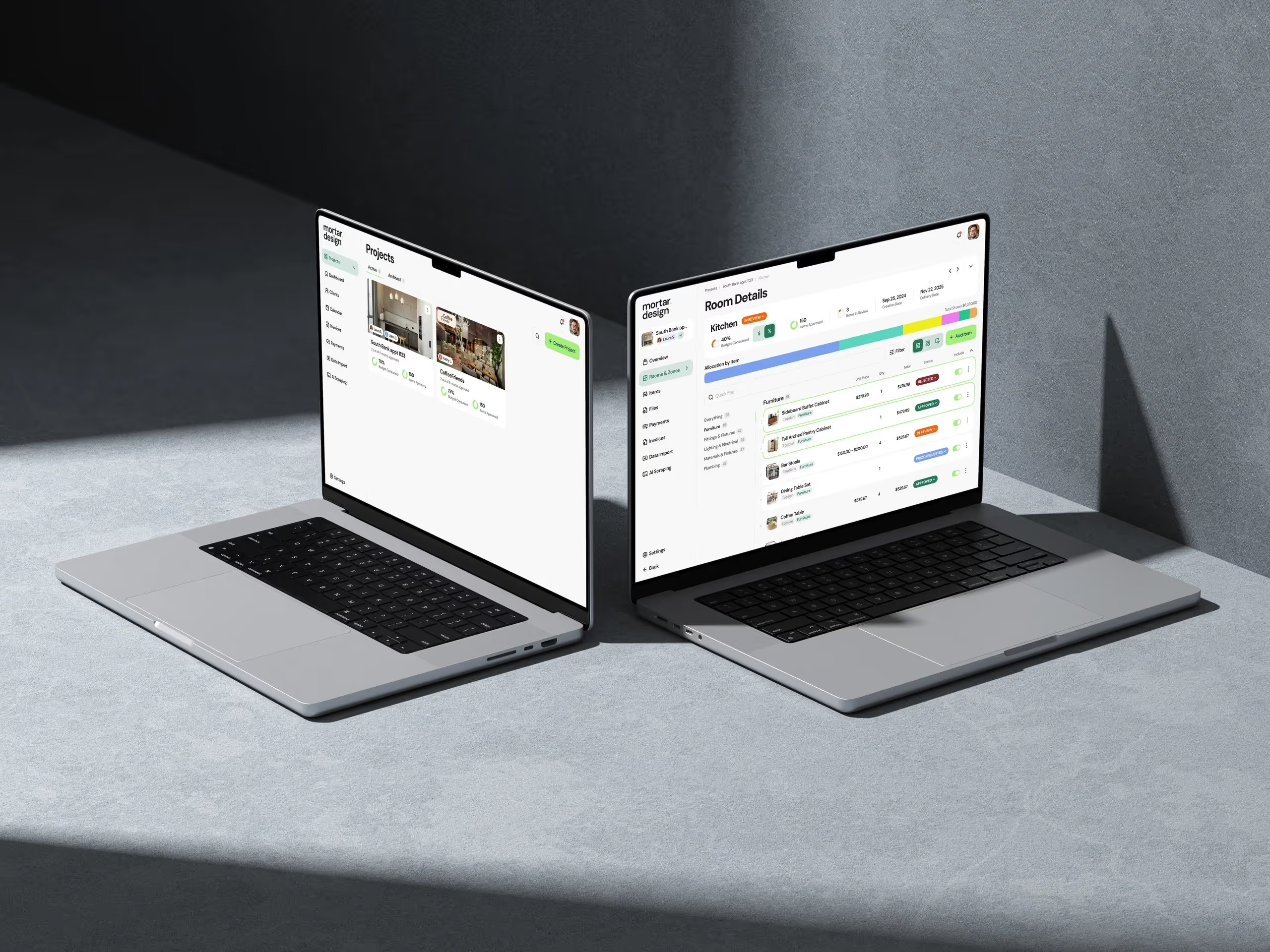
At Dazlab.digital, we've built three successful vertical SaaS products by following a specific process for identifying these opportunities. I'm going to walk you through exactly how we found the markets for Handl (interior design project management), TaliCMS (real estate association content management), and Mortar Design (HR tech for creative agencies). No fluff, no abstract frameworks — just the actual steps we took.
Start Where the Pain Lives, Not Where the Money Is
Most people looking for vertical SaaS opportunities start by analyzing TAM (Total Addressable Market) and growth projections. That's backwards. We start by finding professionals who are genuinely suffering with their current tools.
When we discovered the opportunity for Handl, it wasn't through market research. It came from a conversation with an interior designer friend who was drowning in project management chaos. She showed me her "system" — a nightmare combination of Excel sheets, Pinterest boards, email threads, and paper invoices. Every project involved dozens of vendors, hundreds of product samples, and clients who kept changing their minds. The existing project management tools? They were built for software teams, not designers dealing with fabric swatches and furniture lead times.
Here's the key insight: the best opportunities come from industries where professionals have adapted generic tools to their specific needs. When you see Excel sheets with 30 custom columns and complex macros, that's a SaaS opportunity. When you see people using three different tools to accomplish one workflow, that's a SaaS opportunity. When an entire industry shares "template" spreadsheets on forums, that's definitely a SaaS opportunity.
The mistake most builders make is assuming these markets are too small. They see 50,000 interior designers instead of 5 million software developers and walk away. But those 50,000 designers are desperate for solutions and willing to pay premium prices for software that actually understands their workflow.
The Three Questions That Validate Any Vertical SaaS Idea
After identifying potential pain points, we run every opportunity through three validation questions. If the answer to all three is yes, we know we've found something worth pursuing.
1. Is the workflow fundamentally different from horizontal solutions?
Generic tools fail in vertical markets because they force square pegs into round holes. Interior designers don't think in "tasks" and "sprints" — they think in rooms, vendors, and installation schedules. Real estate associations don't just need a CMS — they need member portals, MLS integrations, and compliance workflows.
When we evaluated TaliCMS, we found that real estate associations were struggling with WordPress and generic content management systems. Sure, they could publish articles, but what about member directories with license verification? What about automated compliance notices based on local regulations? What about integrating property listings while maintaining brand consistency? These weren't features you could just plugin to WordPress. The workflow was fundamentally different.
2. Are professionals cobbling together multiple tools?
This is the clearest signal of an underserved SaaS market. When we researched creative agencies before building Mortar Design, we found HR managers using five different tools: one for applicant tracking, another for portfolio reviews, a third for skills assessments, plus Slack for team communication and Google Sheets for tracking everything.
The fascinating part? They'd built elaborate Zapier workflows to connect these tools. They'd hired virtual assistants just to move data between systems. They'd even created internal "how-to" wikis explaining their Frankenstein process to new hires. When people invest that much effort into making disparate tools work together, you know there's a massive opportunity for an integrated solution.
3. Is there a clear monetization path beyond just "efficiency"?
This is where many vertical SaaS ideas die. It's not enough to save people time — you need to directly impact their revenue or significantly reduce costs. With Handl, we didn't just streamline project management. We reduced project delays (which meant designers could take on more clients), decreased ordering errors (which protected their margins), and improved client communication (which led to better reviews and more referrals).
The key is understanding how professionals in that vertical make money and where they lose it. Interior designers lose money on revision cycles, incorrect orders, and project overruns. HR managers at creative agencies lose money on bad hires and extended vacancy periods. Real estate associations lose members when their websites look outdated and are hard to navigate. Your vertical SaaS needs to directly address these economic realities.
The Research Process That Actually Works
Forget surveys and focus groups. Here's the research process we actually use to find SaaS niche markets:
Step 1: Embed yourself in their world
Join their Slack communities, Facebook groups, and industry forums. Don't announce yourself as a software developer — just lurk and listen. What complaints come up repeatedly? What workarounds do they share? What "hacks" are they proud of?

For TaliCMS, I spent two months in real estate association forums. The same complaints surfaced weekly: "Our website takes forever to update," "We can't get our MLS feed to display properly," "Members complain they can't find anything." But the real insights came from the solutions they'd jerry-rigged — custom WordPress plugins held together with duct tape, expensive consultants for every minor change, staff members who'd become accidental IT administrators.
Step 2: Shadow actual workflows
You can't understand a vertical market from the outside. We always find 3-5 professionals willing to let us shadow their actual work for a day. Not interviews, not demos — watching them do real work with real deadlines.
When researching Handl, I sat with interior designers during client presentations, vendor calls, and installation days. I watched them flip between seven browser tabs, three spreadsheets, and a pile of fabric samples. I saw them spend 20 minutes searching for an email with a crucial measurement. I witnessed the panic when a custom sofa arrived in the wrong fabric because someone misread a product code.
These observations are gold. They reveal the moments of friction that professionals have accepted as "just how things are" but represent massive opportunities for software solutions.

Step 3: Map the money flow
Understanding how money moves through an industry is crucial for building successful vertical SaaS. Who pays whom? What are the typical margins? Where does value get created or destroyed?
In interior design, we discovered that designers typically mark up products 20-35%, but lose much of that margin to errors and revisions. In creative agencies, we learned that a bad hire costs 1.5-2x annual salary when you factor in recruitment costs, training, and lost productivity. For real estate associations, member retention directly correlates with website functionality — lose 10% of members because your site is clunky, and you're looking at significant revenue loss.
This financial understanding shapes everything from feature prioritization to pricing strategy. If your software can prevent one expensive mistake per month, you can justify premium pricing.
Signs You've Found a Winner
Through building multiple vertical SaaS products, we've identified clear signals that indicate a strong opportunity:
The "Excel Breaking Point"
When professionals in an industry have pushed Excel beyond its limits, you've found gold. We're talking about spreadsheets with 50+ columns, complex macros that break monthly, and "DO NOT TOUCH" warnings on certain cells. These Frankenstein spreadsheets represent workflows begging for proper software.
Before Mortar Design, we found creative agencies tracking candidates across multiple sheets — one for applications, another for portfolio reviews, a third for interview scheduling, and a "master sheet" that tried to pull everything together with increasingly fragile VLOOKUP formulas. When Excel becomes a database, CRM, and project management tool rolled into one, that's a clear vertical SaaS opportunity.
The "Consultant Tax"
Industries that rely heavily on consultants for basic operational tasks are prime targets. When we researched real estate associations, we found they were paying consultants $150-$300/hour for simple website updates. Not because the updates were complex, but because their CMS required technical knowledge to make basic changes.
This "consultant tax" is a clear indicator of software opportunity. If professionals need to hire experts for routine tasks, there's room for software that puts control back in their hands. TaliCMS succeeded because it eliminated this dependency — association staff could update their sites without calling (and paying) their web developer.
The "Tribal Knowledge" Problem
When an industry runs on undocumented processes and institutional knowledge, software can provide massive value. Interior designers often rely on mental notes about vendor relationships, past orders, and client preferences. When a senior designer leaves a firm, years of crucial information walks out the door.
This pattern appears across verticals. Creative agencies lose their recruiting "playbooks" when key HR staff leave. Real estate associations struggle when the one person who understands their website retires. Software that captures and systematizes this tribal knowledge becomes invaluable.
Common Pitfalls When Exploring Vertical SaaS
Having built successful products and seen plenty of failures, here are the traps to avoid:
Building for the exceptions, not the rule
Every industry has edge cases and unique workflows. The temptation is to build software that handles every possible scenario. This is death for vertical SaaS. We learned this the hard way with an early version of Handl that tried to accommodate every possible design specialty — from residential to commercial to hospitality.
The result? A bloated product that served no one well. We stripped it back to focus on the core workflow that 80% of interior designers actually use. The lesson: build for the common case, not the exception. Let your competitors chase the edge cases while you dominate the mainstream workflow.
Underestimating the power of industry-specific language
Generic software fails in vertical markets partly because it speaks the wrong language. Interior designers don't have "tasks" — they have "selections." They don't track "inventory" — they manage "samples." Real estate associations don't publish "posts" — they issue "market updates" and "compliance notices."
This might seem like semantics, but it's crucial for adoption. When software speaks the industry's language, it feels like it was built by someone who understands their world. When we renamed features in Handl to match interior design terminology, engagement jumped 40%. Never underestimate the power of feeling understood.
Assuming they want to change their workflow
The biggest mistake builders make is trying to "fix" an industry's workflow instead of supporting it. Yes, that convoluted process might seem inefficient to you. But it evolved for reasons you don't understand yet. Successful vertical SaaS adapts to existing workflows first, then gradually introduces improvements.
When we built Mortar Design, our instinct was to completely reimagine how creative agencies handle recruitment. We designed a "better" process based on software industry best practices. Beta testers hated it. We went back, mapped their actual workflow (messy as it was), and built software that supported their process while removing friction. Only after gaining trust and adoption did we introduce workflow improvements.
The Path Forward: From Opportunity to Product
Identifying a vertical SaaS opportunity is just the beginning. The real work comes in translating that opportunity into a product that professionals will actually pay for and use daily. Here's how we approach this transition:
Start with the highest-value problem
Every vertical has dozens of problems worth solving. The key is identifying which one causes the most pain and directly impacts revenue. For Handl, we could have started with mood boards, vendor management, or client communication. But we discovered that project timeline management caused the most financial pain — delays meant angry clients, rushed installations, and designers who couldn't take on new projects.
By solving this core problem first, we created immediate value that justified the subscription cost. The other features came later, but that initial hook — preventing costly project delays — drove adoption.
Build with design partners, not in isolation
We never build vertical SaaS products in a vacuum. For each product, we identify 3-5 "design partners" — professionals in the target market who commit to weekly feedback sessions in exchange for free access and input on the product direction.
These aren't beta testers who try the product once it's built. They're active participants in the creation process. They review mockups, test prototypes, and most importantly, tell us when we're building something they won't actually use. This approach has saved us from countless wrong turns and ensures we're building something the market actually wants.
Price for value, not competition
Vertical SaaS often has little direct competition, which means you can't price based on competitive analysis. Instead, price based on the value you deliver. If Handl prevents one project delay per month, saving a designer $5,000 in rush charges and client discounts, charging $299/month is a bargain.
We've found that professionals in underserved markets are willing to pay premium prices for software that truly understands their needs. They've been burned by generic tools and half-measures. When you deliver genuine value, price becomes secondary to solving their daily frustrations.
Your Next Steps
The opportunity to build profitable vertical SaaS has never been better. AI-native capabilities now make it possible to deliver sophisticated solutions to niche markets that would have been economically unfeasible just a few years ago. But the process remains the same: find genuine pain in underserved markets, validate through direct observation, and build solutions that speak the industry's language.
If you're serious about finding your own vertical SaaS opportunity, here's what to do this week: Pick an industry where you have connections or genuine interest. Join their online communities. Schedule coffee with three professionals in that space. Ask them to show you their current tools and workflows. Look for the Excel sheets, the consultant invoices, and the duct-tape solutions.
The opportunities are there, hiding in plain sight in industries that software has largely ignored. At Dazlab.digital, we've proven this model works with Handl, TaliCMS, and Mortar Design. Each started with a simple observation: professionals struggling with tools that didn't understand their world.
Ready to explore building a vertical SaaS product for an underserved market? Let's talk about your idea and how we can help validate and build it. We've been down this path before, and we can help you avoid the pitfalls while accelerating toward product-market fit.

Frequently Asked Questions
What makes a market "underserved" for vertical SaaS opportunities?
An underserved market typically shows three clear signs: professionals using multiple generic tools cobbled together with workarounds, heavy reliance on Excel spreadsheets pushed beyond their limits, and frequent payments to consultants for routine operational tasks. These markets often have 50,000-500,000 potential users who are desperate for purpose-built solutions and willing to pay premium prices for software that truly understands their workflow.
How long does it take to validate a vertical SaaS opportunity?
Based on our experience with Handl, TaliCMS, and Mortar Design, proper validation takes 2-3 months. This includes spending time in industry forums and communities, shadowing 3-5 professionals through their actual workflows, and mapping the money flow in the industry. Rushing this process leads to building features nobody wants or missing the core problems that drive purchasing decisions.
What's the biggest mistake when building vertical SaaS products?
The biggest mistake is trying to "fix" an industry's workflow instead of supporting it. Professionals have developed their current processes for specific reasons, even if they seem inefficient. Successful vertical SaaS adapts to existing workflows first, using industry-specific language and respecting established patterns. Only after gaining trust and adoption should you introduce workflow improvements.
How do you price vertical SaaS products with no direct competition?
Price based on value delivered, not competitive analysis. Calculate the financial impact of the problems you're solving — whether it's preventing project delays, reducing hiring mistakes, or eliminating consultant fees. If your software saves a business $5,000 per month in avoided costs or enables them to take on additional revenue, charging $299-$999/month becomes an easy decision for buyers.
What industries are most ripe for vertical SaaS opportunities?
The best opportunities exist in industries where professionals have adapted generic tools to specific needs, creating elaborate spreadsheet systems and multi-tool workflows. Look for traditional industries with 50,000+ professionals, complex workflows involving multiple stakeholders, and clear monetization paths beyond just "saving time." Industries like interior design, specialized healthcare practices, trade associations, and niche professional services often have untapped potential.
Related Reading


Dazlab is a Product Studio_
Our products come first. Consulting comes second. Whichever path you take, you’ll see how a small team can deliver outsized results.