After 25 years of shipping software and building multiple vertical SaaS products, I've learned this: the difference between a successful vertical SaaS and another dead project isn't the code. It's understanding the specific problem so deeply that your solution feels inevitable.
This article is part of our complete guide to vertical SaaS.

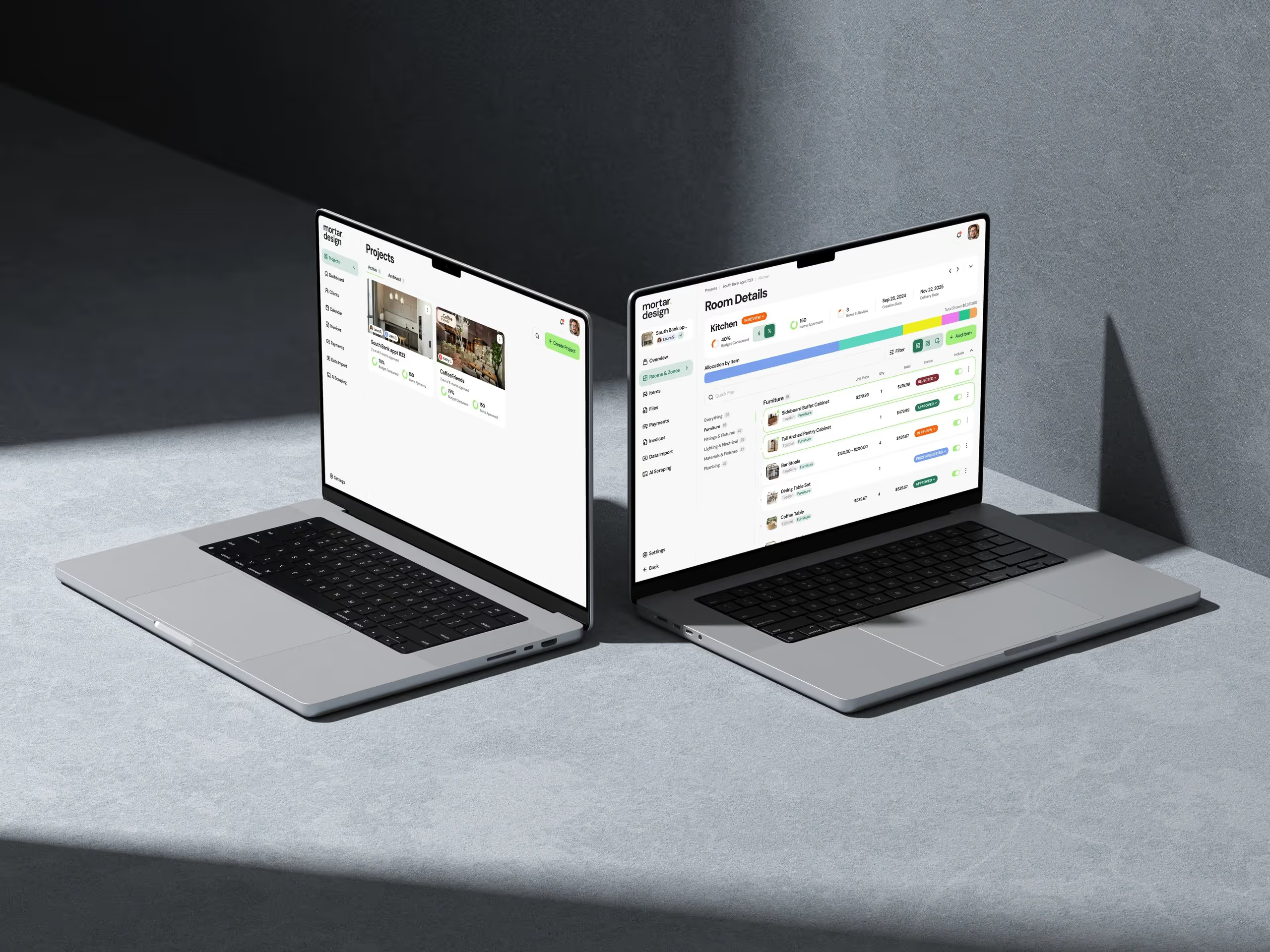
We've built HR tech for recruiters drowning in applications. Interior design software for firms losing money to project delays. Real estate association tools that replaced spreadsheet chaos. Each time, the pattern is the same — go deep into one industry's pain, then build exactly what they need. Nothing more, nothing less.
This guide shares our exact playbook for building vertical SaaS products. No theory. Just what actually works when you're trying to solve real problems for real businesses.
Start With the Problem, Not the Solution
Most founders get this backwards. They build first, then look for customers. We've watched dozens of technically impressive products die this way. The code was clean, the UI was beautiful, but nobody cared because it didn't solve a burning problem.
Here's how we validate problems worth solving. First, we pick an industry we understand or can learn quickly. Not "all small businesses" — that's a market segment, not an industry. We mean interior designers. Recruiters. Property managers. People with specific workflows, specific pain points, specific language.
Then we talk to them. Not surveys. Not focus groups. Actual conversations where we shut up and listen. We ask about their worst days. What makes them want to throw their laptop out the window? What tasks eat hours but add no value? What are they using Excel for that Excel was never meant to handle?
When we built our HR tech product, we spent three weeks embedded with recruiting teams. We watched them juggle between five different tools just to track one candidate. We saw them lose great hires because their process was too slow. We felt their frustration when they couldn't find that perfect resume they saw last month. That's when we knew we had a problem worth solving.
Validate Before You Build Anything

We use a simple test: can you get three people to pay for your solution before you build it? Not huge amounts — maybe $200-500 each for early access. But real money that proves real commitment. If you can't get three paying customers with just mockups and a clear vision, you won't get thirty with working software.
Create a simple landing page that explains the problem, shows the solution, and asks for payment. Use actual screenshots of your mockups. Be specific about what you're building and when. We typically promise access within 60-90 days — long enough to build an MVP, short enough to maintain urgency.
The conversations during this phase are gold. Prospects will tell you exactly what features matter and which ones don't. They'll explain their workflows in detail. They'll share horror stories about their current tools. Take notes on everything. This becomes your product roadmap.
Design for the Workflow, Not the Feature List
Vertical SaaS wins by fitting perfectly into existing workflows. Generic software forces people to change how they work. We build software that works how they work.
Start by mapping the current workflow — even the ugly parts. When we built software for interior designers, we discovered they weren't just managing projects. They were juggling client communications, vendor relationships, budget tracking, timeline management, and inspiration boards. Their "project management" looked nothing like what Asana or Monday.com imagined.
Design your product to enhance their workflow, not replace it. If they start their day checking email, integrate with email. If they live in spreadsheets, make your export function bulletproof. If they collaborate through WhatsApp (yes, really), figure out how to play nice with that.

The best vertical SaaS products feel like they were built by someone who actually does the job. Because in a way, they are — you've spent so much time understanding the work that you can anticipate needs before users even articulate them.
Build the Right MVP (Minimum Valuable Product)
Everyone talks about MVPs, but most people build them wrong. They strip out everything until they have a useless shell that nobody wants. That's not minimum viable — that's minimum effort.
For vertical SaaS, your MVP needs to solve one complete workflow end-to-end. Not five workflows partially. One workflow completely. Pick the most painful, most frequent task your users face and nail it.
When we built our recruiting software, our MVP did exactly one thing: it collected applications from multiple job boards into one unified inbox with smart filtering. That's it. No interview scheduling. No onboarding workflows. No analytics dashboards. Just one painful problem solved completely.
This focused approach has three benefits. First, you can build it fast — usually 6-8 weeks for a solid MVP. Second, users can actually use it in production immediately. Third, you get real usage data to guide what to build next.
Technical choices matter here. We've learned to be boring with our tech stack. React or Vue for the frontend. Node.js or Python for the backend. PostgreSQL for the database. Stripe for payments. Nothing exotic. The innovation should be in solving the customer's problem, not in your architecture.
Launch to Your Tribe, Then Expand

Start with your beta customers — the ones who paid early. Give them white-glove onboarding. Set up their accounts yourself. Import their data. Train their team. These first customers will teach you more about your product than any amount of planning could.
We typically spend 2-3 hours with each early customer. Yes, it's time-intensive. No, it doesn't scale. That's the point. You're not trying to scale yet — you're trying to learn. What features are they using? What's confusing? What's missing? What delights them?
Once you have 10-20 happy customers, word of mouth kicks in. People in the same industry talk. They share tools that work. They complain about tools that don't. Make sure you're in the first category.
Pricing for vertical SaaS is usually straightforward: charge more than you think. Specialized software that solves real problems commands premium prices. We typically start at $200-500 per month for small teams. That might sound high compared to generic tools, but you're not competing with generic tools. You're competing with the cost of the problem you're solving.
Growth Strategies for Niche Markets
Growing a vertical SaaS requires different tactics than horizontal products. You can't just throw money at Facebook ads and hope for the best. Your market is smaller but more connected.
Content marketing works exceptionally well for vertical SaaS. But not generic "5 Tips for Better Productivity" content. Deep, specific content that only someone in that industry would care about. When we marketed our interior design software, we wrote about specific vendor management challenges, how to handle client revision requests, and real strategies for preventing scope creep on design projects.

Industry partnerships accelerate growth. Find the tools your target market already uses and integrate with them. Find the consultants who serve your market and make them affiliates. Sponsor the niche conferences where your customers gather. Be present where they already are.
The compound effect of focusing on one vertical is powerful. Each new customer makes the product better for all customers. Each new feature solves problems for the entire user base. Each piece of content attracts more of the right people. Everything reinforces everything else.
The Economics of Vertical SaaS Development
Let's talk money. Building vertical SaaS isn't cheap, but it's not as expensive as most people think. Here's our typical breakdown for getting to initial revenue:
Initial development (MVP): $40,000-80,000. This assumes you're working with an experienced team that can move fast. Yes, you could build it cheaper offshore or with junior developers. We've tried that. It usually costs more in the long run when you factor in delays, rewrites, and lost customers.
Getting to product-market fit typically takes another $50,000-100,000 in development, plus 6-12 months of refinement. You're not just writing code during this phase — you're learning exactly what the market needs and adjusting accordingly.
The beautiful thing about vertical SaaS is the unit economics. With average customer values of $300-1,000 per month and annual churn rates often below 10% for well-built products, you can reach profitability with just 100-200 customers. Try doing that with a horizontal product.
We've seen vertical SaaS products reach $1M ARR with teams of 3-5 people. The key is staying focused. Resist the temptation to expand to adjacent verticals too quickly. Dominate one niche before you consider another.
Common Pitfalls and How to Avoid Them
After building multiple vertical SaaS products, we've made every mistake in the book. Here are the big ones to avoid:
Building for multiple verticals too early. We once tried to build project management software for both interior designers and architects. Seemed similar enough, right? Wrong. The workflows were different. The terminology was different. The priorities were different. We ended up with a product that worked poorly for both. Pick one vertical and nail it.
Over-engineering the solution. It's tempting to build the perfect architecture that can scale to millions of users. But most vertical SaaS products never need that scale. Build for your first 1,000 customers. You can re-architect later if you're lucky enough to need it.
Underestimating the importance of industry-specific features. Generic features rarely win in vertical SaaS. The interior designers we work with don't just need "project templates" — they need templates for specific room types with pre-loaded vendor categories and typical timeline. The details matter more than you think.
Competing on price. There's always someone willing to build it cheaper. That's not your game. Vertical SaaS wins on value, not price. If you're constantly defending your pricing, you haven't communicated your value clearly enough.
Making the Decision: Should You Build Vertical SaaS?
Building vertical SaaS isn't for everyone. It requires patience. You need to truly care about solving problems for a specific group of people. You need to be comfortable with a smaller total addressable market in exchange for higher win rates and better retention.
But if you're tired of building generic software that nobody loves, if you want to solve real problems for real businesses, if you get excited about going deep instead of broad — vertical SaaS might be your path.
The world doesn't need another generic project management tool. But that recruiting team spending four hours a day on manual tasks? That interior design firm losing money to scope creep? That trade association managing members in spreadsheets? They desperately need someone to build exactly what they need.
At Dazlab.digital, we've committed to building niche software that solves real problems. We've seen firsthand how the right vertical SaaS product can transform an entire industry's way of working. It's not easy, but it's worth it.
Ready to build something that matters? Start with one industry. One problem. One solution that works. Everything else follows from there.
Frequently Asked Questions
How long does it take to build a vertical SaaS MVP?
Based on our experience at Dazlab.digital, a focused MVP solving one complete workflow typically takes 6-8 weeks with an experienced team. This assumes you've already validated the problem and have clear requirements from talking to potential customers.
How much should I charge for vertical SaaS software?
Vertical SaaS commands premium pricing because it solves specific industry problems. We typically start at $200-500 per month for small teams. Price based on the value you deliver and the cost of the problem you're solving, not on what generic tools charge.
What's the minimum budget needed to build vertical SaaS?
Expect to invest $40,000-80,000 for initial MVP development with an experienced team. Getting to product-market fit usually requires another $50,000-100,000 over 6-12 months. While you could build cheaper, it often costs more long-term due to delays and rebuilds.
How many customers do I need to validate my vertical SaaS idea?
We recommend getting at least three paying customers before building anything. They don't need to pay much ($200-500 for early access), but real money proves real commitment. If you can't get three people to pay for mockups, you won't get thirty to pay for software.
Should I build for multiple industries at once?
No. Pick one vertical and dominate it first. We learned this the hard way trying to build for both interior designers and architects simultaneously. Even similar industries have different workflows, terminology, and priorities. Focus wins in vertical SaaS.
Related Reading

Dazlab is a Product Studio_
Our products come first. Consulting comes second. Whichever path you take, you’ll see how a small team can deliver outsized results.