
I've spent the last 25 years building software products, and if there's one debate that never gets old, it's this: should you build for everyone or build for someone specific? After launching dozens of products—from massive horizontal platforms to laser-focused vertical tools—I've got strong opinions on this.
This article is part of our complete guide to SaaS MVP development.

Here's the uncomfortable truth: most founders choose horizontal SaaS because it feels safer. Bigger market, more potential customers, what could go wrong? Everything, actually. I've watched countless horizontal plays burn through millions trying to be everything to everyone, while scrappy niche SaaS products quietly print money serving 500 customers who'd pay anything to solve their specific problem.
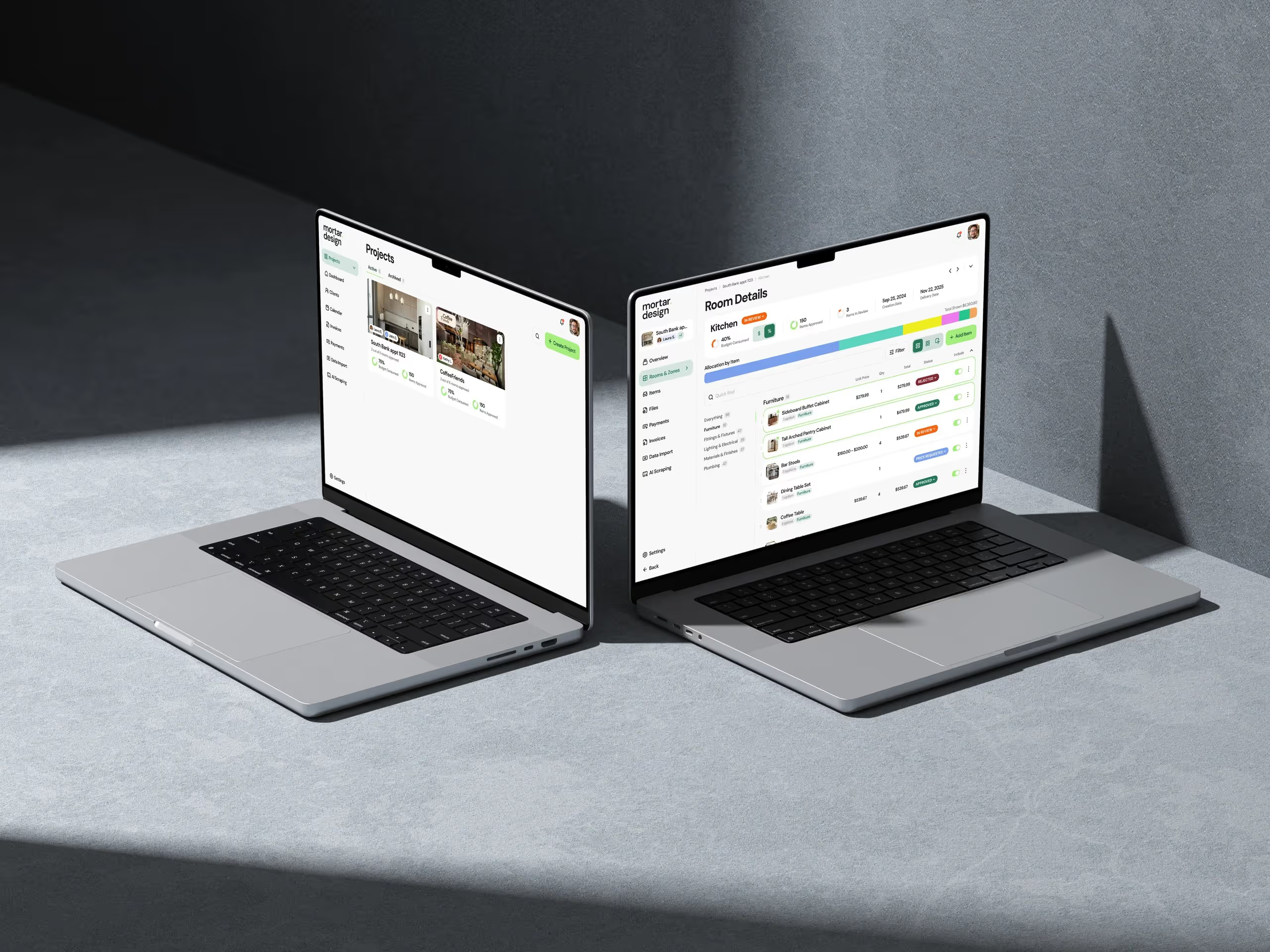
At Dazlab.digital, we've bet our entire business on niche. Not because it's trendy, but because after building products for interior designers, HR teams, and real estate associations, I've seen what happens when you actually understand your customer's workflow. You build something they can't live without.
The Seductive Trap of Horizontal SaaS
Let me paint you a picture. You're sitting in a coffee shop, sketching out your next big idea. You think, "Why limit myself to just accountants when every business needs invoicing?" So you build a generic invoicing tool. Congratulations, you just entered a market with 847 competitors, all fighting over the same features.
Horizontal SaaS feels smart because the TAM (Total Addressable Market) looks massive on your pitch deck. VCs love those hockey stick projections showing how you'll capture 1% of a $50 billion market. But here's what those decks don't show: the graveyard of horizontal products that died trying to please everyone.
I learned this lesson the hard way in 2015. We built what we thought was the ultimate project management tool—flexible enough for any industry. Six months in, we had construction companies asking for equipment tracking, marketing agencies wanting campaign calendars, and law firms demanding billing integration. We couldn't move fast enough. Our product became a Frankenstein monster of half-baked features that satisfied no one.
The moment you try to serve everyone, you serve no one well. Your product becomes a compromise, not a solution.
The worst part? Customer acquisition costs exploded. When your product could theoretically help anyone, you have to market to everyone. Your messaging becomes generic corporate speak. Your sales cycles stretch forever as you customize demos for wildly different use cases. And forget about word-of-mouth—when your customers don't know each other, they're not talking about you.
Why Niche SaaS Actually Works
Now let's talk about what happens when you go niche. When we built TaliCMS specifically for digital agencies, something magical happened. We didn't need to explain why frequent content updates matter—every agency owner had already felt that pain. We didn't waste time building features for industries we didn't understand. We built exactly what digital agencies needed, nothing more, nothing less.

Here's a real example from our portfolio. We built specialized software for a real estate association that manages member directories and event registrations. Total addressable market? Maybe 5,000 potential customers nationwide. But we charge $500/month, have 70% gross margins, and our customers stay for years. Do the math—that's a perfectly viable business.
The secret sauce of niche SaaS is domain expertise. When you deeply understand an industry's workflows, regulations, and pain points, you build features your horizontal competitors would never even think of. Interior designers don't just need project management—they need vendor catalogs, fabric samples, and client approval workflows. HR managers don't just need applicant tracking—they need compliance workflows specific to their industry.

The Hidden Advantages Nobody Talks About
After building niche products for different verticals, I've discovered advantages that don't show up in business school case studies. First, customer support becomes almost trivial. When all your customers have similar workflows, your support team becomes experts fast. They're not context-switching between wildly different use cases.
Second, product development gets radically simpler. We used to spend months in analysis paralysis, trying to design features that would work for everyone. Now, when our interior design customers ask for a feature, we know exactly how it should work because we understand their business. Our product roadmap practically writes itself.
Third, and this is huge—pricing power. When you're the only solution that truly gets their workflow, customers stop comparing you to generic alternatives. They compare you to the pain of not having your solution. We've raised prices 40% in the last two years with minimal churn because our customers know switching to a horizontal tool would cost them hours every week.
In niche markets, you're not competing on features. You're competing on how deeply you understand their specific problem.
Marketing becomes almost unfairly easy too. Instead of broad Google Ads campaigns bleeding money, you're sponsoring the Interior Design Society's annual conference. Instead of generic content marketing, you're writing about specific challenges only your audience faces. Your CAC (Customer Acquisition Cost) drops through the floor because you know exactly where your customers hang out and what they care about.
When Horizontal Makes Sense (Spoiler: Rarely)
I'm not completely dogmatic. There are scenarios where horizontal SaaS makes sense, but they're rarer than most founders think. If you're building truly novel infrastructure—think Stripe or Twilio—that every business needs regardless of industry, horizontal can work. But notice these are technical infrastructure plays, not workflow software.
Horizontal also works if you have massive funding and can afford to dominate through sheer force. Slack pulled this off, but they raised over $1 billion to do it. Even then, look closely and you'll see they started with tech companies—a niche—before expanding. They didn't try to be everything to everyone on day one.
The other exception is when you're building a platform that others will customize. Salesforce succeeded as horizontal CRM because they built an ecosystem where consultants and developers create industry-specific solutions. But unless you're planning to raise hundreds of millions and build a platform economy, this probably isn't your path.
Here's my test: if you can't name 50 potential customers off the top of your head, you're probably too horizontal. If you need more than one sentence to explain who your product is for, you're too horizontal. If your homepage could work for any B2B SaaS company with a quick logo swap, you're definitely too horizontal.
The AI Native Advantage for Niche Players
Here's where things get really interesting for 2026. AI changes the game completely for niche SaaS products. When you have deep domain knowledge, you can train AI on industry-specific workflows and terminology. Generic horizontal tools are stuck with generic AI features.
We're building AI features for our HR tech product that understand recruiting jargon, compliance requirements, and industry-specific screening criteria. A horizontal tool could never match this depth. Their AI would suggest generic responses while ours crafts messages that sound like they came from a seasoned recruiter.
The barrier to entry for niche players just got lower too. You don't need a team of 50 engineers to build sophisticated software anymore. With the right domain expertise and modern tools, a small team can build products that would have required millions in funding just five years ago. This is why we're seeing an explosion of micro-SaaS products serving incredibly specific niches.
But here's the kicker—AI also makes it easier for customers to spot generic solutions. When everyone has access to the same ChatGPT API, the differentiation isn't the AI itself. It's how well the AI understands the specific context of your industry. Niche players have a massive advantage here because they can feed their AI years of industry-specific data and workflows.
Making the Choice: A Framework That Actually Works
So how do you decide? After building both types of products, here's the framework I use. First, can you name your first 20 customers? Not customer categories—actual company names. If yes, you might have a viable niche. If you're listing categories like "small businesses" or "marketing teams," you're too broad.
Second, do these potential customers know each other? The best niches have strong communities. Interior designers go to the same conferences, read the same publications, and follow the same influencers. When your customers talk to each other, your product spreads organically.
Third, is their problem expensive enough? Niche markets need to have expensive problems. If you're saving an interior designer 10 hours a week, that's worth real money. If you're saving a random small business owner 30 minutes a month, good luck charging more than $9.
Fourth, can you become the obvious choice within 18 months? In a niche market, you should be able to build the essential features and establish yourself as the go-to solution relatively quickly. If it'll take five years and $50 million to build a competitive product, you're probably in a horizontal market.
Finally, and this is crucial—do you actually care about this market? Building for a niche means living and breathing their problems for years. If you're not genuinely interested in how interior designers source furniture or how HR managers screen candidates, you'll burn out before you succeed.
The Path Forward
Look, I get the appeal of horizontal SaaS. The market looks bigger, the opportunity seems endless, and success stories like Salesforce and Slack make it seem achievable. But for every Slack, there are thousands of horizontal plays that died trying to be everything to everyone.
The future belongs to products that solve specific problems exceptionally well. As markets mature and customers get more sophisticated, they're less willing to compromise. They want software built for their exact workflow, not generic tools they have to bend to fit.
At Dazlab.digital, we've staked our entire business on this belief. We build niche SaaS products because we've seen what happens when you truly understand your customer's world. You build something they can't imagine working without. You charge prices that reflect real value. You create businesses that are profitable from month one, not mythical unicorns that might make money someday.
The choice between niche and horizontal isn't really about market size or TAM calculations. It's about whether you want to build a real business solving real problems, or chase venture capital telling stories about capturing 1% of a massive market. I know which one I'd choose every time.
Ready to build something that matters? If you're sitting on deep industry knowledge and see problems that generic software can't solve, let's talk. We help companies design, build, and launch niche SaaS products that dominate their markets. Sometimes the smallest markets create the biggest opportunities.
Frequently Asked Questions
What's the main difference between niche and horizontal SaaS?
Niche SaaS products are built for specific industries with deep understanding of their unique workflows, while horizontal SaaS tries to serve everyone with generic features. Niche products typically have higher conversion rates, lower churn, and stronger pricing power because they solve specific problems perfectly rather than generic problems adequately.
How do you know if your market is too niche?
A market is viable if you can name 50 potential customers, they have expensive problems worth solving, and they form a community that talks to each other. If you're saving professionals 10+ hours weekly or solving compliance nightmares specific to their industry, the market is likely large enough to build a profitable business.
Can you start niche and expand to horizontal later?
Yes, but it rarely makes sense. Successful examples like Slack started with tech companies before expanding. However, most profitable niche SaaS businesses find it more lucrative to deepen their vertical expertise rather than dilute their product trying to serve everyone. Going deeper into your niche usually yields better returns than going broader.
What advantages do niche SaaS products have with AI technology?
Niche SaaS products can train AI on industry-specific workflows, terminology, and compliance requirements that generic tools can't match. This creates a massive competitive advantage because your AI actually understands the context of your customers' work, not just generic business processes.
How much should you charge for niche SaaS products?
Niche SaaS products often command premium pricing because customers compare them to the cost of not having a solution, not to generic alternatives. If you're saving significant time or solving expensive problems specific to their industry, you can typically charge 3-5x more than horizontal alternatives while maintaining low churn.
Related Reading

Dazlab is a Product Studio_
Our products come first. Consulting comes second. Whichever path you take, you’ll see how a small team can deliver outsized results.