257 pull requests merged across 9 codebases last week. Edge Lab gets the full write-up I promised, two weeks of it. Then Handl, Mortar's phone release, and what it costs to build software this fast.
Edge Lab: start with your foot
Most people find Edge Lab by typing what hurts. The site now starts there, and it has two new sections.
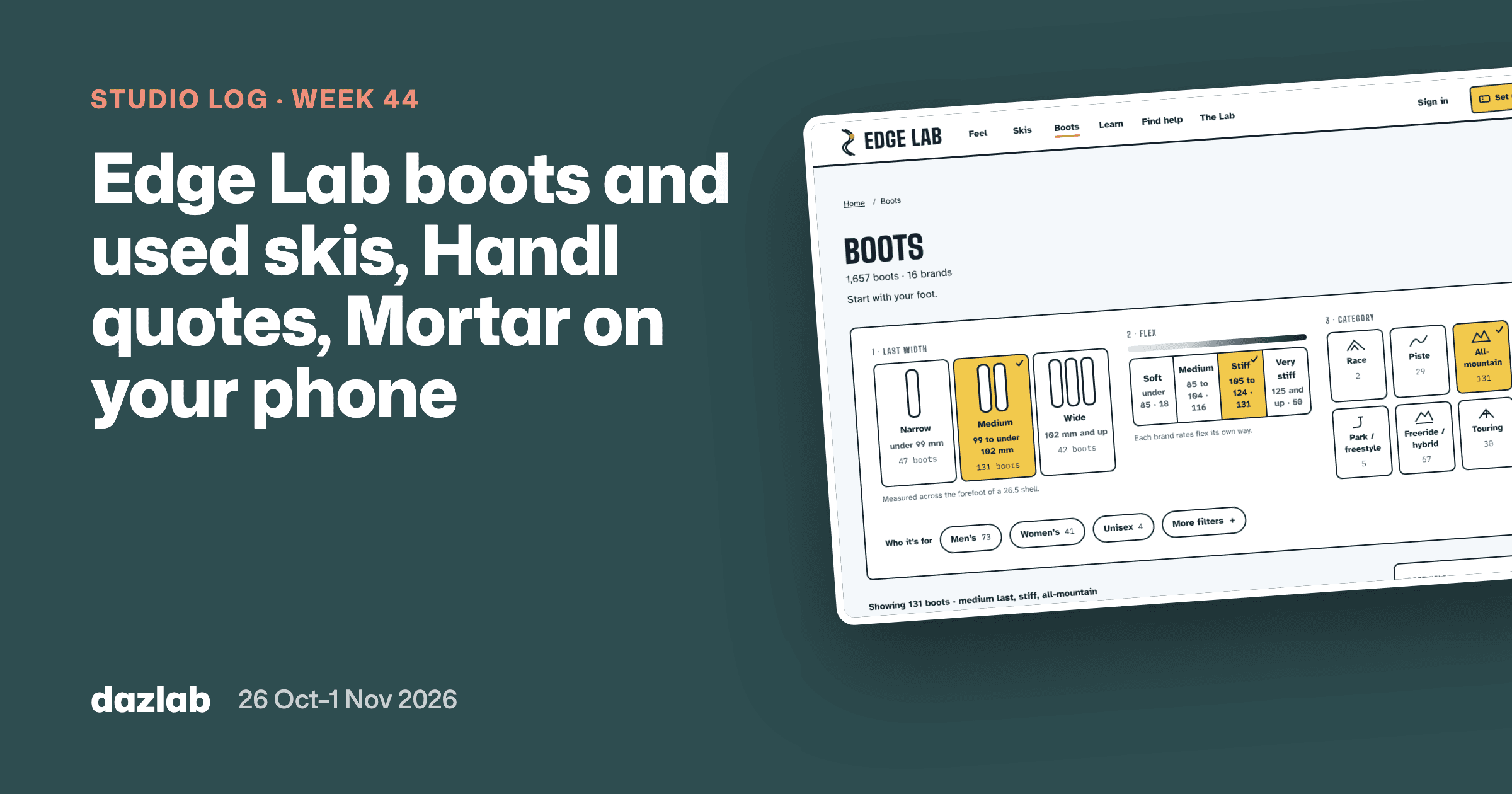
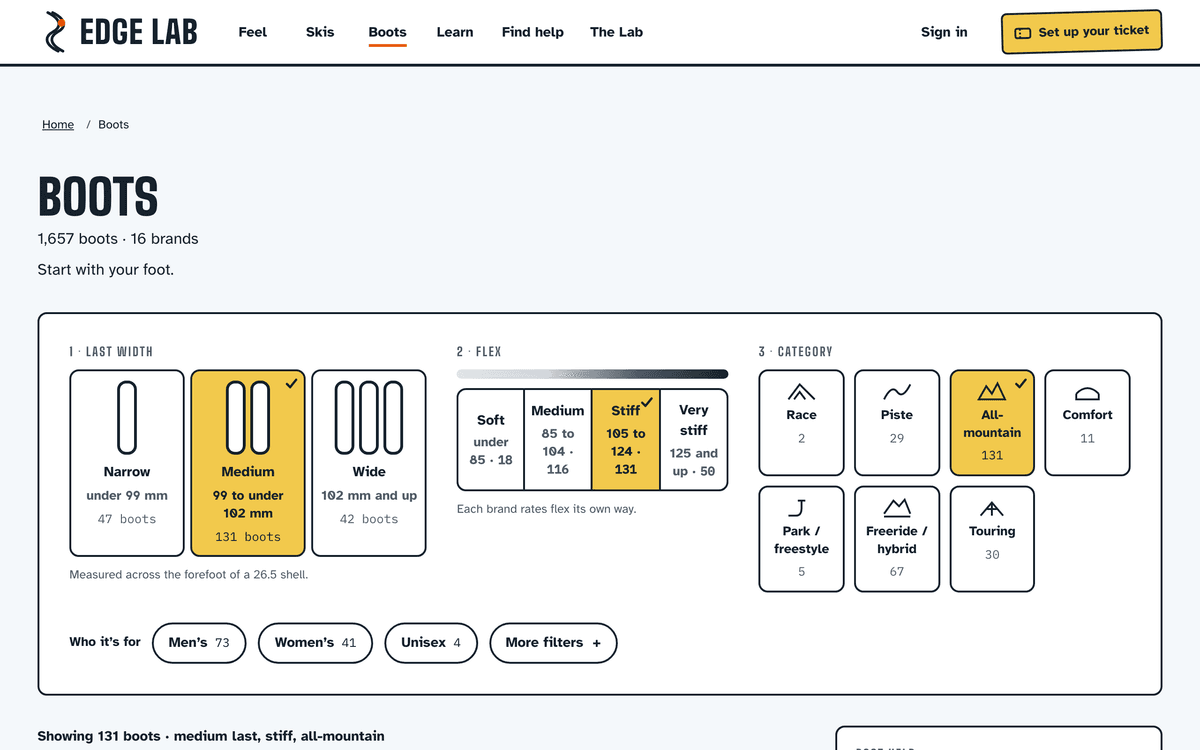
Boots. Edge Lab now knows 1,657 ski boots from 16 brands. Start with your foot: last width (narrow, medium or wide), flex, and what kind of skiing you do. Every boot page says in plain words who it fits and which flex suits your weight and ability, with a source on every fact and "not published" where the maker doesn't say.
What should I pay for used skis? Most skis people buy aren't new. The used ski price guide gives you a fit check for your weight and level, then an estimated price worked out from the maker's original price for that year, clearly labelled as an estimate, with the rule of thumb on the page.
The Lab has a new layout: a big 3D skier with the working muscles and the pressure under each foot alongside, in a printed, realistic or night look. Your own setup in the Lab now needs a free account; there's a 66-second demo first.
Feel pages, from the evidence. The what doesn't feel right? page is now one list: tick everything you notice on a normal run and the model ranks the likely causes for your ticket. Ten feelings got their own page this week, from cold feet and toe bang to speed control. Ski pages now say how reviewers say it feels, from video reviews, and feel pages carry "instructors describe this as…" with a timestamped link into the lesson video. When enough reviewers agree about a feeling (at least five quotes from two sources), a new page is drafted and published overnight, and the morning digest tells me what went up.
A few more:
- Ski pages lead with the verdict for your ticket, one spec table, and estimates marked as estimates
- Ask Edge Lab about one brand. Members on a brand page can ask about that brand only: which suits me, compare two, what length. J Skis is first
- Brand pages open on the newest season and show the brand's own collections; older seasons sit behind a free account
- Comparisons show how two skis actually differ for your ability, in the shape of the turn, and in where each ski presses into the snow
- The best-for picker has five skill levels, junior and older skiers, and more than one snow type at a time, and "help me choose" now shortlists first, so you only see current-season skis in a length that fits you
- New navigation (Feel, Skis, Boots, Learn, Find help, The Lab), how the model works in four steps, and a partners page for fitters, shops and instructors
- Lessons are coming for the 2027 season. Leave your email and resort and you'll hear once when instructors near you are listed
→ Find a boot · used ski price guide · what doesn't feel right? · try the Lab
Handl: quotes, invoice numbers that carry on, and Upwork without the spreadsheet
Handl went live 17 times last week. Most of it is about the first few days of a new project.
Quotes have their own page under Money, next to invoices, with an "Open quotes" card on Today showing days left. A new quote starts with the project's milestones as line items. When the client approves they get a confirmation with the PDF; they can also decline, with a reason, and you hear straight away. Quotes expire on their date, and the agent can draft, list and revoke them.
Your invoice numbers continue. Moving to Handl from another tool? Set your prefix, year and next number, and imported invoices move the counter along, so your first Handl invoice follows the last one from the old tool. The switching guide covers what else comes across.
Upwork, live. Connect Upwork once and Handl reads your contractor payments every day through Upwork's own connector, read-only, so Upwork costs land in project margin without a CSV export.
Pay your team, round two. Pay terms are now two plain questions: how often do they invoice, and when do you pay it. There's a review step before a Pay portal invite goes out. Australian contractors can add their ABN, GST registration and business address, and a pay run warns you if an Australian contractor hasn't given an ABN.
Also shipped:
- Billing items show the billing day, time and end date up front, because you should know you can bill on a fixed day each week or month
- A Billing plan activity list, and held time is visible with a "Release to billing" button
- Upload a proposal to the new project wizard and it fills in the total, currency and suggested milestones
- Linked milestones on the roadmap move together when you drag one
- Xero: an invoice settled in Xero now records itself in Handl, and owners hear if a payment couldn't be pushed across
- Trello and Notion as project tools are built and coming soon
→ Invoice automation · pay your team · integrations → Free: tax set-aside calculator → Start a Handl trial
Mortar: fits your phone, and a portal that answers straight away
The release I mentioned last week went live on 27 October, and most of it is about small screens.
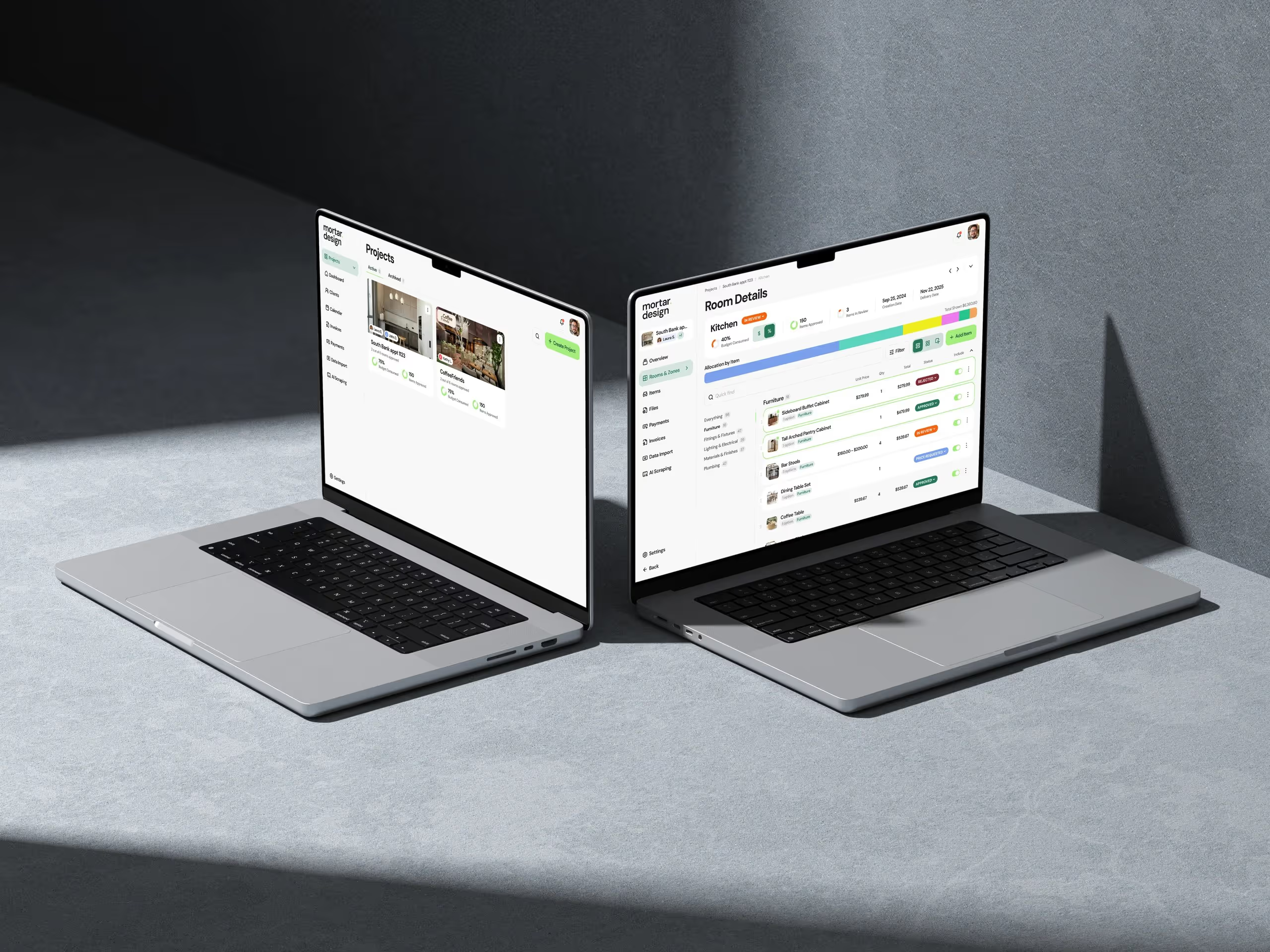
Designers check Mortar on site and clients open the portal from an email on their phone, so every page got a pass at phone and tablet width. The navigation becomes a drawer, money tables scroll with the first column pinned, the calendar opens as an agenda, and portal item cards show the full name, the status and Approve, Not for me and Comment on one row, with buttons sized for a thumb.
The client portal answers faster too: approvals and comments show their state the instant the client taps, rooms stay in the designer's order, and quantities show their unit. On the designer's side, the Notes tab keeps private notes and client replies apart, and Room Details tells you whether your reply was emailed.
Also in this release:
- Add Item from the Items page, picking the room as you go
- A foreign-currency unit price shows its project-currency value and the saved rate
- Margin says how many items it leaves out for not having a cost yet
- A searchable studio time zone picker, and Data Import says when it assumed the project currency for a sheet with no currency
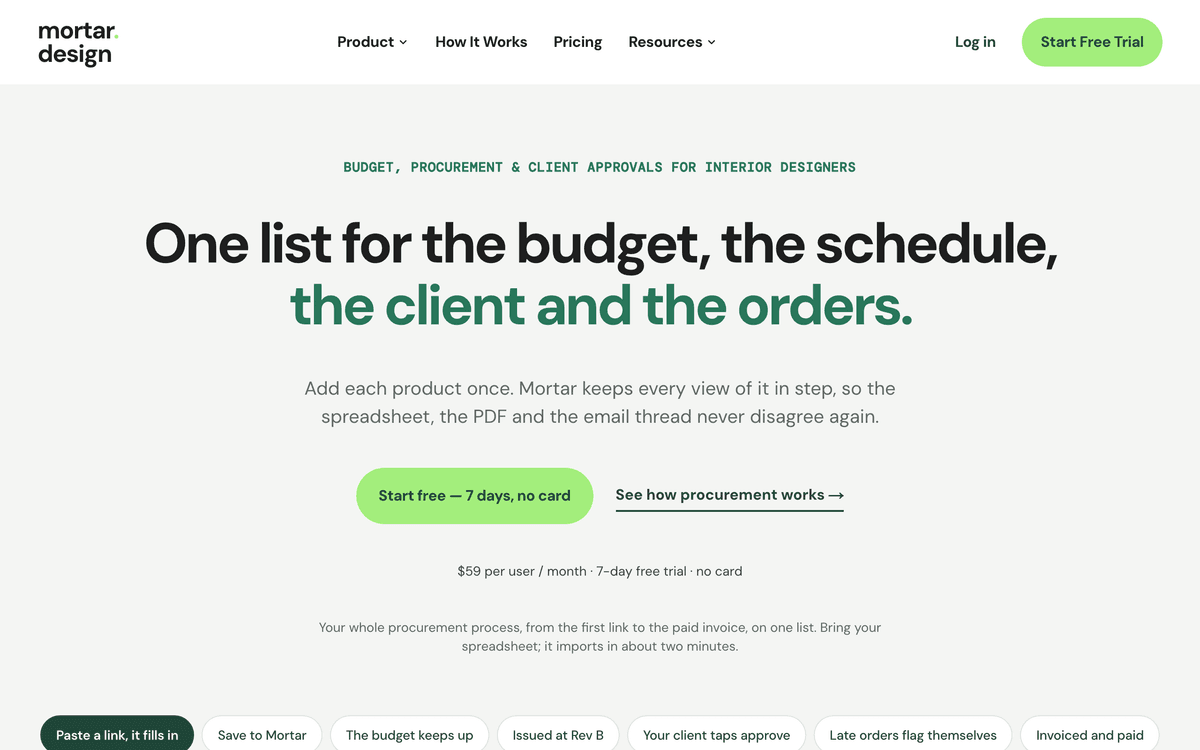
mortar.design has a new homepage, written from the interview in last week's log. "One sofa. Five places to update it" shows the three places a product gets typed into today and what Save to Mortar does instead, and the site now says "cut sheet (spec sheet)" because that's what designers call it.
→ Client portal · procurement · data import → Free: interior design proposal template → Try Mortar free for 7 days
Client work
A quiet week on the live client sites. Work for Texas REALTORS® and Real Estate Jobs Australia is in review and will be here when it ships.
If you need something like this built for your industry, this is what we do.
Marketing, behind the scenes
- handl.works has 13 new pages. Guides: what is a retainer, automate invoicing with AI and switching invoicing tools: what moves over. Templates: change request form, deposit request, payment reminder emails and price increase letter. A tax set-aside calculator. Blog: how to pay contractors, net 30 vs due on receipt, unpaid invoice: what to do, how to calculate utilisation rate and credit card surcharges in Australia.
- mortar.design: a free proposal template, a bigger finishes schedule template page, and three posts: what is FF&E, how to write an interior design quotation and what software interior designers use.
- dazlab.digital has the start of a series on how we build: agentic engineering, what AI-native actually means and Codex vs Claude Code. The real estate software page was rewritten around the eight platforms we've built, and there's a new custom software development, Sydney page.
- talicms.com switched to US English, since every customer is a US association.
- Edge Lab added 376 pages and 2,712 boot pages to its sitemap, which now lists only the pages worth sending Google to.
One thing I learned
We were paying more to build the software than to run it.
Last month's Vercel bill was almost all build minutes, and almost all of those were Edge Lab: about 1,500 deploys since 8 October, each built on Vercel's machines. Handl's tests alone used 45,000 GitHub Actions minutes in September. Neither number showed up anywhere until the invoices did.
So last week every repo moved its tests and builds onto two runners on one small server of our own. Deploys are built there and pushed to Vercel ready-made, which uses no build minutes at all. Same checks, same pipeline, a fraction of the cost.
The lesson isn't "self-host". It's that at 250 changes a week, the price of each check is a line item, and small releases are only cheap if the pipeline is. I'd been treating compute as free because it used to be too small to notice.
See you next week.
— Daz
 Consulting Inquiries