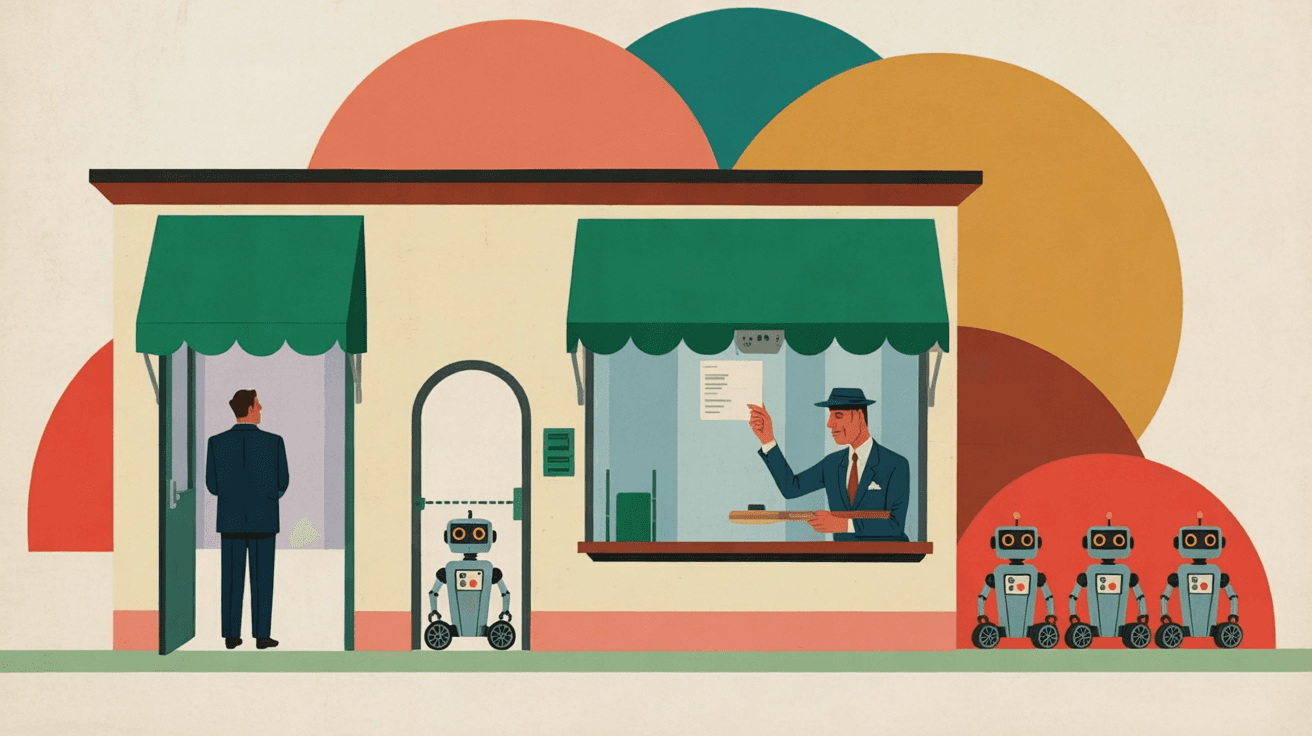
AI-native means the software was designed on the assumption that an AI will be using it, not just a person. The AI might be an assistant your customer already has open all day, or an agent inside the product, or the agents that built the product in the first place. Either way, it changes what you build: tools instead of only screens, permissions for what an agent may change, an approval queue for anything it shouldn't change on its own, and a data model an agent can read without guessing.
AI-enabled is a product that was built for people and then had AI added to it, usually as a chat box in the corner. There's nothing wrong with it. It's just a different thing.
We describe Handl as AI-native financial ops for agencies, so we should be able to say what that means in practice. Here's what it means for us.
AI-native vs AI-enabled vs AI-first
The three get used interchangeably. They aren't.
| What it means | What it looks like | |
|---|---|---|
| AI-enabled | A conventional product with AI features added | A "write this for me" button, a chatbot, a summary panel |
| AI-first | AI is the main way you interact with the product | You type what you want and the product does it |
| AI-native | The product assumes an AI will operate it, and is built so one can, safely | Tools with permissions, an approval queue, data the AI can read directly, AI inside and outside the product |
The useful test is this: can your customer's AI assistant use your product without you building a chatbot? If the answer is yes, you've built something AI-native. If the only AI in the product is the one you bolted on, it's AI-enabled.
What it looks like in a product
Handl handles invoicing, payments and multi-currency reporting for agencies. Here's what AI-native meant when we built it.
The product has tools, not just screens. Since June, Handl has spoken MCP, the standard that AI assistants like Claude use to talk to other software. Over forty tools: projects, clients, invoices, the team, reports, search. An agency owner can ask their own AI "which invoices are overdue and who's on the hook?" and get an answer from their live Handl data, not something the AI made up. Or "set up a project for this client", and it does.
The AI has permissions. Every connection is per agency, with proper sign-in, and can be revoked. The tools know which agency they belong to. Nothing an AI does can reach across into someone else's data, because the product won't let it, not because the AI promised to behave.
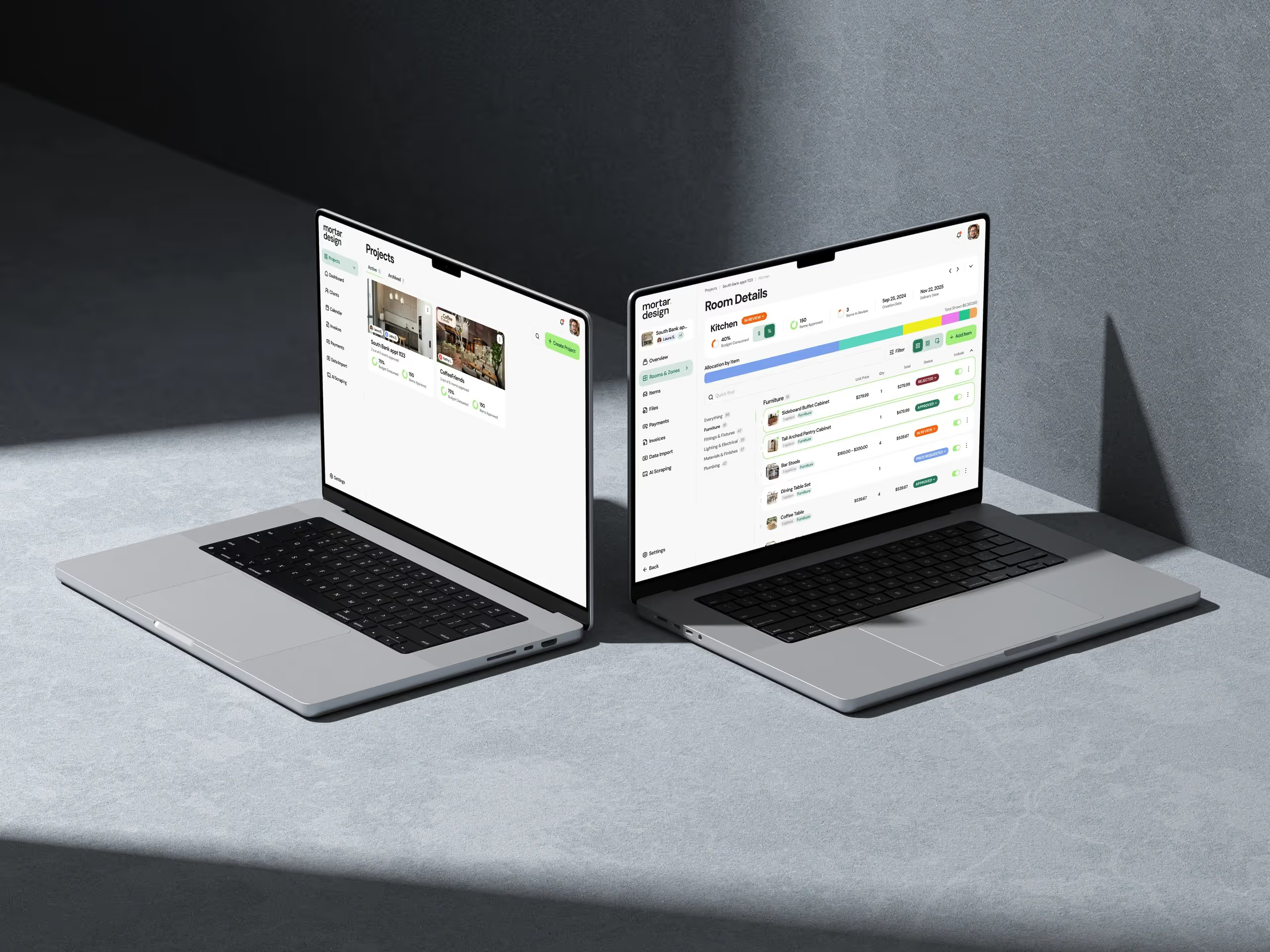
There's an approval queue. This is the part most people miss. Handl runs in one of three modes: an AI can act directly, it can only propose, or it can only read. In propose-only mode, anything that would change money or send something to a client goes into a queue and waits for a person to say yes. Mortar, our product for interior designers, works the same way: its connector is read-only by default, and any change it wants to make waits for approval.
The data is readable. Agents are bad at guessing what a field means. So the tool descriptions got rewritten until the AI picked the right one first time, and the instructions it reads when it connects explain what Handl is and how the pieces fit. Unglamorous work. It's most of what makes the thing usable.
There's an agent inside too. Paste a link to a proposal and Handl's own agent reads it, pulls out the scope, milestones and payment schedule, and builds the project. That's the AI-first part. It sits on the same tools and the same permissions as the outside assistants.
None of that is a chat box. It's structure.
What it looks like in a studio
There's a second meaning of AI-native that applies to us rather than the product: the software is built by AI agents, inside an engineering process.
Every change starts as a written ticket. AI builder agents build against it, at most three at a time. The tests that cover the change run while building, and the full suite runs in CI. Every change is reviewed, by a different model from the one that wrote it, and anything touching money or customer data gets a stronger adversarial review on top. A person decides what ships.
That process is why a small team can run four products and a set of client platforms. It's also why we can say what AI-native means with some confidence: the agents that build Handl are the same kind of thing that will use it.
We've written up the process in spec-driven development with AI agents and the difference between that and just prompting in is vibe coding bad?.
What AI-native costs
Two things people underestimate.
Running costs. Every AI feature costs money each time it runs, forever. That's a per-customer cost, not a build cost, and it shows up in your pricing. When we prepared First Shift, Arbeo's home care hiring product, for launch, we cut the AI cost per application substantially by using a smaller model where it was good enough and summarising conversations as they went rather than re-reading the whole thing every turn. Budget for the cost, and budget for the work to bring it down.
Trust. The first time an AI emails your customer's client something they didn't expect, they switch it off. So the rules are: anything that contacts a client is opt-in, anything that changes money ships switched off, and an agent that wants to change something waits for a yes. Those aren't limitations of the AI. They're what makes it safe to let one in.
How to tell if something is AI-native
If you're evaluating a product, or deciding how to build one:
- Can an outside AI assistant connect to it and do real work? Through what standard?
- What is the AI allowed to change, and what has to be approved?
- Is every action scoped to the customer it belongs to?
- Can the AI read the data without a person explaining what the fields mean?
- What does each AI action cost to run, and who pays?
If the answers are vague, it's AI-enabled with a good landing page.
FAQ
What does AI-native mean?
Software built on the assumption that an AI will use it, not just a person: tools an AI can call, permissions for what it may change, an approval queue for what it may not, and data it can read directly. It usually also means the software was built by AI agents inside an engineering process.
What's the difference between AI-native and AI-enabled?
AI-enabled is a conventional product with AI features added, usually a chatbot or a generate button. AI-native is built so an AI, yours or the customer's, can operate the product safely, with permissions and approvals built in.
What's the difference between AI-native and AI-first?
AI-first describes the interface: the main way you use the product is by telling an AI what you want. AI-native describes the structure underneath. A product can be AI-native without being AI-first, and most should be; people still want screens.
Is an AI-native product more expensive to run?
Yes, if it has AI features inside it, because each use costs something. The work is to bring that per-use cost down with smaller models and smarter context, and to price for what's left.
If you're building something and want it to work with the AI tools your customers already use, that's what we do.
 Consulting Inquiries