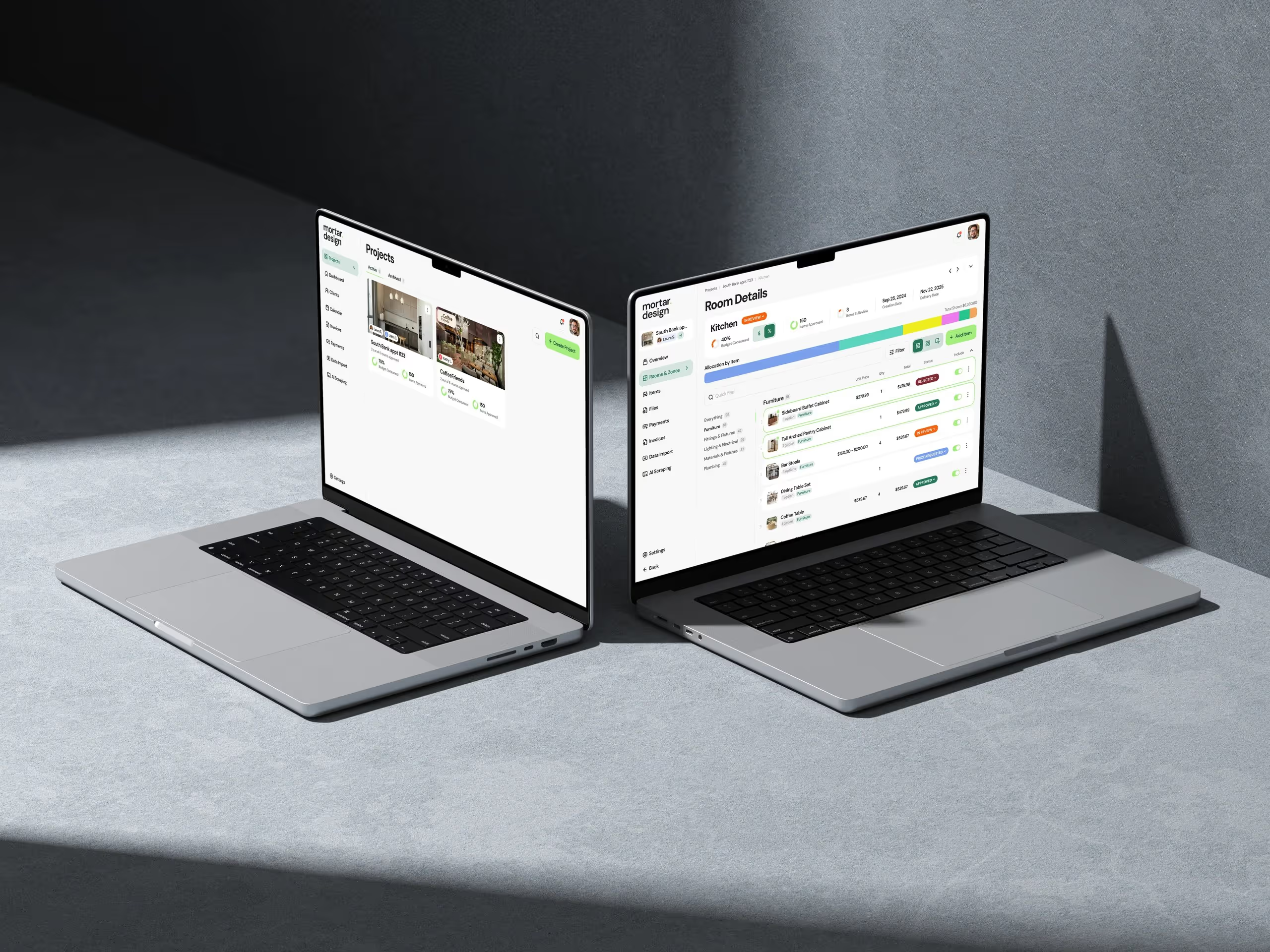

After 25 years of building software, I've watched countless businesses struggle with the same problem: generic software that promises to do everything but actually does nothing particularly well. You know the feeling — you're an interior designer trying to make QuickBooks work for project billing, or an HR manager forcing candidates through a CRM meant for sales leads. It's like trying to perform surgery with a Swiss Army knife.
This article is part of our complete guide to vertical SaaS.

That's where vertical SaaS comes in, and it's why we've spent the last decade at Dazlab.digital building software that actually solves real problems for specific industries. Let me break down what vertical SaaS really means and why it matters for your business.
The Vertical SaaS Definition That Actually Makes Sense
Vertical SaaS is software built specifically for one industry, solving that industry's unique problems with purpose-built features. Unlike horizontal SaaS (think Slack, Salesforce, or Microsoft 365), which tries to serve everyone, vertical SaaS goes deep into one market's specific workflows, regulations, and pain points.

The vertical SaaS meaning goes beyond just industry focus — it's about understanding the nuances that make or break daily operations. When we developed Billabex for digital agencies, we didn't just create another invoicing tool. We built in project milestone tracking, scope creep alerts, and client approval workflows because that's what agencies actually struggle with. Generic billing software doesn't even know what scope creep is.
Why Vertical SaaS Beats Generic Solutions Every Time
I've sat in too many meetings where companies try to convince themselves that their Frankenstein monster of generic tools held together with Zapier integrations is "working fine." It's not. Here's what actually happens when you use software built for your specific industry:

First, onboarding time drops from months to days. When we launched TaliCMS for real estate associations, new clients were up and running in 48 hours. Why? Because the software already understood member directories, event management, and dues collection. There's no configuration gymnastics required — it works the way real estate associations work.
Second, you eliminate the feature bloat that plagues horizontal solutions. Your interior designers don't need a CRM's sales pipeline features cluttering their project management view. Your HR team doesn't need marketing automation getting in the way of candidate screening. Vertical SaaS strips away the noise and delivers exactly what you need.
Third, and this is the big one — vertical SaaS actually understands your business logic. Generic software makes you adapt your processes to fit its limitations. We've watched companies completely restructure how they work just to accommodate their software's assumptions. That's backwards. When we build for a specific vertical, the software adapts to how that industry actually operates.
Real Examples of Vertical SaaS in Action
Let me show you what vertical SaaS looks like in practice, starting with our own products at Dazlab.digital. These aren't hypothetical case studies — these are real solutions we've built because generic alternatives failed our clients.

Billabex emerged from our frustration watching agencies struggle with payment disputes. Generic invoicing tools treat all businesses the same, but agencies face unique challenges: projects that evolve mid-stream, multiple stakeholders approving work, and the dreaded "but that's not what we agreed to" conversation. Billabex builds transparency into every step — clients can see project progress, approve milestones, and track changes in real-time. Payment disputes dropped by over 70% for our early adopters because there's a clear audit trail of every decision.
Another example: property management software for multi-family residential buildings. Generic tools force property managers to track maintenance requests in one system, tenant communications in another, and vendor relationships in a third. Purpose-built vertical SaaS for property management integrates all these workflows. When a tenant reports a broken AC unit, the system automatically checks warranty information, notifies preferred vendors, schedules the repair within lease-mandated timeframes, and updates the tenant — all without manual intervention.
Healthcare provides perhaps the clearest example of why vertical matters. A dental practice can't use the same software as a cardiology clinic. Different procedures, different billing codes, different regulatory requirements. That's why successful dental practice management systems include features like tooth charting, X-ray integration, and insurance pre-authorization workflows that would be meaningless to other medical specialties.
The Hidden Advantages of Industry-Specific Software
Beyond the obvious operational benefits, vertical SaaS delivers advantages that most businesses don't consider until they experience them. Compliance is the big one. When we built TaliLMS for healthcare recruiting, we didn't just add compliance features as an afterthought — we baked HIPAA requirements, credential verification, and license tracking into the core architecture. Try doing that with a generic ATS.
Industry-specific software also evolves with your sector's needs, not the whims of a product manager trying to please everyone. When new regulations hit healthcare recruiting, TaliLMS adapts immediately because that's our only focus. Meanwhile, users of horizontal platforms wait months or years for updates that might never come because healthcare recruiting represents 0.01% of their user base.
Then there's the network effect within your industry. Vertical SaaS platforms become hubs where industry professionals share best practices, templates, and workflows. Our TaliCMS users share event templates and member engagement strategies because they're not competing with users from completely different industries. This community becomes as valuable as the software itself.
Integration is another hidden advantage. Vertical SaaS platforms integrate with the specific tools your industry actually uses. An interior design platform integrates with furniture vendor catalogs and fabric suppliers. A real estate association platform connects to MLS systems and continuing education providers. These aren't generic API connections — they're purpose-built integrations that understand industry-specific data formats and workflows.
How to Identify When You Need Vertical SaaS
Here's my litmus test: if you spend more time working around your software than working with it, you need a vertical solution. We see this pattern constantly. Companies create elaborate workarounds, build custom fields that sort of capture what they need, and train new employees on "how we use the system" rather than how the system works.
Watch for these warning signs that generic software is failing you. First, you're maintaining shadow IT — spreadsheets, documents, or unofficial tools that hold the "real" data because your official systems can't handle it. Second, critical industry terms or concepts don't exist in your software's vocabulary. If you're constantly explaining to support that "no, that's not what that means in our industry," you're using the wrong tool.
Third, and this one's painful — you're paying for features you'll never use while missing ones you desperately need. We worked with an interior design firm paying enterprise prices for a project management tool because they needed one specific feature buried in the top tier. Meanwhile, basic design industry needs like finish schedules and vendor sample tracking required complex workarounds.
The cost of these workarounds adds up fast. Not just in software licenses, but in time spent training, productivity lost to inefficient workflows, and opportunities missed because your tools can't keep up with your business. One of our agency clients calculated they were losing 15 hours per week just managing the gaps between their various generic tools.
The Future of Vertical SaaS: AI and Beyond
We're entering a new era where AI makes vertical SaaS even more powerful. Generic AI features like "summarize this document" are table stakes. The real opportunity lies in AI trained on industry-specific patterns and workflows. We're building AI into our products that understands the difference between a design revision and scope creep, or that can predict which healthcare candidates are likely to accept offers based on industry-specific signals.

This isn't theoretical — we're shipping these features now. Our latest updates to Billabex include AI that learns from successful agency projects to predict timeline risks and budget overruns. It's not magic; it's pattern recognition trained on actual agency data, understanding that certain client behaviors or project characteristics correlate with specific outcomes.
The next wave of vertical SaaS will be even more specialized. Instead of "healthcare software," we'll see platforms for specific medical specialties. Instead of "real estate software," we'll have solutions for different property types and transaction models. This hyper-specialization might seem excessive, but when software truly understands your exact business model, the efficiency gains are transformative.
AI-native vertical SaaS also means software that learns from your specific business. Not just your industry — your actual company's patterns, preferences, and processes. Imagine applicant tracking software that learns which candidate attributes predict success at your specific healthcare facility, or project management software that adapts to your agency's unique creative process.
Making the Switch: Your Next Steps
If you're convinced that vertical SaaS could transform your operations (and you should be), here's how to move forward. Start by mapping your current pain points. Where do generic tools force you to work against your natural workflows? What industry-specific needs are you solving with duct tape and spreadsheets?
Next, research what vertical solutions exist for your industry. Fair warning: you might not find perfect fits immediately. Many industries are still underserved, which is exactly why we keep building new vertical SaaS products at Dazlab.digital. But even partial solutions often deliver more value than generic alternatives.
When evaluating vertical SaaS options, look beyond feature lists. The best vertical software comes from teams who deeply understand your industry. Ask about their experience, their other customers, and their product roadmap. Generic software companies add features based on the loudest voices. Vertical SaaS companies add features based on industry evolution.
Finally, don't let perfect be the enemy of good. Even if a vertical solution only solves 80% of your needs elegantly, that's usually better than a generic solution that technically handles 100% but requires constant workarounds. Remember, the goal isn't to have software that can do everything — it's to have software that does what you actually need, exceptionally well.
"The best software feels like it was built specifically for you because, in the case of vertical SaaS, it actually was."
Ready to explore how vertical SaaS could transform your business? Whether you're looking for existing solutions or need something built from scratch, we'd love to discuss your specific challenges. After 25 years of building software that actually works for real businesses, we know the difference the right tools can make. Let's talk about building something that solves your actual problems, not generic ones.
Frequently Asked Questions
What exactly is vertical SaaS?
Vertical SaaS is software designed specifically for one industry, with features and workflows tailored to that industry's unique needs. Unlike horizontal SaaS that serves all industries generically, vertical SaaS goes deep into specific sectors like healthcare, real estate, or interior design.
How do I know if my business needs vertical SaaS instead of generic software?
If you're maintaining spreadsheets to track what your software can't, constantly working around system limitations, or paying for features you'll never use while missing ones you need, you likely need vertical SaaS. The key indicator is spending more time making your software work than actually using it productively.
What are some real examples of vertical SaaS?
Examples include Billabex for digital agencies (handling project milestones and scope management), TaliLMS for healthcare recruiting (with credential verification and compliance tracking), and TaliCMS for real estate associations (managing member directories and dues collection). Each solves industry-specific problems generic tools can't address.
Is vertical SaaS more expensive than generic solutions?
While vertical SaaS might have higher sticker prices, the total cost is often lower. You eliminate multiple tool subscriptions, reduce training time, avoid productivity losses from workarounds, and prevent costly mistakes from using inadequate tools. The efficiency gains typically outweigh any premium pricing.
How is AI changing vertical SaaS?
AI makes vertical SaaS even more powerful by understanding industry-specific patterns. Instead of generic AI features, vertical platforms use AI trained on industry data - like predicting project risks in agencies or identifying qualified healthcare candidates based on sector-specific signals.
Related Reading

Dazlab is a Product Studio_
Our products come first. Consulting comes second. Whichever path you take, you’ll see how a small team can deliver outsized results.