
After 25 years building software for specific industries, I've watched countless technology waves promise to "revolutionize" how we serve niche markets. Most fizzle out. But what's happening with AI in vertical software right now? This one's different.
This article is part of our complete guide to AI-native software development.

We're not just bolting chatbots onto existing SaaS products and calling it innovation. AI is fundamentally changing what vertical software can do — and more importantly, who can build it and how fast they can move.
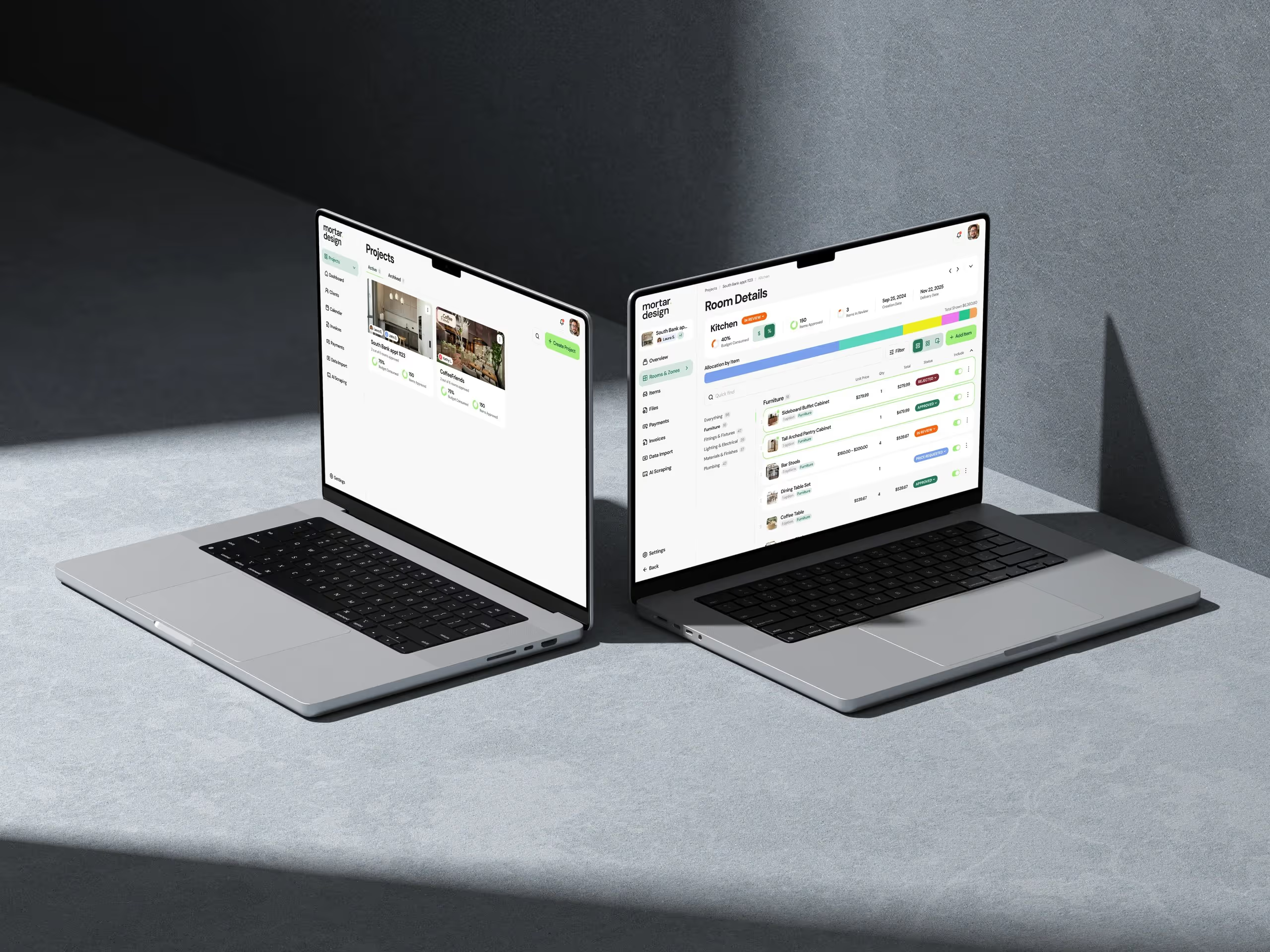
I've spent the last year deep in the trenches, building AI-native products for niches like interior design and HR tech. The patterns I'm seeing aren't what the thought leaders on LinkedIn are preaching. Let me share what's actually happening on the ground.
The Core Difference: Automation vs Intelligence
Traditional vertical SaaS is essentially industry-specific workflow automation. Take interior design software — it digitizes the process of creating mood boards, tracking inventory, managing client approvals. The software follows the same steps a human would, just faster and with better record-keeping.
We built products this way for decades because it worked. You'd spend six months shadowing interior designers, mapping their workflows, then another year building software that automated those exact workflows. The value proposition was simple: do what you're already doing, but more efficiently.
Vertical AI flips this model entirely. Instead of automating existing workflows, AI vertical software creates entirely new capabilities that weren't possible before. When we built an AI-powered design assistant, it didn't just organize mood boards faster — it could generate design concepts from a photo of an empty room, suggest furniture combinations based on a client's Instagram likes, and predict which design directions would resonate before the first client meeting.
The difference isn't subtle. Traditional SaaS makes you 2x more efficient at your existing job. AI-native vertical software lets you do things that were physically impossible before. That's not iteration — that's transformation.
Why Vertical Markets Are Perfect for AI Disruption

I learned this the hard way building HR tech. Recruiters don't just need a database of candidates — they need software that understands the difference between vertical AI and SaaS roles, that can parse whether "5 years of Python" on a resume means data science Python or web development Python. Generic ATS systems treat all text as equal. Industry-specific AI can actually understand context.
The magic happens when you combine deep industry knowledge with AI's pattern recognition. We trained models on thousands of successful interior design projects. Now the AI doesn't just store design preferences — it understands why certain combinations work in Manhattan lofts but fail in suburban McMansions. That's not something you can configure in Salesforce.
Vertical markets also have another advantage: clearer ROI. When you're selling to interior designers, you can directly tie AI capabilities to billable hours saved or projects won. Try doing that with a horizontal AI writing tool — the value gets too fuzzy.

The Technical Reality Check
Let's get real about what building AI vertical software actually requires. The LinkedIn influencers make it sound like you just sprinkle some GPT-4 on your SaaS and watch the magic happen. That's not how this works.
First challenge: data quality. Vertical markets are messy. The interior design industry doesn't have nice, clean datasets waiting to train your models. You're dealing with decades of PDFs, proprietary CAD formats, and design blogs written in flowery prose that would make an NLP engineer cry. We spent three months just building data pipelines before we could even start on the actual AI features.
Second challenge: industry-specific accuracy. Generic AI models hallucinate. That's annoying in a chatbot, but catastrophic in vertical software. When your AI suggests using the wrong grade of steel in a construction project, or misidentifies a protected wood species in furniture design, you're not just losing customers — you're creating liability.
We solve this by building hybrid systems. The AI handles pattern recognition and generation, but we wrap it in deterministic guardrails based on industry rules. It's more complex than pure AI or pure rules-based systems, but it's the only way to build vertical AI that professionals actually trust.
Third challenge: the build vs. buy calculation has completely changed. Five years ago, if you wanted visual recognition in your interior design software, you'd need a team of ML engineers and six months of development. Today, you can get 80% of the way there with off-the-shelf models and two weeks of integration work. But that last 20% — making it actually work for your specific vertical — that's where the real work lives.
Business Model Evolution: From Seats to Outcomes
Traditional vertical SaaS trained us to think in seats and subscriptions. You'd charge $50 per user per month and call it a day. AI breaks this model in interesting ways.
First, the value delivery is completely different. When our interior design AI generates a complete room design in 30 seconds — something that previously took 4 hours — charging per seat doesn't capture the value. We've experimented with usage-based pricing, outcome-based pricing, even hybrid models where the base platform is subscription but AI features are consumption-based.
The surprising finding? Customers in vertical markets actually prefer predictable pricing, even if it costs more. An interior designer would rather pay $500/month for unlimited AI usage than worry about burning through credits during a busy project. The psychology is different than horizontal software — these are their business-critical tools, not nice-to-have productivity boosters.
Customer acquisition is changing too. Traditional vertical SaaS required massive education efforts. You'd spend months convincing someone to digitize their workflow. With AI features, the demo sells itself. When you show a recruiter an AI that can screen 1,000 resumes and surface the 10 best candidates in under a minute, you don't need to explain ROI calculations.
But here's the trap: easy demos don't mean easy retention. AI features can wow in a demo but disappoint in daily use if they're not deeply integrated into actual workflows. We learned this lesson with our first AI product — great demos, terrible 60-day retention. Now we design AI features that enhance existing workflows rather than trying to replace them entirely.
The Competitive Landscape Shift
The moats in vertical software are shifting under our feet. Traditional vertical SaaS competed on features and integrations. You'd win by having the most complete feature set and connecting to the most industry-specific tools. That game is changing.

Now the moats are about data and model quality. The interior design software with the best design prediction model wins, not the one with the most export formats. This creates an interesting dynamic — early movers who can aggregate industry data have a massive advantage. Every design project completed on your platform makes your AI smarter. That's a moat that compounds over time.
We're also seeing new entrants who would never have competed in vertical SaaS before. Building traditional industry software required deep domain expertise and years of development. But with AI, a smart team can build a competitive product in months by focusing on one killer AI feature and expanding from there.
I watched this happen in real estate software. A two-person team built an AI that could generate property descriptions from photos. Within six months, they were competing with decade-old incumbents because their narrow AI feature was so much better than anything else on the market. They didn't need feature parity — they needed one transformative capability.
The incumbents are struggling to respond. They have technical debt, complex codebases, and business models built around the old way of doing things. Bolting AI onto a legacy vertical SaaS platform is like putting a Ferrari engine in a horse-drawn carriage — technically possible, but missing the point.
What This Means for Builders and Buyers
If you're building vertical software today, you have two choices: go AI-native or go home. That sounds dramatic, but I've watched too many vertical SaaS companies treat AI as a feature checkbox rather than a fundamental rethinking of what their software should do.

If you're buying vertical software, the calculation has changed too. The question isn't whether your software has AI features — everyone will claim that. The question is whether the AI actually understands your industry. Ask for demos with your messy, real-world data. See if the AI can handle your edge cases, not just the vendor's perfect scenarios.
Most importantly, think about switching costs differently. Traditional vertical SaaS locked you in with data and integrations. AI vertical software locks you in by learning your specific business. Every project you complete, every decision you make, trains the AI to work better for you specifically. That's either a powerful competitive advantage or a dangerous dependency, depending on how you look at it.
The real transformation isn't adding AI to vertical SaaS — it's rebuilding vertical software with AI at its core. That's not an upgrade, it's a different product category entirely.
After 25 years in this business, I've learned to be skeptical of transformation claims. But what I'm seeing with AI in vertical markets isn't hype — it's a fundamental shift in what software can do for specific industries. The builders who understand this shift will own the next decade of vertical software.
At Dazlab.digital, we're not just watching this transformation — we're building it. If you're ready to explore what AI-native software could do for your industry, let's talk. We've learned these lessons the hard way so you don't have to.
Frequently Asked Questions
What is the main difference between vertical AI and vertical SaaS?
Traditional vertical SaaS automates existing industry workflows — it makes you more efficient at tasks you already do. Vertical AI creates entirely new capabilities that weren't possible before. For example, while vertical SaaS for interior designers might organize mood boards faster, vertical AI can generate complete design concepts from a photo of an empty room or predict which designs will resonate with clients.
Why are vertical markets particularly suited for AI transformation?
Vertical markets are drowning in unstructured, industry-specific data that generic software can't handle effectively. Every industry has its own language, documents, and processes that have evolved over decades. AI can understand this context in ways traditional software cannot, making it perfect for parsing industry nuances — like understanding the difference between "Python for data science" versus "Python for web development" in recruiting.
What are the main technical challenges in building AI vertical software?
The three biggest challenges are: 1) Data quality — vertical markets have messy, decades-old data in various formats, 2) Industry-specific accuracy — generic AI models can hallucinate, which is catastrophic in professional software, and 3) The complexity of building hybrid systems that combine AI capabilities with deterministic industry rules to ensure reliability and trust.
How is AI changing the business model for vertical software?
AI is shifting pricing from traditional per-seat subscriptions to usage-based or outcome-based models. However, vertical market customers often prefer predictable pricing for business-critical tools. Customer acquisition is easier with impressive AI demos, but retention requires deep workflow integration. The competitive moats are also shifting from features and integrations to data quality and model sophistication.
What should companies consider when choosing between traditional vertical SaaS and AI vertical software?
Look beyond surface-level AI features to whether the software truly understands your industry. Test with your real, messy data and edge cases. Consider switching costs differently — AI software creates lock-in by learning your specific business patterns over time, which can be either a competitive advantage or a dependency. Focus on solutions that enable previously impossible capabilities rather than just faster versions of existing workflows.
Related Reading
Dazlab is a Product Studio_
Our products come first. Consulting comes second. Whichever path you take, you’ll see how a small team can deliver outsized results.