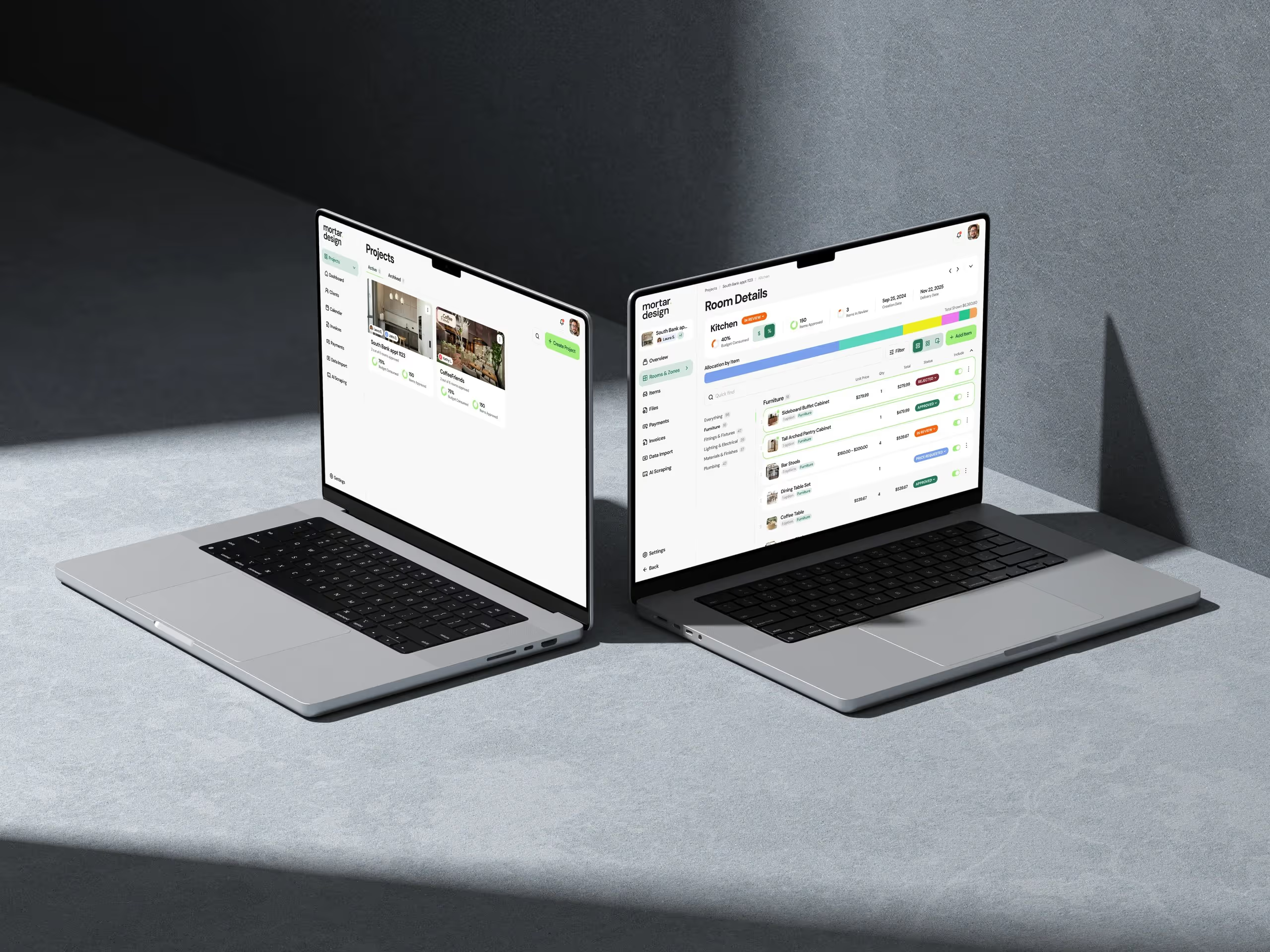

I've been building software for 25 years, and I've never seen a more exciting time for vertical SaaS. But here's what most people miss: the real opportunity isn't in competing with Salesforce or trying to be the next $10 billion horizontal platform. It's in solving the deeply specific problems that generic software can't touch.
This article is part of our complete guide to vertical SaaS.

Last week, I talked to an interior designer who spent four hours manually updating project statuses across three different tools. That's the kind of pain point that vertical SaaS exists to solve. And over the next five years, we're about to see a fundamental shift in how these solutions get built, sold, and scaled.
The AI Revolution Isn't What You Think
Everyone's talking about AI, but most are missing the point entirely. The future of vertical SaaS isn't about slapping ChatGPT onto existing workflows. It's about AI-native architectures that fundamentally rethink how work gets done in specific industries.
We built an HR tech tool recently that uses AI to match candidates to roles. Not by keyword matching resumes – that's table stakes. Instead, it learns the hiring patterns specific to each company, understands the nuances of role requirements in their industry, and predicts cultural fit based on communication patterns. That's what AI-native means in vertical SaaS: deeply embedded intelligence that understands your specific business context.

Consolidation Is Coming (But Not How You Think)
The vertical SaaS market is incredibly fragmented right now. There are over 50 different practice management solutions just for dentists. That's not sustainable, and consolidation is inevitable. But it won't happen the way most people expect.
Instead of big companies buying up all the small ones, we're seeing something more interesting: micro-platforms emerging within verticals. A billing solution for creative agencies realizes it can add project management. A recruiting tool for tech companies expands into onboarding. These aren't random feature additions – they're natural extensions that solve adjacent problems for the same users.
We're building exactly this kind of platform play at Dazlab.digital. Our interior design software started as a project management tool. Now it handles billing, client communications, and vendor relationships. Not because we wanted to build a bigger product, but because our users kept asking us to solve more pieces of their workflow puzzle.
By 2030, I expect most verticals will have 3-5 dominant platforms that handle 80% of industry-specific needs. The winners won't be the ones with the most features, but the ones that understand workflows deeply enough to connect different parts of the business seamlessly.
The Rise of Industry-Specific Super Apps
Here's a prediction that might sound crazy: by 2030, most professionals will do 90% of their work inside a single, industry-specific super app. Not Slack plus Notion plus Airtable plus whatever else. One app that truly understands their business.
I'm already seeing early signs of this. Real estate agents using platforms that combine CRM, transaction management, marketing automation, and client communications. HR teams working entirely within unified talent platforms that handle everything from sourcing to performance reviews.
The key insight is that vertical workflows are inherently interconnected. When an interior designer creates a project plan, that should automatically generate purchase orders, update client portals, and trigger billing milestones. Generic software makes you stitch these connections together manually. Vertical super apps make them automatic.
But building these super apps is hard. Really hard. You need deep industry expertise, significant technical capabilities, and the patience to solve dozens of interconnected problems well. That's why we're seeing a new breed of vertical SaaS companies emerging – ones that think in decades, not quarters.
The Death of One-Size-Fits-All GTM
The go-to-market playbook for SaaS is broken when it comes to vertical solutions. You can't just run Facebook ads and expect interior designers to sign up for your software. They don't hang out where B2B marketers think they do.
Over the next few years, we'll see vertical SaaS companies completely reimagine how they reach customers. Think embedded partnerships with industry associations, software that spreads through professional networks like wildfire, and sales teams that speak the language of the industry fluently.
We learned this the hard way with one of our products. We spent months perfecting our LinkedIn outreach strategy, only to discover our target users barely check LinkedIn. They were all on Instagram, sharing project photos. So we pivoted our entire GTM strategy around visual social proof and industry influencers. Conversions went up 400%.
By 2030, the most successful vertical SaaS companies won't look like software companies at all from a GTM perspective. They'll look like industry insiders who happen to make great software. They'll sponsor trade shows, publish industry research, and build communities that become essential resources for professionals in their space.
The future of vertical SaaS isn't about competing on features. It's about becoming so embedded in an industry's workflow that using anything else feels like going backwards.
New Business Models for Niche Markets
Traditional SaaS pricing doesn't work for many vertical markets. A $99/month subscription might be perfect for generic project management software, but it's completely wrong for specialized industry solutions.
We're seeing innovative pricing models emerge that align with how specific industries actually make money. Revenue-based pricing for e-commerce tools. Transaction fees for payment platforms. Success fees for recruiting software. These aren't just pricing tweaks – they're fundamental alignments between software value and customer success.
I recently worked with a real estate association that needed member management software. Instead of charging per seat, we priced based on member count with volume discounts. It aligned perfectly with how associations think about growth and budgeting. The result? They signed a five-year contract on the first call.
By 2030, I predict most vertical SaaS will abandon traditional subscription models entirely. Instead, pricing will be so closely tied to customer outcomes that the software essentially becomes a partner in the business. This creates better alignment, reduces churn, and allows for much deeper product investment.

The Opportunity Nobody's Talking About
Here's what keeps me excited about the future of vertical SaaS: we've barely scratched the surface. Most industries are still running on spreadsheets and email. The digital transformation everyone talks about? It hasn't really happened yet for 90% of vertical markets.
Take associations, for example. There are over 100,000 trade and professional associations in the US alone. Most are using software designed in the early 2000s, if they're using anything at all. The opportunity to build modern, AI-native solutions for these organizations is massive and largely untapped.
Or consider creative agencies. They're cobbling together generic tools that don't understand how creative work actually flows. Project management tools that don't handle client feedback well. Billing systems that can't deal with scope creep. Time tracking that doesn't integrate with creative tools.
Each of these gaps represents a billion-dollar opportunity for the right team. But it requires patience, deep industry knowledge, and a willingness to solve hard problems that generic software companies won't touch.
We're betting our entire business on this thesis at Dazlab.digital. Instead of trying to build the next Slack, we're going deep into specific verticals, understanding their unique challenges, and building software that feels like it was made by someone who's lived their problems.
The next five years will see an explosion of these deeply specialized solutions. AI will accelerate development, making it feasible to build sophisticated software for smaller and smaller niches. Platform plays will emerge within verticals, creating new opportunities for integration and expansion. And the companies that win will be the ones that truly understand and serve their specific markets.
If you're building in the vertical SaaS space, now's the time to go deeper, not wider. Pick an industry, learn it inside out, and build something that makes professionals wonder how they ever lived without it. That's where the real opportunity lies – not in competing with horizontal platforms, but in solving the problems they'll never understand deeply enough to address.
The future of vertical SaaS isn't about building better software. It's about building the right software for the right people. And there's never been a better time to start.
Frequently Asked Questions
What makes AI-native vertical SaaS different from traditional SaaS with AI features?
AI-native vertical SaaS is built with AI at its core architecture, not added as an afterthought. Instead of generic AI features like chatbots, these solutions use AI that deeply understands specific industry contexts and workflows. For example, HR software that learns company-specific hiring patterns rather than just matching keywords on resumes.
Why will vertical SaaS consolidation create micro-platforms instead of giant acquisitions?
Vertical markets have unique, interconnected workflows that generic acquirers don't understand deeply enough. Instead, we're seeing successful vertical SaaS companies naturally expand into adjacent problems their users face. A billing tool for agencies adding project management makes more sense than a large horizontal player trying to serve every vertical.
How will pricing models in vertical SaaS evolve by 2030?
Traditional per-seat subscriptions will give way to outcome-based pricing that aligns with how specific industries make money. This includes revenue-based pricing, transaction fees, success fees, and member-based pricing for associations. The key is matching the pricing model to how customers measure value in their specific industry.
What industries offer the biggest opportunities for new vertical SaaS products?
Industries still running on spreadsheets and outdated software present massive opportunities. Trade associations, creative agencies, and specialized professional services are particularly underserved. Look for industries with complex, specific workflows that generic software can't address properly.
How should vertical SaaS companies approach go-to-market differently?
Forget generic B2B marketing playbooks. Successful vertical SaaS companies need to become industry insiders, understanding where their users actually spend time and how they make decisions. This might mean Instagram over LinkedIn, trade shows over webinars, and building industry communities rather than running traditional ad campaigns.
Related Reading


Dazlab is a Product Studio_
Our products come first. Consulting comes second. Whichever path you take, you’ll see how a small team can deliver outsized results.