Let me tell you what product design isn't: it's not just making things pretty. After building software for 25 years and launching multiple SaaS products, I've learned that product design is the art of solving real problems through software — from the first napkin sketch to the moment a user achieves their goal.
This article is part of our complete guide to SaaS product design.

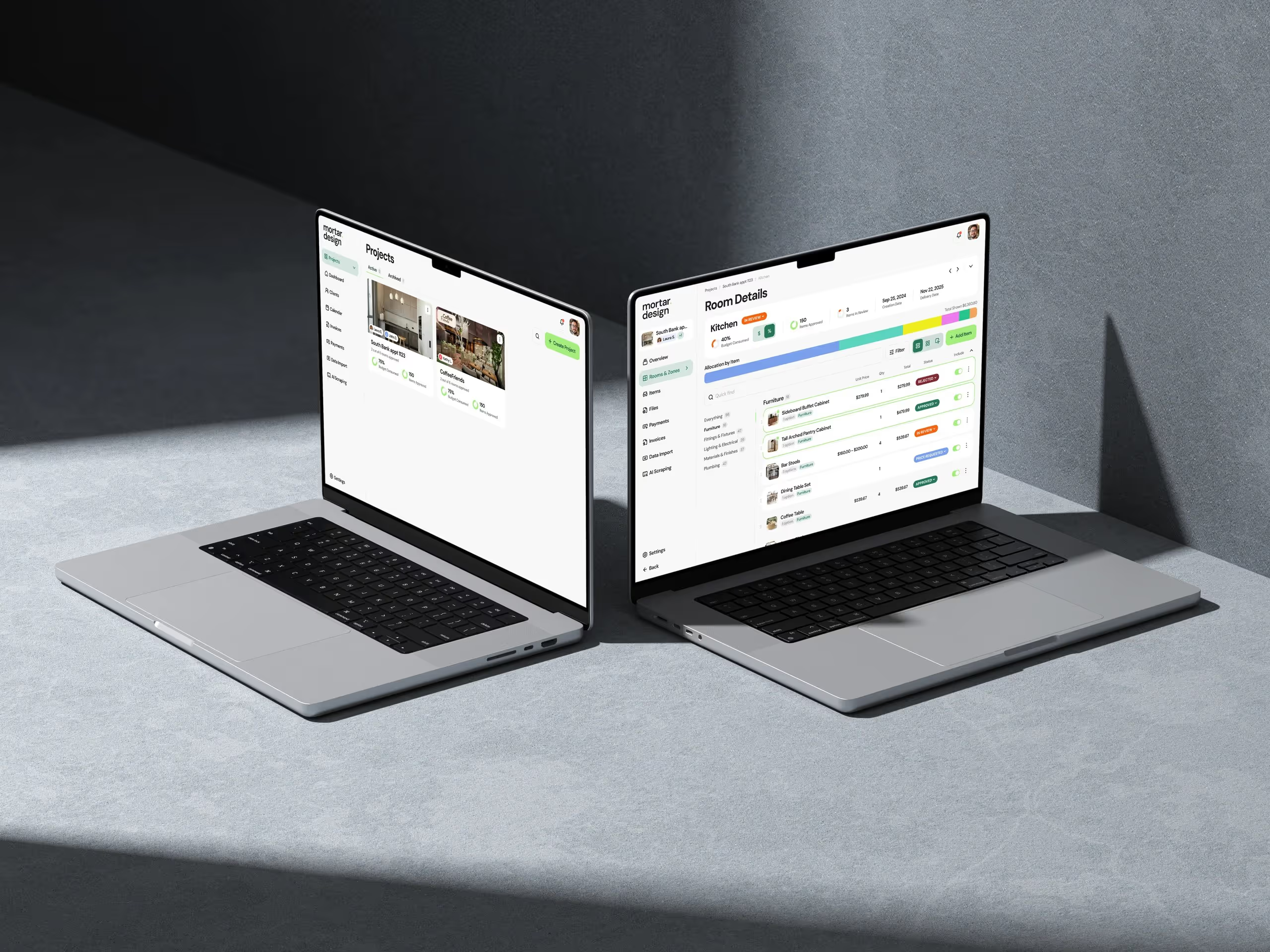
We've built HR tech that cuts recruitment time in half. Created billing systems that eliminate payment disputes. Shipped interior design tools that actually fit how designers work. Each time, product design was the difference between software that looks nice in demos and software that transforms how people work.
If you're building SaaS products — especially for niche industries — understanding product design isn't optional. It's the foundation of everything that comes after.
The Real Product Design Definition (Not the Textbook Version)
Here's my product design definition after years in the trenches: Product design is the complete process of understanding user problems, creating solutions, and iterating until those solutions work seamlessly in the real world. It's equal parts psychology, business strategy, and technical execution.
Most people think product design starts with wireframes. Wrong. It starts with understanding why someone is frustrated enough to Google for a solution at 9 PM on a Tuesday. We discovered TaliCMS because content managers were literally crying over WordPress complexity. That's where real product design begins — with actual human pain points.
In the SaaS world, product design encompasses everything from initial user research to the micro-interactions that make daily tasks effortless. It's asking "what does a product design do?" at every stage — from concept to code to customer success. The answer changes based on where you are in the journey, but the goal remains constant: create software that users can't imagine working without.
I've seen too many teams separate "design" from "development" like they're different universes. That's a recipe for shipping beautiful interfaces that nobody uses. Real product design is holistic — it considers technical constraints, business models, and user needs as inseparable parts of the same puzzle.
Core Elements of SaaS Product Design That Actually Matter
Forget the design theory textbooks. Here are the elements that determine whether your SaaS product ships and scales or joins the graveyard of good intentions.
User Experience (UX) Design isn't about following best practices — it's about understanding your specific users' workflows. When we built applicant tracking features for small HR teams, we discovered they don't work like enterprise HR departments. They jump between tasks, wear multiple hats, need different flows. Generic UX patterns would have killed the product.

Visual Design and Interface serves a purpose beyond aesthetics. Every visual element should reduce cognitive load or guide action. We use color coding in our real estate association software not because it's pretty, but because administrators process 50+ member requests daily and need instant visual categorization.
I've learned that consistency beats creativity in SaaS interfaces. Users don't want to relearn your clever navigation. They want to complete tasks and move on with their day. Save the creative flourishes for your marketing site.
Information Architecture makes or breaks SaaS products. How you structure features determines whether users discover value or abandon ship. We organize our interior design software around project phases because that's how designers think — not around feature categories like most software.
The right information architecture feels invisible. Users find what they need without thinking about it. The wrong architecture creates support tickets and churn. We've rebuilt entire products because we got this wrong initially.
The SaaS Product Design Process That Ships
Here's the process we've refined over hundreds of product launches. It's messier than what you'll read in product management books, but it works.
Research and Problem Definition starts with conversations, not surveys. We talk to actual users doing actual work. For our HR tech products, we sat with recruiters during their busiest hiring seasons. Watched them juggle spreadsheets, email, and three different tools. That's where insights live — in the space between tools.

The biggest mistake teams make is researching problems they want to solve instead of problems users actually have. We thought agencies needed better project management. They actually needed billing transparency to stop payment disputes. Completely different product.
Problem definition isn't about finding any problem — it's about finding problems worth solving. Is the pain frequent enough? Expensive enough? Frustrating enough that people will change their behavior? We use a simple test: if users aren't already trying to solve this with spreadsheets or duct-tape solutions, it's probably not painful enough.
Ideation and Concept Development happens fast and loose. We sketch on whiteboards, build paper prototypes, create clickable mockups — whatever gets ideas out quickly. The goal isn't perfection, it's exploration.
Good ideation sessions feel chaotic. We mix technical possibilities with user needs with business constraints. "What if we used AI to match candidates?" meets "But small HR teams don't trust black box algorithms" meets "We need to differentiate from enterprise ATS." That tension creates better solutions.
Concepts that survive this phase share DNA: they solve the core problem simply, they're technically feasible with our resources, and they create a sustainable business model. Everything else gets archived for "someday."
Prototyping and Testing reveals truth faster than any other phase. We build the minimum viable piece that tests our riskiest assumption. For content management, that meant testing whether non-technical users could actually update their sites without training.

Real testing happens in real environments. We don't test billing software in calm usability labs — we test it during month-end chaos when emotions run high and mistakes cost money. That's where products prove themselves.
The feedback that hurts most is usually the most valuable. "This is too complicated" killed months of work on an analytics dashboard. But it saved us from shipping something users would ignore. Better to fail fast in prototype than fail slow in market.
What Product Designers Actually Do in SaaS Companies
Let me demystify the daily reality of SaaS product design. It's less glamorous and more impactful than most people imagine.
Product designers are translators first, designers second. We translate between user needs and technical possibilities, between business goals and development constraints. When our engineering team says "that'll take six months," we find the two-week version that delivers 80% of the value.
The best product designers I've worked with obsess over problems, not solutions. They'll spend days understanding why HR managers lose candidate information before sketching a single screen. They know that deeply understanding the problem makes solutions almost obvious.
In SaaS, product designers own outcomes, not just outputs. It's not enough to deliver mockups — we track whether features actually solve problems. Did billing disputes decrease? Are recruiters finding candidates faster? Numbers don't lie, even when our egos want them to.
Collaboration is the job, not a nice-to-have. Product designers live at the intersection of engineering, sales, support, and customers. We're running user interviews while developers build prototypes while sales shares deal-breaker feedback. It's orchestrated chaos.
The dirty secret? Most product design time isn't spent designing. It's spent in Slack threads debating trade-offs, in customer calls understanding workflows, in data tools analyzing usage patterns. The actual "design" part — pushing pixels, creating flows — might be 30% of the role.
From Design to Development: Making It Real
The handoff from design to development is where many products die. We've eliminated the handoff entirely — designers and developers work together from day one.

Design systems save products. Not because they ensure consistency (though they do), but because they create a shared language between design and development. When everyone knows what "primary action button" means, we stop debating pixels and start shipping features.
We document design decisions, not just design outputs. Why did we choose a tabbed interface over a sidebar? What user feedback drove that choice? When developers understand the why, they make better implementation decisions.
The best developers are part-designer, questioning flows and suggesting improvements. The best designers understand technical constraints and design within them. This overlap is where great products emerge.
Iteration during development is normal, not failure. We discover edge cases, technical limitations, performance issues. Good product design adapts. We've shipped features that look nothing like original mockups but solve the problem better.
Measuring Product Design Success Beyond Launch
Launch is the beginning, not the end. Real product design success shows up in retention rates, feature adoption, and customer testimonials months later.
We track micro and macro metrics. Micro: How long does it take to complete key tasks? Where do users get stuck? Macro: Are customers achieving their business goals? Is churn decreasing? Both matter, but macro metrics pay the bills.
The most valuable feedback comes from users who almost churned. They'll tell you exactly where your product design fails. We turned our biggest complainers into our biggest advocates by fixing what frustrated them most.
Success looks different for different products. For our interior design software, it's measured in project completion rates. For HR tech, it's time-to-hire metrics. Define success based on user outcomes, not usage statistics.
Post-launch iteration is where good products become great. We ship, observe, adjust, repeat. The first version is never the best version. Product design continues as long as the product lives.
Your Next Steps in Product Design
Product design isn't magic — it's discipline. It's talking to users when you'd rather be building. It's killing features you love because they don't solve real problems. It's iterating until something clicks.
If you're building SaaS products, especially for niche industries, remember this: great product design starts with deep problem understanding. Not market research reports — actual conversations with frustrated users.
The tools and processes matter less than the mindset. Stay curious about why things don't work. Question assumptions, especially your own. Test everything with real users in real situations.
Ready to apply these principles to your own product? We've been through this journey with dozens of SaaS products. If you're tackling a complex problem in a niche industry — whether it's revolutionizing how interior designers work or transforming HR workflows — let's talk. At Dazlab.digital, we don't just design products. We build and grow them into sustainable businesses that solve real problems.
Because at the end of the day, that's what product design really is — the relentless pursuit of solutions that make someone's work life better. Everything else is just process.
Frequently Asked Questions
What exactly does product design include for SaaS products?
Product design for SaaS encompasses the complete process from understanding user problems to creating solutions that work in the real world. It includes user research, UX design, visual interface design, information architecture, prototyping, testing, and continuous iteration based on user feedback. It's not just about making things look good — it's about solving real business problems through software.
How is product design different from just UI/UX design?
While UI/UX design focuses on interfaces and user experience, product design is much broader. It includes understanding business models, technical constraints, market positioning, and user workflows. Product designers own outcomes (like reducing time-to-hire by 50%) not just outputs (like delivering mockups). They work at the intersection of business, technology, and user needs.
What's the most important element of the product design process?
Research and problem definition is the foundation everything else builds on. You need to understand the real pain points users face — not what you think they need, but what actually frustrates them enough to seek solutions. This means talking to actual users, observing their workflows, and understanding why current solutions fail them.
How do you measure product design success in SaaS?
Success is measured through both micro metrics (task completion time, user flow efficiency) and macro metrics (retention rates, feature adoption, business outcomes achieved). The key is defining success based on user outcomes — like faster project delivery for agencies or reduced payment disputes — rather than just usage statistics.
When should design hand off to development in the product process?
The best approach eliminates the traditional handoff entirely. Designers and developers should work together from day one, with developers involved in early prototypes and designers staying engaged through implementation. This collaboration ensures technical constraints inform design decisions and design intentions guide development choices.
Related Reading
Dazlab is a Product Studio_
Our products come first. Consulting comes second. Whichever path you take, you’ll see how a small team can deliver outsized results.