I've spent the last 25 years building software, and I've watched countless organizations burn millions on ERP implementations that promised to solve everything but delivered on almost nothing. I've also seen scrappy vertical SaaS products transform entire industries by solving one problem exceptionally well.
This article is part of our complete guide to vertical SaaS.

At Dazlab.digital, we've bet our entire business on vertical SaaS. Not because ERPs are inherently bad—they're not. But because we've learned that most businesses don't need a Swiss Army knife when a scalpel will do.
Let me share what we've discovered about when vertical SaaS beats ERP systems, when it doesn't, and how to make the right choice for your organization.
The Fundamental Difference Nobody Talks About
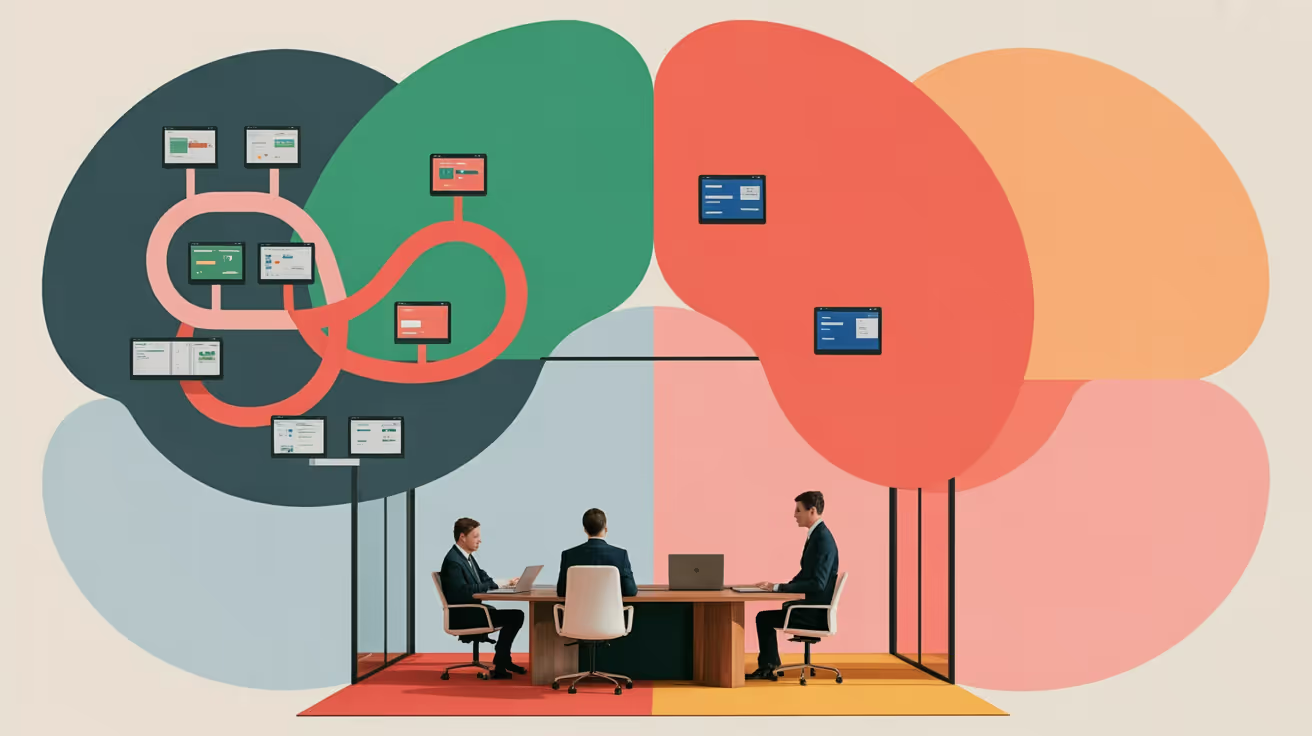
Here's the thing about ERPs that vendors won't tell you: they're built on the assumption that all businesses fundamentally work the same way. They believe that with enough configuration, modules, and consultants, they can make their horizontal solution fit your vertical needs.
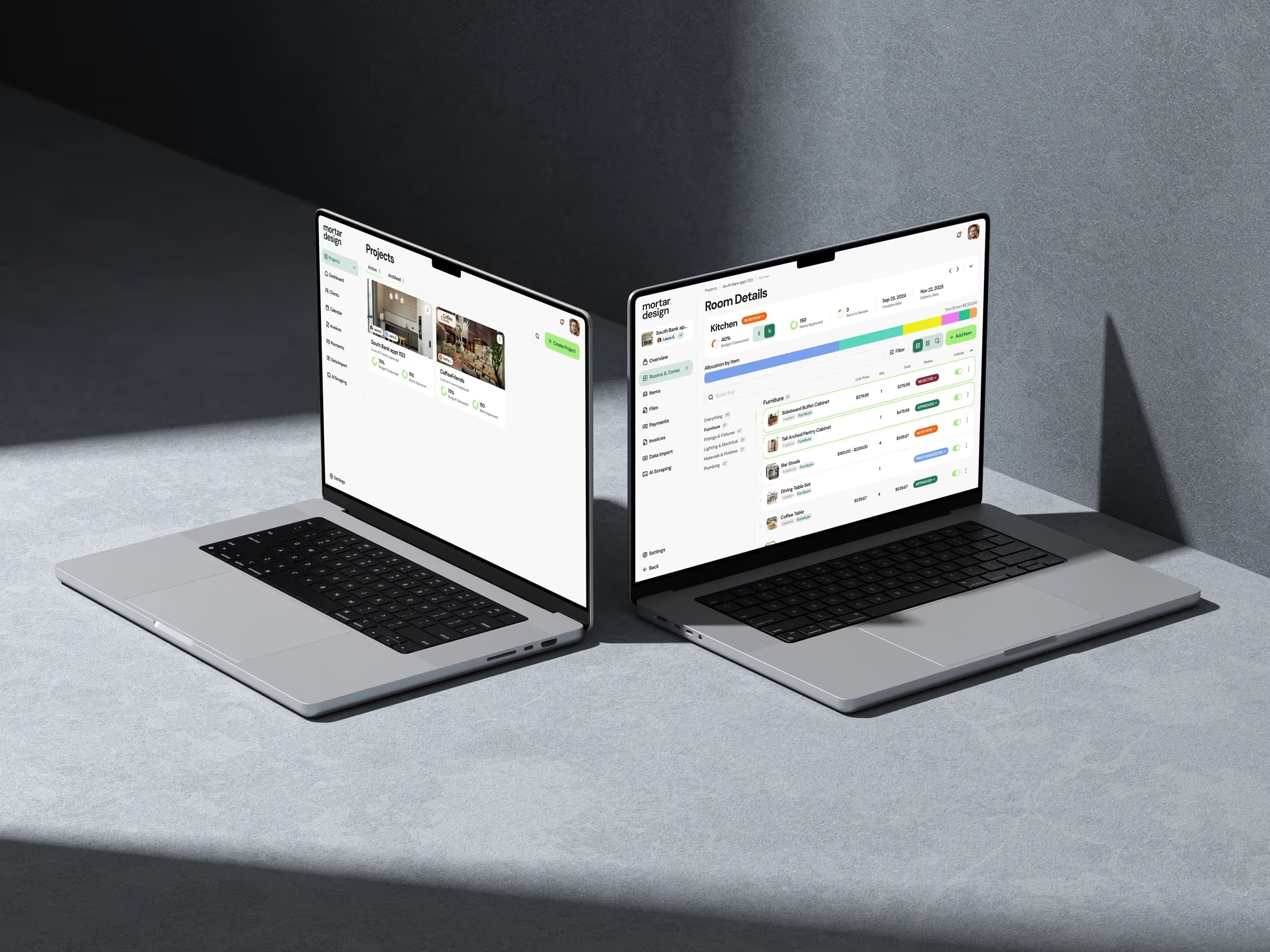
We've taken the opposite approach with our vertical SaaS products. When we built software for interior designers, we didn't start with generic project management and try to configure it. We started by shadowing designers for weeks, understanding how they source materials, manage client approvals, and handle vendor relationships. The result? Software that speaks their language from day one.
The difference isn't just philosophical—it's practical. ERPs require you to change how you work to fit the software. Vertical SaaS changes how the software works to fit you. This might sound like marketing fluff, but the impact on adoption rates is dramatic. We've seen vertical SaaS products hit 90% user adoption within 30 days, while ERP modules often struggle to break 50% after six months.
When Vertical SaaS Crushes ERP Performance
Let me be clear about something: vertical SaaS isn't always the answer. But in specific scenarios, it absolutely destroys ERP performance. Here's what we've observed across hundreds of implementations.
Speed to value is the first massive differentiator. We recently helped a recruiting firm implement specialized applicant tracking software. They were live in two weeks. Their competitor spent eight months configuring SAP SuccessFactors and still didn't have half the features they needed. The vertical solution understood recruiting workflows out of the box—no configuration gymnastics required.

Industry-specific features are another game-changer. When we work with real estate associations, they need member directories, event management, and dues tracking that integrate seamlessly. Sure, you could probably configure Salesforce to do this. But why spend months building what already exists in purpose-built association management software? The vertical solutions we implement come with these features refined by thousands of similar organizations.
The cost difference often shocks people. Enterprise ERPs can run $50,000 to $500,000 just for implementation, not counting annual licenses. Meanwhile, most vertical SaaS products cost $100-500 per user per month and can be implemented in weeks. For a 50-person interior design firm, that's the difference between a $300,000 ERP project and a $30,000 annual SaaS investment that actually gets used.
Real Examples from the Trenches
We worked with an interior design agency that tried implementing NetSuite for three years. They spent $180,000 on licenses and consulting, but designers still tracked projects in spreadsheets because the system was too cumbersome. We replaced it with vertical design management software that cost $15,000 annually. Within a month, every designer was using it daily because it matched their actual workflow—from mood boards to purchase orders.

Another client, an HR consulting firm, attempted to use Microsoft Dynamics for applicant tracking. The generic CRM module required so much customization that candidates were falling through the cracks. We implemented a vertical HR tech solution that understood job requisitions, candidate pipelines, and placement tracking natively. Time-to-fill dropped by 40% in the first quarter.
These aren't edge cases. We see this pattern repeatedly: organizations forcing themselves into horizontal ERP molds when vertical solutions would serve them better.
When ERPs Actually Make Sense
Now, I'm not here to bash ERPs entirely. There are legitimate scenarios where they're the right choice. After building software for dozens of industries, we've identified clear patterns for when ERPs earn their keep.
Complex manufacturing operations genuinely benefit from integrated ERP systems. When you're managing supply chains across continents, multi-level BOMs, and complex inventory requirements, you need that Swiss Army knife. The integration between procurement, manufacturing, and distribution in a well-implemented ERP can't be matched by connecting multiple vertical solutions.
Multi-entity corporations with standardization needs are another strong ERP use case. If you're running 15 subsidiaries that need consolidated reporting, shared services, and inter-company transactions, the overhead of maintaining 15 different systems becomes untenable. ERPs provide that single source of truth across complex organizational structures.
Highly regulated industries sometimes require ERPs for compliance reasons. Pharmaceutical companies, aerospace manufacturers, and defense contractors often need the audit trails, change management, and validation processes that mature ERPs provide out of the box. Trying to achieve FDA or AS9100 compliance with a patchwork of vertical solutions is asking for trouble.
The Integration Question
The biggest legitimate criticism of vertical SaaS is integration complexity. When you're running five different best-of-breed solutions, getting them to talk to each other can become a full-time job. We've addressed this at Dazlab.digital by building AI-native integration layers, but it's still a real consideration.
However, here's what ERP vendors won't tell you: their promised "seamless integration" often isn't. We've seen Fortune 500 companies running SAP with 200+ bolt-on applications because the ERP couldn't handle their specific needs. At that point, you're managing integration complexity anyway—you're just paying a lot more for the privilege.
Modern vertical SaaS platforms increasingly offer robust APIs and pre-built integrations. The ecosystem has matured dramatically in the last five years. Tools like Zapier, Make, and custom iPaaS solutions mean that connecting your vertical stack is easier than ever.
The Hidden Costs Nobody Calculates
When organizations compare vertical SaaS vs ERP, they typically look at license costs and implementation fees. But the real costs—and savings—hide elsewhere.
Training and adoption costs kill more software projects than anything else. We've tracked this across our implementations: vertical SaaS requires 80% less training time than comparable ERP modules. Why? Because the software speaks the user's language. An interior designer doesn't need to learn what a "work order" is when the system calls it a "design project" and structures it exactly how they work.
Customization is another hidden money pit. ERP vendors love to say their systems are "configurable," but configuration often means expensive customization. We worked with an agency that spent $200,000 customizing their ERP's project management module to handle creative workflows. A vertical agency management platform would have had those features standard.
The opportunity cost of slow implementation might be the biggest hidden factor. While you're spending 18 months implementing an ERP, your competitors using vertical SaaS are already optimizing their second or third iteration. In fast-moving industries, that lost time can be fatal.
The Support and Evolution Factor
Here's something we've learned building niche SaaS products: vertical vendors live or die by their specific market. When interior design workflows change, vertical vendors update their software or lose customers. When HR compliance requirements shift, HR tech platforms adapt immediately.
ERP vendors, serving every industry, can't possibly keep pace with vertical-specific changes. We've seen companies wait years for industry-critical features in their ERP while vertical competitors get updates monthly. This responsiveness gap only widens as industries evolve faster.
The support experience differs dramatically too. When you call a vertical SaaS vendor, you're likely talking to someone who understands your industry. They know what a punch list means in construction or what EEOC compliance entails in HR. Try explaining industry-specific issues to generic ERP support—it's an exercise in frustration.
Making the Right Choice for Your Organization
So how do you decide between vertical SaaS and ERP? After guiding hundreds of these decisions, we've developed a framework that cuts through vendor propaganda.
Start by mapping your core differentiators. What processes make your business unique? If your competitive advantage comes from industry-specific workflows, vertical SaaS will likely serve you better. If your advantage comes from operational scale and efficiency across diverse operations, lean toward ERP.
Consider your growth trajectory. High-growth companies in specific verticals often outgrow ERPs' ability to adapt. We've seen agencies triple in size while their vertical platform scaled effortlessly. Meanwhile, their ERP-using competitors struggled with system constraints and expensive upgrades.
Evaluate your internal capabilities honestly. Do you have the IT resources to manage complex ERP implementations and ongoing customization? Or would you rather have your team focused on core business activities? Vertical SaaS typically requires 90% less IT overhead.
The best software decision isn't about features or price—it's about alignment with how your business actually operates and where it's headed.
The Hybrid Approach
Increasingly, we're seeing smart organizations take a hybrid approach. They use ERP for core financial management and compliance while deploying best-of-breed vertical solutions for industry-specific operations. This isn't the mess it used to be—modern integration platforms make this architecture viable.
For example, we recently architected a solution for a professional services firm using QuickBooks for financials, a vertical PSA tool for project management, and specialized HR software for recruiting. Total cost: 70% less than their ERP quote. Implementation time: two months versus the proposed 18-month ERP rollout.
The key to hybrid success is choosing your integration points wisely. You don't need real-time synchronization for everything. Understanding which data needs to flow when can dramatically simplify your architecture.
The Future Belongs to Vertical Intelligence
Here's what keeps ERP vendors up at night: AI is accelerating the vertical SaaS advantage. When we build AI features into vertical products, we're training models on industry-specific data and workflows. The AI understands context in ways horizontal solutions never will.
We're seeing this play out in real time. Our interior design clients use AI that understands style preferences, vendor catalogs, and project timelines. Try getting that level of specialization from a generic ERP's AI module—you can't.
Vertical SaaS vendors are also moving faster in AI adoption. They can experiment with focused use cases and roll out improvements rapidly. ERP vendors, constrained by their massive installed bases and complex architectures, move at geological pace.
The gap between vertical and horizontal solutions will only widen as AI capabilities expand. Specialized knowledge and context become more valuable, not less, in an AI-powered world.
After 25 years in this business, I've learned that the best technology decisions aren't about choosing the most features or the biggest vendor. They're about finding solutions that understand your world and help you work better within it. For most organizations, that means vertical SaaS. But knowing when to break that rule—that's where experience matters.
If you're wrestling with this decision, we'd love to share more specific insights about your industry. At Dazlab.digital, we've helped organizations navigate this choice and build solutions that actually get used. Reach out if you want to discuss what makes sense for your specific situation.
Frequently Asked Questions
What's the main difference between vertical SaaS and ERP systems?
The fundamental difference is approach: ERPs are horizontal solutions that require businesses to adapt their processes to fit the software through extensive configuration. Vertical SaaS solutions are built specifically for one industry, with workflows and features that match how that industry actually operates. This means faster implementation, higher adoption rates, and less need for customization.
When should I choose an ERP over vertical SaaS?
ERPs make sense in three main scenarios: complex manufacturing operations with multi-level supply chains, multi-entity corporations needing standardized processes and consolidated reporting, and highly regulated industries requiring specific compliance features. If you need deep integration across diverse business units or have complex inter-company transactions, an ERP's unified architecture provides value that's hard to replicate with multiple vertical solutions.
What are the real cost differences between vertical SaaS and ERP?
Beyond the obvious license fees (ERPs can cost $50,000-$500,000 to implement vs. $100-500 per user monthly for vertical SaaS), the hidden costs are significant. Vertical SaaS requires 80% less training time, minimal customization costs, and can be implemented in weeks versus months. For a 50-person company, this often means the difference between a $300,000 ERP project and a $30,000 annual SaaS investment.
Can I use both vertical SaaS and ERP together?
Yes, and increasingly this hybrid approach makes sense. Many organizations use ERP for core financials and compliance while deploying vertical SaaS for industry-specific operations. With modern integration platforms, this architecture is much more viable than in the past. The key is choosing your integration points wisely—not everything needs real-time synchronization.
How does AI impact the vertical SaaS vs ERP decision?
AI is accelerating the vertical SaaS advantage significantly. Vertical solutions can train AI models on industry-specific data and workflows, delivering contextual intelligence that generic ERPs can't match. Vertical SaaS vendors are also implementing AI features faster due to their focused scope and agile architectures, while ERP vendors move slowly due to their complex, multi-industry constraints.
Related Reading

Dazlab is a Product Studio_
Our products come first. Consulting comes second. Whichever path you take, you’ll see how a small team can deliver outsized results.