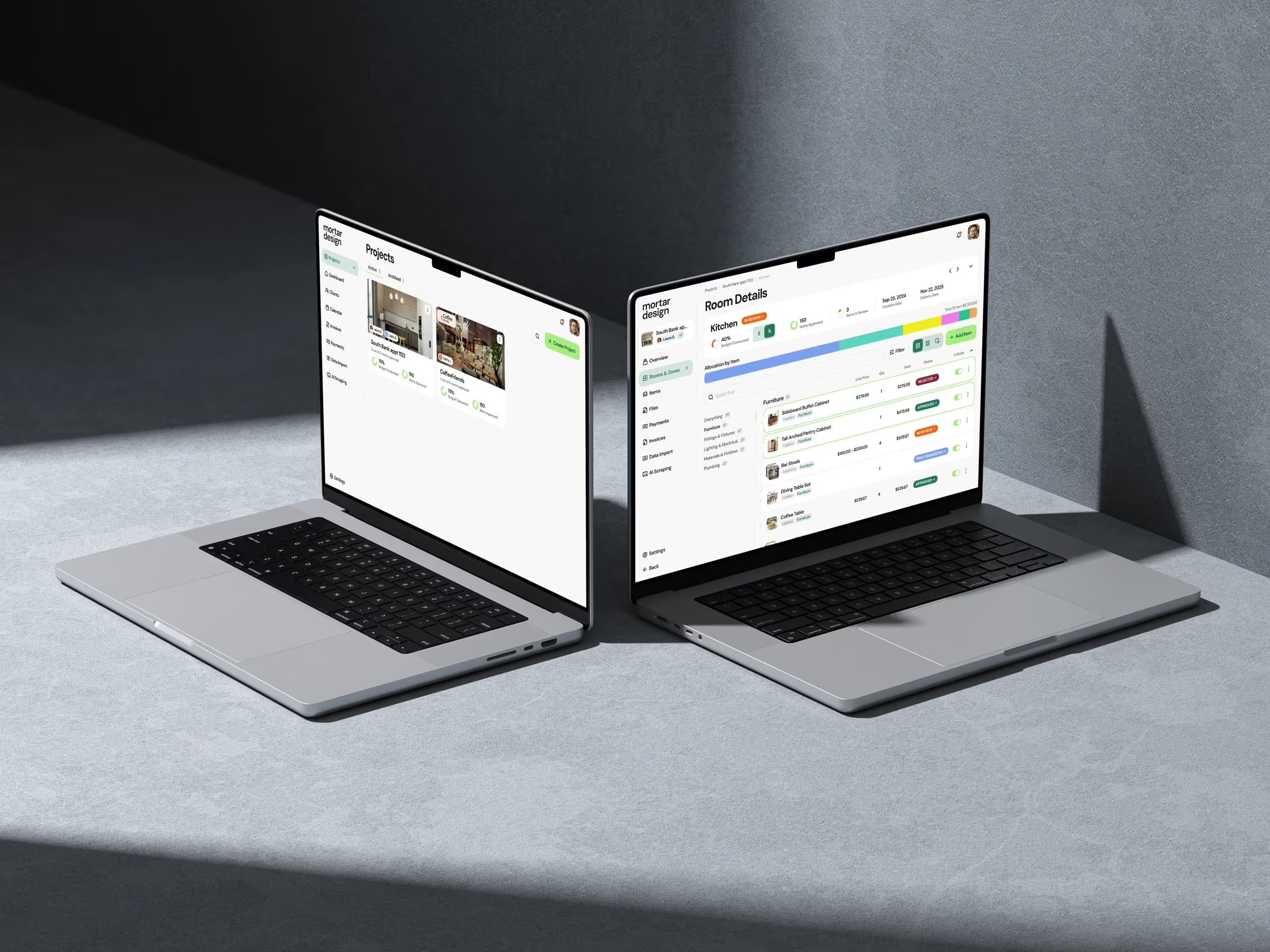

I've built software for 25 years. Started as a developer, ran product teams, founded companies, and now we run Dazlab.digital where we build niche SaaS products. I've seen every possible way to build an MVP — the disasters, the surprises, and the rare times everything actually worked.
This article is part of our complete guide to SaaS MVP development.

Here's what nobody tells you about building your first SaaS MVP: the decision between in-house, agency, or freelance isn't about budget or timeline. It's about understanding what you're actually building and being honest about what you don't know.
Most founders get this wrong because they're asking the wrong question. They ask "Who should build this?" when they should ask "What am I actually trying to build?" The answer changes everything.
The Real Cost of Building Wrong
Last month, I talked to a founder who spent $180,000 on an MVP that nobody wanted. Beautiful code. Perfect architecture. Zero customers. The agency they hired did exactly what they asked for — that was the problem. They asked for the wrong thing because they didn't know what they didn't know.

The expensive mistake isn't picking the wrong development approach. It's not understanding that an MVP is a learning tool, not a product. Once you get that, the in-house vs agency vs freelance decision becomes much clearer.
An MVP isn't a smaller version of your final product. It's the fastest way to learn if anyone cares about the problem you're solving.
When In-House Actually Makes Sense
Everyone defaults to hiring developers first. It feels like progress. You post job listings, interview candidates, make offers. You're building a company! Except you're usually building the wrong thing.
In-house development makes sense in exactly three scenarios. First, when you have deep technical requirements that are core to your business. If you're building developer tools or infrastructure software, you probably need technical founders or early engineering hires. Second, when you've already validated demand and need to scale fast. Third, when your competitive advantage is technical innovation, not market insight.
For everyone else? You're probably wasting time and money. I've watched too many founders spend six months hiring, another three months onboarding, only to realize they built the wrong product. Now they have a team optimized for building the thing nobody wants.
The real killer with in-house teams isn't the cost — it's the commitment. Once you hire developers, you're psychologically invested in whatever they build. You'll convince yourself the product just needs "one more feature" instead of admitting you're solving the wrong problem. We see this constantly at Dazlab.digital when companies come to us after burning through their first round trying to make a failed MVP work.
Here's what actually works: if you're going in-house, hire one senior developer who's built SaaS before. Not five juniors. Not a "full team." One person who can ship an actual MVP in 6-8 weeks. If you can't find or afford that person, you shouldn't go in-house.
The Agency Reality Check
Agencies get a bad reputation in startup circles. "Too expensive." "They don't get startups." "They over-engineer everything." All true for most agencies. But that's like saying restaurants are bad because McDonald's exists.
The right agency — one that specializes in SaaS MVPs — can be your fastest path to market. We've built dozens of MVPs at Dazlab.digital, and our sweet spot is founders who know their industry cold but need technical execution. They come to us with deep market knowledge. We help them translate that into software that actually works.

Good agencies bring three things you can't easily replicate: pattern recognition from building multiple products, established processes that prevent common mistakes, and the ability to scale up or down without hiring/firing. When we work with interior design firms or HR companies, we're not starting from scratch. We've seen what works and what doesn't in those verticals.
The agency trap is picking one that builds websites, not products. Most agencies are optimized for marketing sites and corporate projects. They'll happily take your money to build your SaaS, but they're learning on your dime. Look for agencies that only do SaaS, have shipped actual products you can use, and talk more about customer validation than technical architecture.
Price-wise, expect $50,000-150,000 for a real MVP from a good agency. Sounds expensive until you compare it to six months of salaries for an in-house team that might build the wrong thing. The key is working with an agency that pushes back on features and helps you find the actual MVP, not the MVP you think you want.
The Freelance Wildcard
Freelancers are the most variable option. I've seen solo freelancers outperform entire teams. I've also seen projects disappear when the freelancer got a full-time offer or decided to backpack through Thailand.
The freelance model works best for technical founders who need specific expertise. You know exactly what needs to be built, you can manage the project, but you need someone to write the React frontend or set up the infrastructure. It's surgical support, not full product development.
Where freelancers struggle is the full MVP build. It's not a skills issue — plenty of freelancers could build your entire product. It's a bandwidth and risk issue. One person juggling multiple clients while trying to build your entire product is a recipe for delays and quality issues.
We often bring in freelance specialists at Dazlab.digital for specific pieces — a machine learning expert for an AI feature, a mobile developer for the iOS app. But the core product work needs more stability and coordination than most freelance arrangements provide.
If you go freelance, here's what works: hire for specific, bounded work. "Build the authentication system" not "build my startup." Pay by the milestone, not the hour. And always have a backup plan because even the best freelancers sometimes disappear.
The best freelancers are usually too busy to take on full MVP projects. If someone has wide-open availability for a three-month project, ask yourself why.
The Hybrid Approach Nobody Talks About
Here's what we've learned building products: the pure models rarely work. Pure in-house is too slow. Pure agency is too detached. Pure freelance is too risky. The magic happens when you combine approaches strategically.

Start with an agency or experienced freelancer to build your MVP. Not the whole product — the actual minimum viable piece that tests your core hypothesis. This might be a landing page with a Typeform backend. It might be a Zapier workflow connecting existing tools. It might be a simple web app that does one thing well.
Once you have validation — real users saying "yes, I need this" — then think about team building. Hire a technical lead who can work with the agency/freelancer to understand what was built and why. Start taking ownership of pieces while keeping the external team for surge capacity and specialized work.
This hybrid approach gives you speed to market, risk mitigation, and a growth path. You're not betting everything on hiring the right people before you know what you're building. You're also not fully dependent on external teams once you start scaling.
We've transitioned several products this way at Dazlab.digital. We'll build the MVP, help the client validate it with real users, then gradually hand off to their team as they hire. Some clients keep us on for feature development. Others take it fully in-house. The point is optionality — you're not locked into one approach.
Making the Decision: A Practical Framework
Forget the generic advice about "considering your budget and timeline." Here's how to actually decide:
Choose in-house when: You have a technical co-founder, you've already validated demand with a prototype, or your competitive advantage is deep technical innovation. Don't choose in-house just because it feels more "serious" or you want to "build a team." Build the product first, then the team.
Choose an agency when: You need to move fast, you have budget but not time, or you're entering a space where specialized knowledge matters. The right agency brings patterns and practices from similar products. At Dazlab.digital, when we build HR tech or real estate software, we're applying lessons from previous products in those verticals.
Choose freelancers when: You need specific skills for bounded projects, you have technical leadership to manage the work, or you're augmenting an existing team. Don't choose freelancers for your entire MVP unless you're technical enough to effectively be the lead developer yourself.
The meta-lesson? Your first decision isn't who builds your MVP. It's understanding what an MVP actually is for your market. Once you nail that, the build approach becomes obvious.
Most founders overthink the building and underthink the learning. They spend months debating technical stacks when they should spend weeks talking to customers. They hire for scale before proving demand. They optimize for the product they might build instead of the learning they need right now.
The Path Forward
Building a SaaS MVP isn't about making the perfect technical decision. It's about maximizing learning while minimizing risk. Sometimes that means hiring an agency. Sometimes it means finding one great freelancer. Sometimes it means doing it yourself.

The founders who succeed aren't the ones with the best development teams. They're the ones who learn the fastest. Pick the approach that helps you do that, and you'll be ahead of 90% of your competition who's still debating technical architecture for a product nobody wants.
At Dazlab.digital, we've helped dozens of companies navigate this decision. Sometimes we build their MVP. Sometimes we tell them to hire a freelancer. Sometimes we help them structure their first technical hire. The right answer depends on your specific situation, and being honest about that is the first step to building something people actually want.
Frequently Asked Questions
What's the typical cost difference between agency vs freelance for building a SaaS MVP?
Based on the article's insights, a good agency typically charges $50,000-150,000 for a real MVP, while freelance costs vary widely depending on the scope. However, the article emphasizes that freelancers work best for specific, bounded tasks rather than full MVP builds. The real cost consideration isn't just the price tag, but the risk of building the wrong product — which the article notes happened to a founder who spent $180,000 on an MVP nobody wanted.
When should I definitely NOT build my SaaS MVP in-house?
According to the article, you should avoid in-house development unless you meet one of three specific criteria: you have deep technical requirements core to your business, you've already validated demand and need to scale fast, or your competitive advantage is technical innovation. The article strongly warns against defaulting to hiring developers just because it "feels like progress" or seems more "serious." The author notes that most founders waste time and money going in-house too early, before they've validated what to build.
What's the hybrid approach for building a SaaS MVP?
The hybrid approach combines the best of all models: start with an agency or experienced freelancer to build your actual MVP (which might just be a landing page with a Typeform backend or a simple web app). Once you have validation from real users, hire a technical lead who can work with the external team to understand what was built. Gradually transition ownership while keeping external support for surge capacity. This approach provides speed to market, risk mitigation, and flexibility as you grow.
How do I know if an agency is good for SaaS MVP development?
The article identifies several key indicators: look for agencies that only do SaaS (not websites or corporate projects), have shipped actual products you can use, and talk more about customer validation than technical architecture. Good agencies bring pattern recognition from building multiple products and help you find the actual MVP, not the MVP you think you want. Avoid agencies that are "learning on your dime" or those optimized for marketing sites rather than products.
What's the most common mistake founders make when choosing how to build their MVP?
The fundamental mistake is asking "Who should build this?" instead of "What am I actually trying to build?" The article emphasizes that founders often misunderstand that an MVP is a learning tool, not a product — it's the fastest way to learn if anyone cares about the problem you're solving. This misunderstanding leads to poor decisions like hiring full development teams before validating demand or spending months debating technical architecture instead of talking to customers.
Related Reading

Dazlab is a Product Studio_
Our products come first. Consulting comes second. Whichever path you take, you’ll see how a small team can deliver outsized results.