
After 25 years of shipping software and now running Dazlab.digital, I've sat on both sides of this decision more times than I can count. I've built in-house teams, hired studios, been the studio getting hired, and watched plenty of both approaches crash and burn.
This article is part of our complete guide to AI-native software development.

Here's the thing most articles won't tell you: there's no universally right answer. But there are clear signals that point you toward one path or the other. I'm going to share what I've learned from actually doing this work, not from reading case studies.
This isn't a pitch for hiring studios. Sometimes building in-house is absolutely the right call. Sometimes it's a disaster waiting to happen. Let's talk about how to tell the difference.
The Real Cost of Building AI Capabilities In-House
Everyone understands salaries. What catches teams off guard is everything else. When we consult with companies considering their first AI initiatives, I always start with the true costs they haven't calculated yet.
First, there's the talent problem. AI engineers worth their salt are getting offers from everywhere right now. You're not just competing on salary — you're competing with equity packages, remote flexibility, and the chance to work on cutting-edge problems. One client recently told me they spent four months trying to hire a senior ML engineer. They finally found someone, only to have them poached three months later by a FAANG company offering 40% more.
But let's say you solve the hiring problem. Now you need infrastructure. AI development isn't like traditional software where you can get by with basic AWS setup. You need GPU resources, proper data pipelines, experiment tracking, model versioning, and monitoring systems. Industry estimates suggest initial infrastructure setup alone can run $50,000-$150,000 before you write a single line of model code.

When Studios Make Sense (And When They Don't)
Studios aren't magic. We're just teams that have made certain mistakes enough times to avoid them. But that experience comes with trade-offs you need to understand.
The biggest advantage of working with an AI software development partner is speed to initial value. When we built an AI-powered matching system for an HR tech client, we delivered a working prototype in six weeks. They'd already spent four months trying to build it internally without a functioning demo. The difference? We'd built similar systems before. We knew which approaches would dead-end and which had promise.

But here's where studios fall short: deep, long-term integration with your core business. If AI is going to be your primary differentiator — if it IS your product — you probably need in-house expertise eventually. The question is when 'eventually' arrives.
I've seen companies make both mistakes. They hire studios for everything and never develop internal capabilities, becoming permanently dependent on external partners. Or they insist on building everything in-house from day one, burning cash and time reinventing wheels that studios have already perfected.
The sweet spot is often a hybrid approach: use studios to prove concepts and build initial systems, then selectively bring capabilities in-house as you understand what you actually need.
The Domain Knowledge Problem Nobody Talks About
Here's something that surprised me when I started Dazlab.digital: domain expertise often matters more than AI expertise. You can teach a good engineer AI techniques. Teaching an AI expert the intricacies of interior design workflows or real estate association operations takes much longer.

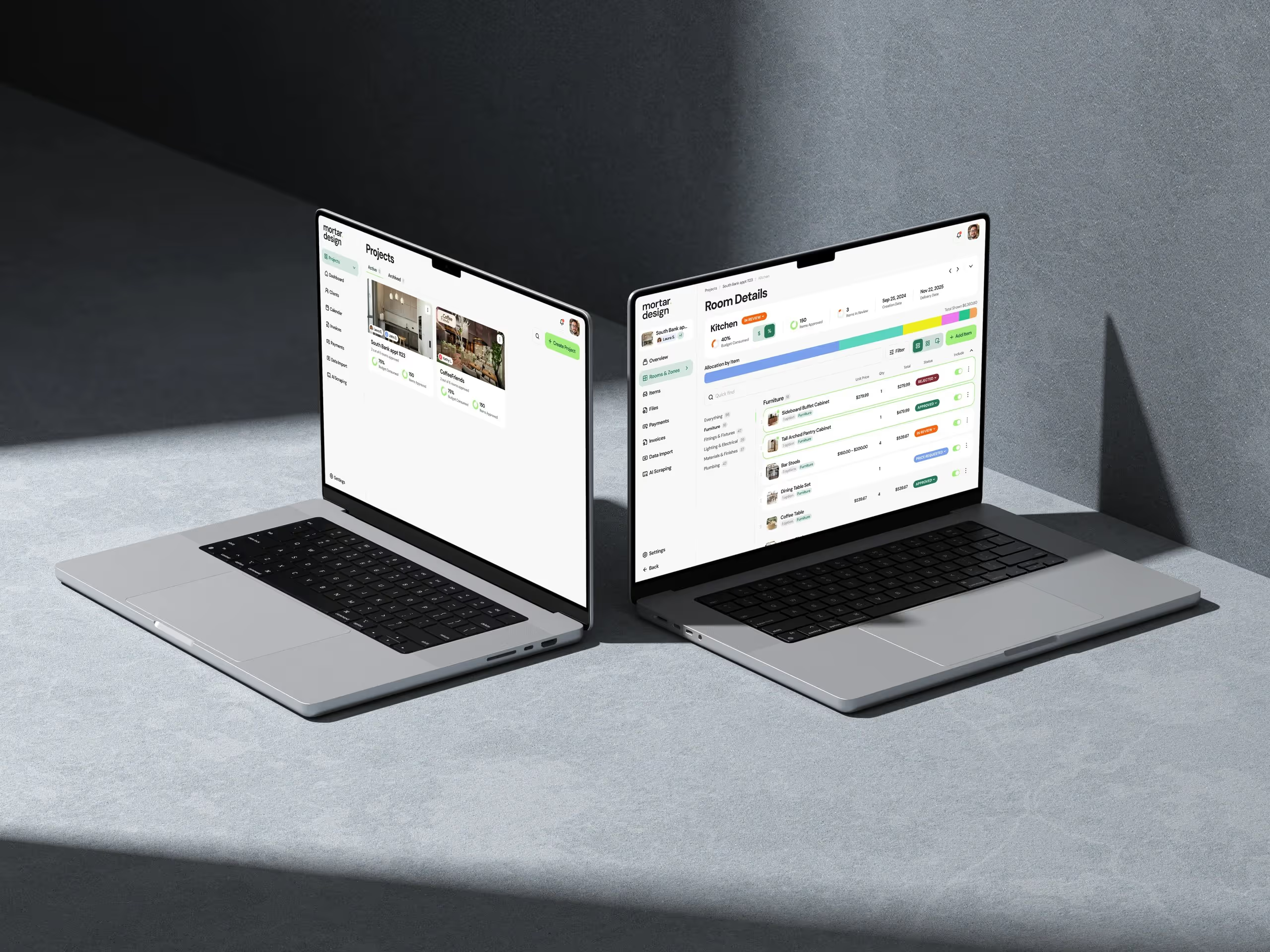
This is where the hire AI development studio versus in-house debate gets interesting. The best studios specialize. We focus on vertical SaaS because we've spent years understanding how these specific industries work. When we built project management AI for interior designers, half the value came from understanding how designers actually think about projects, not from fancy algorithms.
But if you're in a highly regulated industry or have truly unique processes, studios might struggle. I turned down a pharmaceutical client last year because I knew we'd spend more time learning FDA compliance than building useful features. They needed in-house teams who could live and breathe their constraints.
The question to ask yourself: Is your AI challenge more about applying existing techniques to your domain, or creating genuinely novel approaches? Studios excel at the former. The latter might require dedicated internal research.
Speed, Quality, and Control: Pick Two
This is the iron triangle of AI development, and it's even more rigid than in traditional software. Let me explain why through real examples.
Speed and Quality: This is the studio sweet spot. We can move fast because we've built similar systems before. We maintain quality because we've learned from past mistakes. But you sacrifice some control — we'll push back on features we know won't work, and we'll build things our way because that's what we know succeeds.
Quality and Control: This is the in-house path for companies that can afford patience. You get exactly what you want, built exactly how you want it. But it takes time. Lots of time. One enterprise client spent 18 months building an AI system internally that a studio could have delivered in three months. But they got exactly what they needed for their specific use case.
Speed and Control: This is the danger zone. You can try to move fast while maintaining full control by hiring contractors or building a rushed in-house team. I've never seen this work well. You get neither the experience of a seasoned studio nor the dedication of a proper internal team.
Making the Decision: A Practical Framework
After years of these conversations, I've developed a simple framework. It's not perfect, but it's been surprisingly accurate.
Consider hiring an AI development studio when:
Your AI needs are clear but not unique. You want recommendation engines, content generation, classification systems, or other well-understood applications. Studios have built these before and can adapt them to your needs quickly.
Time to market matters more than perfect customization. If you need to validate an AI concept quickly or beat competitors to market, studios can compress months into weeks.
You lack internal AI expertise and aren't sure what you need. Good studios don't just build — they educate. We help clients understand what's possible and what's not, setting them up for future success whether they continue with us or not.
Your core business isn't AI. If you're an interior design platform adding AI features, or an HR system adding intelligent matching, AI enhances your product but isn't your product.
Consider building in-house when:
AI is your core differentiator. If your entire value proposition relies on proprietary AI techniques, you need internal expertise. No studio will care about your algorithms as much as you do.
You have genuinely novel problems. If you're pushing the boundaries of what's possible in AI, you need researchers, not implementers. Studios are great at applying known techniques, less so at inventing new ones.
You can afford the learning curve. This means both time and money. Budget at least 12-18 months before expecting production-ready systems, and be prepared for some expensive dead ends.
You already have AI talent or can reliably attract it. If you've got strong technical leadership who understand AI development, building on that foundation often makes sense.
The Hybrid Approach: Best of Both Worlds
The smartest companies I work with don't treat this as a binary choice. They use studios strategically while building internal capabilities. Here's how that typically looks.
Phase one: Hire a studio to build an MVP or proof of concept. This validates that AI actually solves your problem and gives you a working system quickly. More importantly, you learn what questions to ask and what skills you actually need.

Phase three: Gradually shift ownership internal while keeping the studio engaged for specialized projects or surge capacity. You might own the core recommendation engine but hire the studio to build a new computer vision feature.
This approach costs more initially than pure outsourcing, but less than building everything in-house from scratch. More importantly, it reduces risk. If your AI initiatives don't pan out, you haven't built a huge team you need to redirect. If they succeed wildly, you have the foundation to scale internally.
Questions to Ask Before Deciding
Whether you're leaning toward hiring internally or engaging a studio, ask yourself these questions first. I use these with every client, and the answers usually make the right path clear.
What happens if your first approach fails? Studios absorb this risk — it's built into our model. Internal teams mean you're paying for the learning curve directly. Which can you afford?
How will you measure success in the first six months? If you need production-ready features, studios often deliver faster. If you need deep research and experimentation, internal teams might explore more thoroughly.
What's your competitive advantage? If it's operational excellence in your industry, let studios handle the AI while you focus on what you do best. If it's technical innovation, you probably need internal expertise.
Can you attract and retain AI talent? Be honest about this. Look at your location, compensation packages, and technical culture. If you're not confident about attracting top talent, studios might be more realistic.
How quickly do you need to show results? Boards and investors often want to see AI initiatives bearing fruit quickly. Studios can deliver visible progress faster, even if long-term ownership shifts internal.
The decision to hire an AI development studio versus building in-house isn't permanent. The best approach often evolves as your needs become clearer and your capabilities grow. What matters is making an informed decision based on your current reality, not on where you hope to be in two years.
At Dazlab.digital, we've helped companies navigate this decision both ways. Sometimes we build systems and hand them off. Sometimes we become long-term partners. Sometimes we tell clients they really should hire internally instead. The right answer depends entirely on your specific situation.
If you're wrestling with this decision and want to talk through your specific situation, we're always happy to share what we've learned. Even if the answer is that you should build internally, we'd rather see you succeed than make the wrong choice. That's how we've built lasting relationships over 25 years in this business — by being honest about when we can help and when we can't.
Frequently Asked Questions
How long does it typically take to build AI capabilities in-house versus hiring a studio?
Based on the experience shared in the article, building in-house typically requires 12-18 months before expecting production-ready systems, with additional time for hiring (which can take 4+ months for senior roles). Studios can often deliver working prototypes in 6 weeks and production systems in 3 months for established AI applications. However, truly novel AI problems may take similar timeframes regardless of approach.
What are the hidden costs of building an AI team internally?
Beyond salaries, companies face significant infrastructure costs ($50,000-$150,000 for initial setup), the risk of talent being poached by larger companies, and the expensive learning curve where teams might burn through six months and hundreds of thousands of dollars before finding the right approach. There's also the opportunity cost of not having working AI features while building internal capabilities.
When should a company definitely choose in-house development over a studio?
Companies should build in-house when AI is their core differentiator and entire value proposition, when they're solving genuinely novel AI problems that require research rather than implementation, when they can afford a 12-18 month learning curve, or when they already have strong AI talent or technical leadership who understand AI development.
What's the hybrid approach for AI development?
The hybrid approach involves three phases: First, hire a studio to build an MVP or proof of concept quickly. Second, bring on 1-2 internal AI engineers who work alongside the studio team to learn and start owning components. Third, gradually shift ownership internal while keeping the studio engaged for specialized projects or surge capacity. This reduces risk while building long-term capabilities.
How do you measure success when choosing between studio and in-house AI development?
Success metrics depend on your goals. If you need production-ready features in the first six months, studios typically deliver faster results. For deep research and experimentation, internal teams might explore more thoroughly. The article emphasizes asking what happens if your first approach fails – studios absorb this risk as part of their model, while internal teams mean you're paying for the learning curve directly.
Related Reading
Dazlab is a Product Studio_
Our products come first. Consulting comes second. Whichever path you take, you’ll see how a small team can deliver outsized results.