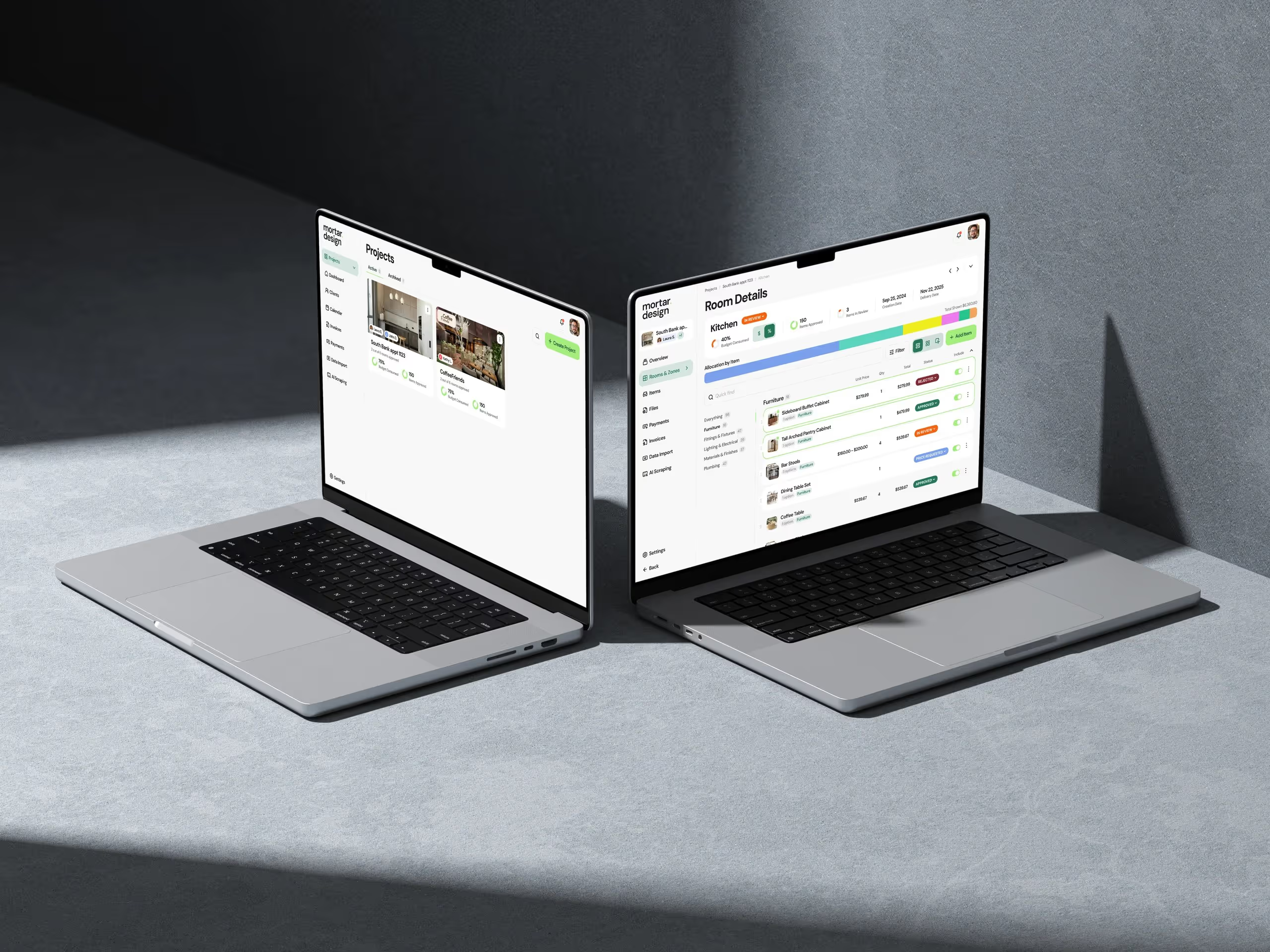

We moved Mortar, our project and budget tool for interior designers, from pricing tiers to a single plan with everything included. We did it because choosing a tier was costing buyers attention they should have spent on their actual problem, and because our product is small and focused enough that tiers were splitting up features nobody wanted split. It's a bet, not a proven result yet, and this post sets out the reasoning, the trade-offs and what we're watching.
What changed
Mortar used to have three tiers: Starter, Professional and Studio, each adding a bit more than the last. They looked sensible on a spreadsheet.
In September 2026 we replaced them with one plan. One price per seat per month, every feature included, a 7-day trial, and the payment fees published on the same page. The current price is on Mortar's pricing page (at the time of writing, $59 per seat per month).
That's the whole pricing model now. There's no "which plan do I need?" left to answer.
Why we dropped the tiers
Tier choice is a tax on attention
Every Mortar demo had the same detour. Somewhere in the conversation, usually right after the designer had seen the part of the product they cared about, the question came up: "which plan do I need?"
And the answer was nearly always "the middle one, probably".
That detour cost about five minutes a demo. Five minutes where we weren't talking about the designer's actual problem: the sofa with a long lead time, the client who approves things by text message, the deposit that never quite gets reconciled against the final invoice. Instead we were comparing feature lists.
A buyer only has so much attention for a new tool. Every decision you put in front of them before they've seen the value spends some of it. Pricing tiers are one of those decisions, and for a niche product they're often the least useful one. We now write this down as a studio rule: fewer choices for the buyer.
Tiers in a niche product mostly gate things everyone needs
Generic SaaS tiers usually work by holding back features. Reports on the top plan, integrations on the middle one, and so on.
That logic gets awkward when the product is built around one workflow for one kind of business. An interior designer needs the budget, the procurement schedule, the client portal and invoicing on the same project. Taking one of those away to create a cheaper plan doesn't make a lighter version of Mortar. It makes a version with a hole in the middle.
We'd already been leaning this way inside the product. When mood boards got their design upgrade in July 2026 (grounding shadows, palettes sampled from the photos, textured backgrounds), we made a point of not gating any of it. If a studio had boards, it had all of it. When we added team roles, we kept them to owner, admin and member, with no permission matrix to configure. Tiered pricing was the last place where we were still asking designers to make choices they didn't need to make.
"The middle one, probably" is a signal
When nearly everyone picks the same tier, the other tiers aren't really choices. The bottom one is a decoy and the top one is an anchor. That's a common pricing pattern, and it works in plenty of markets.
But we're a small studio selling to small studios. Our buyers are owners who do their own admin. They notice when a pricing page is built to steer them, and it doesn't help them trust what comes next. One plan is easier to explain, and easier to stand behind.
The trade-offs
We didn't make this change because it's free. It has real costs, and it's worth being straight about them.
| What we gave up | Why we accepted it |
|---|---|
| A cheaper entry point for very small studios | Per-seat pricing already scales down. A solo designer pays for one seat, not for a "studio" plan |
| An upgrade path to sell later | Revenue now grows with seats, which tracks whether the studio is actually using Mortar with its team |
| Price discrimination between buyers who'd pay more and less | We'd rather have one price we can explain in a sentence than a model we have to defend in a demo |
| A neat "most popular" badge on the pricing page | Nothing to badge. There's only one plan |
The honest version: one plan feels like leaving money on the table. Some studios would happily have paid more for a "premium" badge. Some smaller ones may decide one seat is still more than they want to spend. Tiers exist for good reasons, and a lot of the generic advice on vertical SaaS pricing models is right for products with a wider spread of customers than ours.
The fees are a separate question. Mortar takes payments from clients on the designer's behalf, and the fees for that are published on the pricing page next to the plan, rather than tucked into a higher tier or a footnote. That was already true before the change. One plan just made the page simpler to read.
How we did it
A few practical things we'd tell another founder making the same move.
Make the product match the page. The pricing page is the easy part. The app has to agree with it: every feature available to every studio, with nothing left that hints at a plan you haven't bought. If the product still behaves like it has tiers, one plan on the website just creates confusion.
Change one thing at a time. The trial is 7 days, and we didn't want to touch anything else about the sign-up while the pricing changed. If you change the model, the trial and the onboarding in the same week, you can't tell which change did what.
Keep the fees visible. One plan with hidden fees isn't simpler, it's just a different kind of fine print. Card and bank payment fees sit on the same page as the plan.
Write down why. We put the reasoning in our studio log the week it shipped, and turned it into a rule in how we build. When someone asks in six months why there's no cheaper plan, the answer is already written.
Does this apply to our other products?
Not automatically. Handl, our financial ops product for agencies, still has Solo, Team and Agency plans today, with its payment fees the same on every plan (current pricing). Agencies vary a lot more in size and in how many people touch billing, and we haven't decided that one plan is right there.
That's deliberate. Mortar is where we're testing the idea. If it works, we'll know what to look for before touching anything else. If it doesn't, we'll have learned it on one product rather than three.
What we're watching
We haven't got results to share yet, and we're not going to pretend otherwise. Here's what we're watching, and why.
- Trial starts. The most direct test. If removing the tier decision makes it easier to start, trial starts from the pricing page should move. We said in the studio log we'd report back on this, and we will.
- Demo conversations. Whether the five-minute pricing detour actually disappears, and what fills that time instead. We expect more time on procurement and client approvals, which is where Mortar is strongest.
- Seats per studio. Per-seat pricing only works if studios add their team. If most accounts stay at one seat, that tells us something about how designers share the work.
- Questions on the pricing page. If people start asking "is there a cheaper plan?", that's the cost of the trade-off showing up, and we'll take it seriously.
What we're not doing is reading anything into a couple of weeks of numbers. Small studios buy slowly, and pricing changes take a while to show up.
What we'd tell a founder thinking about it
Start with your demos, not your spreadsheet. If buyers keep spending time on which plan to pick instead of whether the product solves their problem, the tiers are getting in the way.
Then look at what your tiers actually hold back. If it's things every customer needs, you don't have tiers. You have a full product and some partial ones. The broader product-led growth advice about reducing friction applies to the pricing page as much as the sign-up form.
And be honest with yourself about the trade-off. One plan is simpler for buyers and less flexible for you. For a focused niche product with one core buyer, we think that's the right trade. For a product with very different customers at each end, it might not be.
FAQ
Why does Mortar have only one pricing plan?
Because choosing a tier was taking time and attention away from the designer's real problem, and nearly everyone picked the middle tier anyway. One plan with every feature included is easier to understand and easier to trust. The current price is on Mortar's pricing page.
Is single-plan pricing a good idea for every SaaS product?
No. It suits focused products with one core type of buyer, where every customer needs the same core features. Products with very different customers at each end, from freelancers to large teams, often need tiers. Handl, our agency product, still has plans for that reason.
Doesn't one plan leave money on the table?
Probably, a bit. Some customers would pay more for a premium tier. We accepted that in return for a simpler buying decision and a price we can explain in one sentence.
How will you know if the change worked?
We're watching trial starts first, then what happens in demos, how many seats studios add, and whether people ask for a cheaper option. We'll share what we learn in the studio log once there's enough to say.
Is there still a free trial?
Yes. Mortar has a 7-day trial with every feature included, the same as the paid plan. Details are on the pricing page.
If you're building a niche product and want a studio that has made these calls on its own products, here's how we work.
 Consulting Inquiries