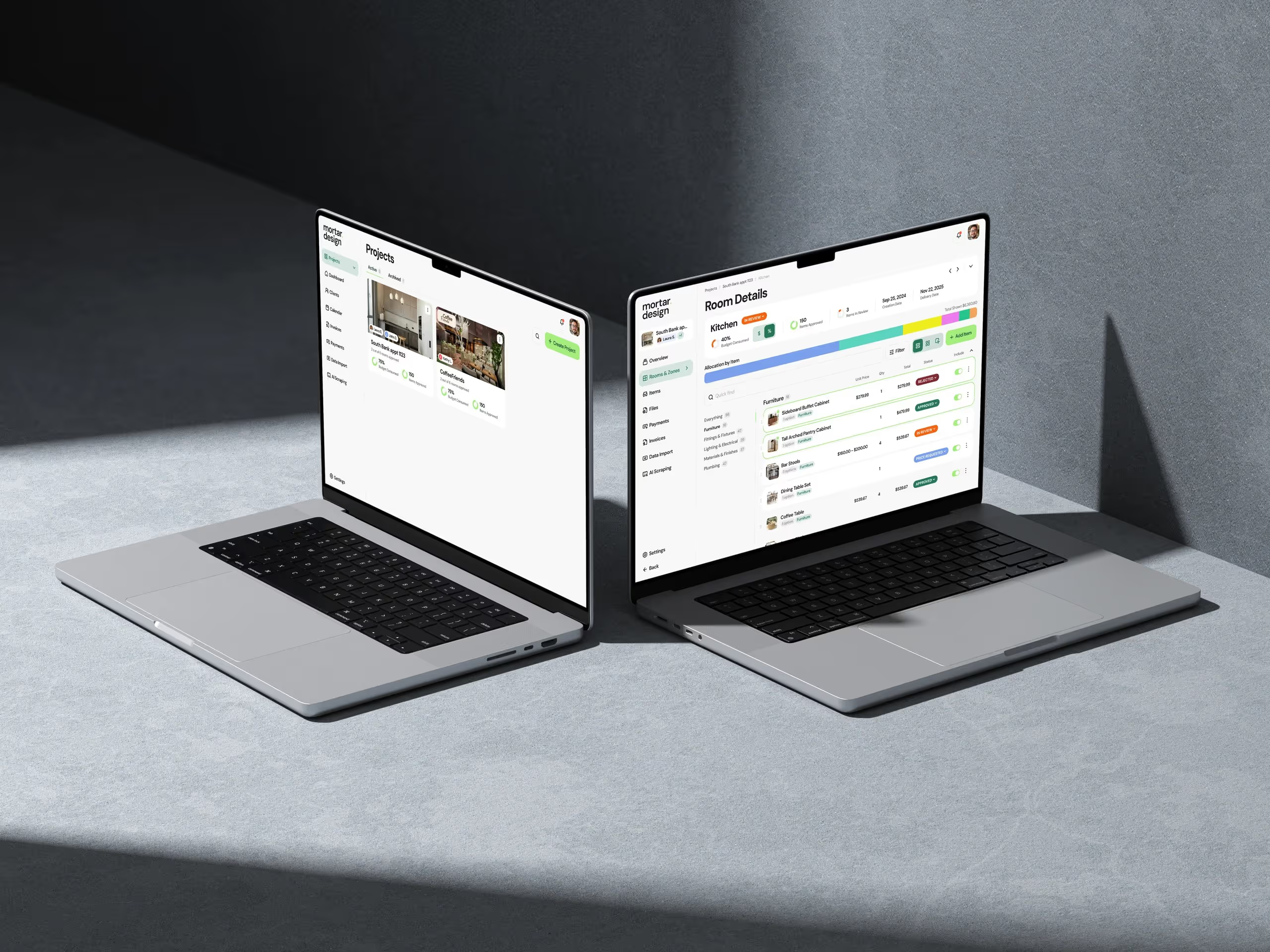

I've spent the last decade building software for niche industries, and real estate tech consistently surprises me. Not because it's cutting-edge — but because so many landlords still run their properties on spreadsheets and filing cabinets. After working with dozens of property owners and building custom solutions for real estate associations, I've seen firsthand what actually moves the needle.

Here's the thing: most property management software is built for massive property management companies, not individual landlords managing a handful of units. The result? Small landlords either overpay for bloated enterprise tools or cobble together consumer apps that weren't built for rental properties. There's a better way.
The Core Software Stack Every Landlord Actually Needs
Let's cut through the noise. After watching landlords struggle with everything from Excel hell to enterprise platforms that cost more than their monthly rental income, I've identified the essential tools that actually get used. Not the ones that look good in demos — the ones that solve real problems.
Property management software sits at the center. This isn't optional anymore. Whether you're managing two units or twenty, you need a system that handles tenant applications, lease tracking, rent collection, and maintenance requests in one place. The best platforms integrate with your bank account and automatically categorize transactions. We've seen landlords cut their administrative time by 70% just by moving off spreadsheets to a proper PMS.

Tenant Screening and Application Management
Bad tenants can destroy your returns faster than any market downturn. Yet I constantly meet landlords who still rely on gut feelings and basic credit checks. Modern tenant screening software has evolved far beyond simple credit reports. The best platforms now aggregate criminal background checks, eviction history, income verification, and even social media screening into comprehensive risk profiles.

What's changed in the last few years is the speed and depth of these checks. AI-powered screening tools can now flag potential red flags that human reviewers might miss — patterns in application data that correlate with problem tenants. One property owner I worked with discovered their "gut feeling" approach had a 40% failure rate compared to algorithmic screening. The software caught income inconsistencies and previous eviction filings that didn't show up in standard reports.
The real game-changer? Automated application workflows. Instead of manually collecting documents, calling references, and running individual checks, modern platforms handle the entire process. Applicants submit everything online, the system runs all verifications automatically, and you get a scored, ranked list of candidates. What used to take days now happens in hours.
Financial Management and Accounting Tools
Here's where most landlords fall apart. They treat rental properties like a hobby instead of a business, dumping receipts in a shoebox until tax season. Then they wonder why they can't get financing for their next property or why their accountant charges them a fortune.

Specialized real estate accounting software changes everything. Unlike generic tools like QuickBooks, these platforms understand rental property economics. They automatically separate capital improvements from repairs, track depreciation schedules, and generate the exact reports your lender needs. More importantly, they integrate with your property management system so rent payments and expenses flow through automatically.
The newest generation of financial tools goes even further. They use AI to categorize expenses, flag potential tax deductions you're missing, and even predict cash flow issues before they happen. One landlord I advised was leaving $8,000 in annual deductions on the table because they didn't understand the difference between repairs and improvements. The right software would have caught that automatically.
But the real value isn't in tax savings — it's in decision-making. When you have real-time visibility into property-level profitability, you make better decisions. Should you raise rent? Is it time to sell that problem property? Can you afford to upgrade those units? Good financial software answers these questions with data, not guesswork.
Maintenance and Work Order Systems
Nothing destroys tenant relationships faster than poor maintenance response. Yet most small landlords still handle maintenance requests through texts, calls, and sticky notes. It's a disaster waiting to happen. Missed requests lead to angry tenants, emergency repairs, and expensive lawsuits.
Modern maintenance management software creates a digital paper trail for every request. Tenants submit issues through an app with photos and descriptions. The system automatically routes requests to the right contractor based on the problem type. You get notifications, contractors get work orders, and tenants get status updates. Everything's documented.

What really matters is mobile access. Your contractors need to update work orders from the field. You need to approve expenses from your phone. Tenants expect real-time updates on their requests. Any maintenance system that requires desktop access is already obsolete.
Communication and Document Management Platforms
Landlord-tenant disputes often come down to one thing: documentation. Who said what, when? Was proper notice given? Did the tenant report that issue before it became major damage? Without proper communication records, you're flying blind in any dispute.
This is why smart landlords centralize all communication through their property management platform. Every message gets logged, timestamped, and attached to the relevant tenant or property. No more digging through text messages or email threads. When that tenant claims they reported the leak six months ago, you can pull up the complete communication history in seconds.
Document management is equally critical. Leases, inspection reports, insurance policies, contractor agreements — these documents contain your entire business. Yet most landlords store them in random folders across multiple computers. Modern document management systems use optical character recognition to make everything searchable. Need to find which leases have pet clauses? Search for "pet" and get instant results across hundreds of documents.
The latest innovation is automated document generation. Instead of manually editing lease templates for each property, the system pulls data from your property management platform and generates customized documents automatically. Lease renewals, rent increase notices, late payment warnings — all generated with correct names, dates, and amounts. No more embarrassing typos or outdated clauses.
Emerging Technologies and Future-Proofing Your Tech Stack
The real estate tech landscape is evolving faster than ever. What worked five years ago is already outdated. Smart landlords aren't just solving today's problems — they're preparing for tomorrow's opportunities.
AI-powered property valuation tools now provide real-time estimates based on market conditions, recent sales, and even social media sentiment about neighborhoods. Virtual showing platforms exploded during COVID but remain valuable for out-of-state investors and busy tenants. Blockchain-based lease agreements and rent payments are moving from experiment to reality in some markets.
But here's my advice after building software for 25 years: don't chase every shiny new tool. Focus on platforms that solve your actual problems and integrate with your existing workflow. The best technology disappears into the background, making your job easier without requiring constant attention.
Look for software with open APIs and integration capabilities. Your property management platform should talk to your accounting software. Your maintenance system should connect to your communication tools. The goal is a seamless ecosystem where data flows automatically between systems. Manual data entry is a bug, not a feature.
Making the Right Software Choices
Choosing the right landlord software guide starts with honest assessment. How many properties do you manage? What tasks consume most of your time? Where do problems typically arise? The answers determine which tools deserve investment.
For landlords with fewer than 10 units, all-in-one property management platforms usually make sense. The integration benefits outweigh any limitations in specific features. As you scale beyond 10 units, specialized tools for screening, maintenance, and accounting often provide better ROI.
Price matters, but so does time. A tool that costs $100/month but saves you 10 hours is worth $1,000/month if you value your time at $100/hour. Calculate the true ROI including time savings, error reduction, and opportunity costs. The cheapest software is rarely the best value.
Most importantly, commit to actually using the tools you choose. The graveyard of real estate tech is littered with powerful platforms that landlords bought but never fully implemented. Start with core features, master them, then expand. Better to use 20% of one platform well than 5% of five platforms poorly.
The goal isn't to have the most software — it's to have the right software working together seamlessly.
At Dazlab.digital, we've built custom real estate software when off-the-shelf solutions fall short. Sometimes generic tools work fine. Sometimes you need something designed specifically for your unique workflow. The key is knowing the difference and making strategic technology investments that actually improve your business.
Ready to modernize your property management tech stack? Start with one core platform and build from there. Your future self — and your tenants — will thank you.
Frequently Asked Questions
What's the most important software for new landlords?
Property management software is the essential starting point. It centralizes tenant applications, rent collection, lease tracking, and maintenance requests in one system. This eliminates spreadsheet chaos and creates the foundation for all other tools to integrate with. Start here before adding specialized screening or accounting tools.
How much should landlords budget for property management software?
For portfolios under 10 units, expect $20-100/month for quality all-in-one platforms. The real ROI comes from time savings — if software saves you 10 hours monthly and you value your time at $100/hour, even expensive tools pay for themselves. Calculate total value including error reduction and better tenant retention, not just subscription costs.
Can I manage rental properties without specialized software?
While possible with spreadsheets and consumer apps, it's increasingly risky and inefficient. Modern tenants expect online applications, digital rent payments, and mobile maintenance requests. Without proper documentation and audit trails, you're vulnerable in disputes. The time saved and risks avoided make specialized software essential for serious landlords.
What's the difference between property management software for small vs. large portfolios?
Small portfolio software (under 10 units) focuses on simplicity and all-in-one functionality. Large portfolio platforms offer advanced features like multi-property reporting, team collaboration, and API integrations. Small landlords often overpay for enterprise features they'll never use, while growing portfolios get constrained by basic tools.
How do AI and emerging technologies benefit landlords?
AI improves tenant screening by identifying risk patterns humans miss, automates expense categorization for taxes, and enables predictive maintenance scheduling. Virtual showing platforms expand your tenant pool, while automated document generation eliminates manual paperwork. Focus on proven AI applications that solve specific problems rather than experimental features.
Related: essential property management software features and selection criteria
Related: top real estate software platforms in Australia
Related: software real estate agents actually use
Related: best real estate CRM software in Australia
Related: future of real estate software and PropTech development
Dazlab is a Product Studio_
Our products come first. Consulting comes second. Whichever path you take, you’ll see how a small team can deliver outsized results.