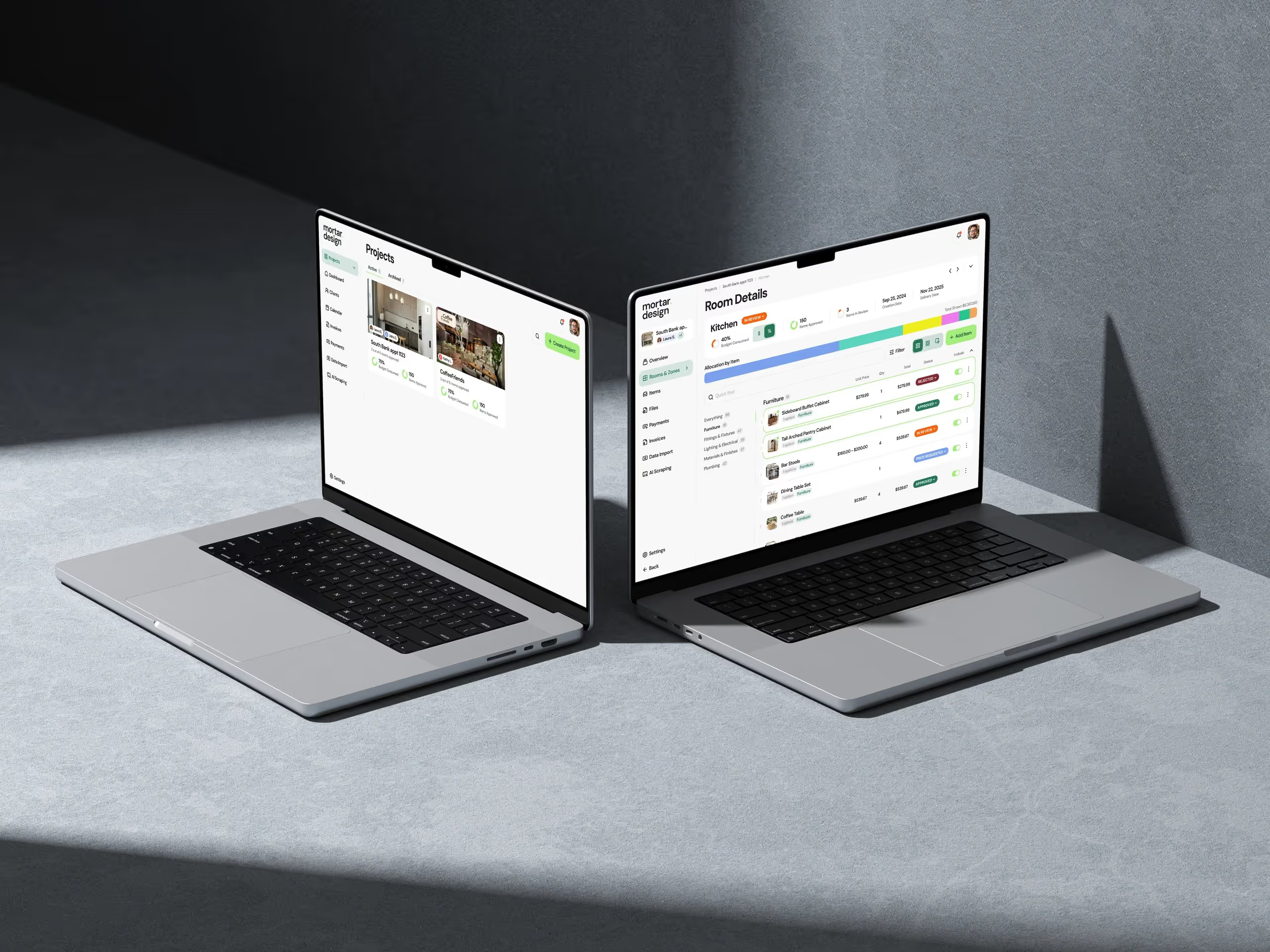

Last week, a potential client asked me how we measure design ROI at Dazlab.digital. I pulled up our dashboard for one of our HR tech products and showed them a number: 47% reduction in time-to-first-value. Their response? "But what about your NPS score?"
Here's the thing — after 25 years of building software, I've learned that most teams are measuring the wrong things. They're tracking vanity metrics that make for nice quarterly presentations but tell you nothing about whether your design decisions are actually driving business outcomes.
We've built and scaled multiple vertical SaaS products at Dazlab.digital. From interior design software to HR tech platforms, we've had to figure out which metrics actually correlate with revenue growth and user retention. And spoiler alert: it's rarely the ones you see in those design maturity frameworks.
The Problem with Traditional Design Metrics
Most product teams inherit their metrics from consumer tech giants. They track things like daily active users, session duration, and Net Promoter Score because that's what Facebook and Spotify measure. But here's why that breaks down in vertical SaaS.
Your interior design software users don't want to spend more time in your app — they want to finish their client presentations faster. Your HR managers don't care about daily active use — they care about filling positions before their competitors do. In vertical SaaS, less time in the product often means better design.
I've sat through countless board meetings where teams celebrated increased engagement metrics while their churn quietly ticked upward. They were optimizing for the wrong behavior. In one case, a client's product team had redesigned their onboarding flow to increase "feature discovery." Users were indeed discovering more features — and abandoning the product at twice the previous rate because they couldn't figure out how to do their actual job.
Activation Rate: Your North Star for Design ROI
If I could only track one metric for product design ROI in SaaS, it would be activation rate. But not the generic "user completed profile" activation that most teams default to. Real activation happens when a user achieves their first meaningful outcome with your product.
For our real estate association software, activation means successfully processing their first member renewal. For HR tech, it's when a recruiter sends their first batch of qualified candidates to a hiring manager. These are the moments when users think, "This is going to make my life easier."
Here's how we measure it: We track every new user cohort and measure what percentage reaches their activation milestone within their first week. Then we A/B test design changes against this metric ruthlessly. When we redesigned the candidate matching interface for one of our HR tech products, we saw activation rates jump from 31% to 58% in the first week. That's the kind of movement that directly impacts revenue.
But activation rate alone isn't enough. You need to understand the journey to activation. We instrument every significant action leading up to that milestone. How many screens did they navigate? Where did they get stuck? Which features did they ignore completely? This granular data tells us exactly where our design is failing users.
Time-to-Value: The Metric Nobody Talks About
Time-to-value might be the most underrated metric in SaaS design. It's simple: how long does it take a new user to get real value from your product? Not perceived value, not potential value — actual, tangible results.
When we started tracking this for our interior design software, we discovered something shocking. Users who achieved their first client approval within 48 hours had an 89% retention rate after six months. Users who took more than a week? 23% retention. The design implications were clear: every friction point in those first 48 hours was costing us customers.
We rebuilt the entire project creation flow around this insight. Instead of a comprehensive setup process that covered every possible use case, we created a fast-track option that got designers to a presentable mood board in under 20 minutes. Power features could wait — what mattered was that first win.
This is where traditional UX metrics fail. User satisfaction surveys might tell you that people prefer having all options available upfront. Time-to-value data tells you they'll churn if they can't get results quickly. In vertical SaaS, speed beats comprehensiveness every time.
Revenue Attribution: Following the Money
Here's an uncomfortable truth: most design teams have no idea how their work impacts revenue. They can tell you about improved task completion rates, but ask them which design decisions drove the most MRR growth last quarter and you'll get blank stares.
At Dazlab.digital, we've built revenue attribution directly into our design process. Every significant design change gets tagged in our analytics system. We can trace exactly how changes to our billing interface affected upgrade rates, or how simplifying our project templates impacted average revenue per user.
One example: We noticed that customers who used our automated invoicing features had 40% higher lifetime values than those who didn't. The feature was buried three levels deep in our settings. We moved it to the main project dashboard and saw immediate impact — $127K in additional annual recurring revenue from existing customers in the first quarter alone.
This isn't about turning designers into spreadsheet jockeys. It's about understanding that in SaaS, design decisions are business decisions. When you can show that simplifying a workflow added $50K in MRR, suddenly everyone understands why design matters.
The Metrics That Don't Matter (And Why Teams Still Track Them)
Let me save you some time. Stop tracking these metrics for design ROI in vertical SaaS: page views, bounce rate, time on site, feature adoption rate, and yes, even NPS. They're not useless, but they're lagging indicators at best and vanity metrics at worst.
NPS is particularly problematic in vertical SaaS. Your users often have no alternative to your product — you've built the only solution for their specific problem. They'll give you a high NPS score because they're grateful you exist, not because your design is actually good. I've seen products with 70+ NPS scores hemorrhaging customers because the product took too long to deliver value.
Feature adoption is another trap. Teams celebrate when 80% of users try their new feature, but what actually matters is whether that feature drives retention or expansion revenue. We've killed features with 90% adoption rates because they were distracting users from their core workflows. In vertical SaaS, focus beats feature richness.
The reason teams still track these metrics? They're easy to measure and easy to game. You can always increase time on site by making tasks take longer. You can boost feature adoption with aggressive prompts and tooltips. But none of that translates to actual business value.
Building Your Design Metrics Stack for 2026
So what should your design metrics stack actually look like? Based on our experience building and scaling vertical SaaS products, here's what we recommend tracking.
First, establish your activation metric. This should be specific to your product and represent real value delivery. For project management software, it might be completing the first project. For billing software, it could be sending the first invoice. Make it binary — either users achieve it or they don't.
Second, instrument your time-to-value tracking. Set up cohort analysis that shows you exactly how long it takes users to reach key milestones. Look for the inflection points where retention drops off dramatically. Those are your design priorities.
Third, connect design changes to revenue impact. This requires coordination with your product and engineering teams, but it's worth the effort. Tag every significant design update in your analytics. Track how those changes impact trial-to-paid conversion, expansion revenue, and churn. Build dashboards that show these connections clearly.
Finally, create feedback loops that connect these metrics to actual design decisions. We run weekly design reviews where we look at metric movements and trace them back to specific interface changes. When metrics move in unexpected directions, we dig into user sessions to understand why. This isn't about blame — it's about learning what actually works.
"In vertical SaaS, the best design is often the one users barely notice — because they're too busy getting their work done."
The Path Forward
The reality of measuring product design ROI in SaaS is that it's gotten both easier and harder. Easier because we have better tools and clearer frameworks for connecting design to business outcomes. Harder because the stakes are higher and the competition is fiercer.
What worked in 2020 won't cut it in 2026. Users expect products that deliver value immediately, adapt to their workflows seamlessly, and justify their subscription costs every single month. They don't care about your design system or your usability scores — they care about getting their job done faster and better than they could yesterday.
At Dazlab.digital, we've learned these lessons the hard way, through building and scaling our own vertical SaaS products. We've made every mistake in the book — optimizing for the wrong metrics, celebrating vanity wins while missing real problems, building features nobody asked for because the data said they'd be popular.
But we've also seen what happens when you get it right. When you align your design metrics with actual business outcomes, magic happens. Churn drops. Revenue grows. Users become advocates. And suddenly, everyone in the organization understands why design deserves a seat at the strategy table.
The metrics and approaches I've outlined here aren't theoretical — they're what we use every day to build and grow vertical SaaS products that actually solve problems. They're what separate products that merely exist from products that dominate their niches.
If you're building vertical SaaS and struggling to prove design ROI, start here. Pick one activation metric. Track time-to-value religiously. Connect every design decision to revenue impact. And most importantly, be willing to kill your darlings when the data shows they're not working.
Because in the end, the only metric that really matters is whether your design helps your users succeed. Everything else is just commentary.
Ready to build vertical SaaS that delivers measurable ROI? Let's talk about how Dazlab.digital can help you design, build, and scale products that actually move the needle. Get in touch at dazlab.digital.
Frequently Asked Questions
What's the most important metric for measuring SaaS design ROI?
Activation rate is the single most important metric. It measures the percentage of users who achieve their first meaningful outcome with your product. Unlike vanity metrics, activation directly correlates with retention and revenue growth.
Why shouldn't I track NPS for design success in vertical SaaS?
NPS can be misleading in vertical SaaS because users often have no alternatives. They'll give high scores simply because you're the only solution, not because your design is effective. Focus on metrics that show actual value delivery instead.
How do I connect design changes to revenue impact?
Tag every significant design update in your analytics system. Track how these changes affect trial-to-paid conversion, expansion revenue, and churn. Build dashboards that clearly show the connection between specific design decisions and MRR movement.
What's the difference between activation and feature adoption?
Feature adoption just means users tried something. Activation means they achieved real value. A feature might have 90% adoption but actually distract from core workflows. Focus on whether users accomplish meaningful outcomes, not whether they click buttons.
How quickly should users reach their first value moment?
It varies by product, but faster is always better. Our data shows users who achieve value within 48 hours have dramatically higher retention rates. Track your time-to-value metric and optimize ruthlessly to reduce it.
Related: conducting user research for SaaS product design
Related: SaaS onboarding UX best practices


Dazlab is a Product Studio_
Our products come first. Consulting comes second. Whichever path you take, you’ll see how a small team can deliver outsized results.