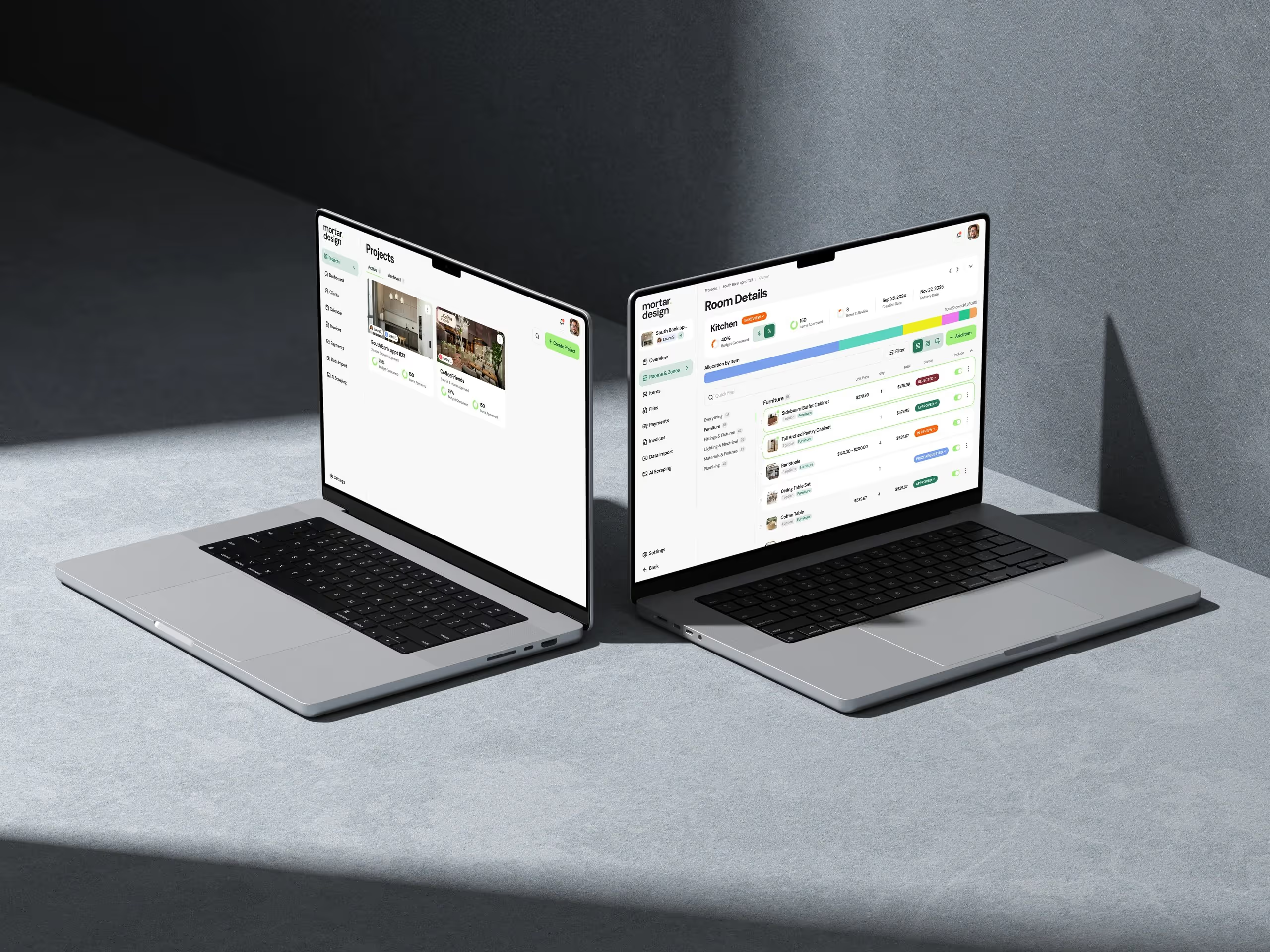

We've spent the last decade building software for real estate companies. And here's what nobody tells you about PropTech integration: most of it is held together with duct tape and prayers.

The average real estate firm runs 15-20 different software tools. Property management systems that don't talk to accounting software. CRMs that won't sync with marketing platforms. Document management systems living in their own universe. It's a mess.
But it doesn't have to be. After helping dozens of real estate organizations connect their tech stacks, we've learned what works, what doesn't, and why most integration projects fail before they start.
The Real State of Real Estate Tech Integration
Let me paint you a picture. Last month, we worked with a property management company running seven different systems. Their team was copying tenant data between platforms. By hand. Every. Single. Day.
This isn't unusual. Most real estate organizations treat integration as an afterthought. They buy tools that solve immediate problems, then wonder why nothing talks to anything else. The result? Your team becomes human APIs, manually moving data between systems.
The cost isn't just time. Manual data entry introduces errors. Duplicate records multiply. Different systems show different versions of the truth. Your team spends more time wrestling with software than serving clients.
The root problem: real estate software wasn't built to play nice with others. Most PropTech tools were designed as walled gardens. They want to be your everything platform, not part of an ecosystem. This creates integration challenges that generic middleware can't solve.
Why Generic Integration Platforms Fall Short
You've probably looked at Zapier or similar tools. They promise to connect everything with a few clicks. For simple workflows, they deliver. But real estate data isn't simple.
Take property listings. In one system, a property might be identified by MLS number. In another, by internal ID. Your accounting system uses property addresses. Your inspection software uses unit numbers. Generic integration tools choke on these mismatches.

"The best integration is invisible. Your team shouldn't know or care how systems connect — data should just flow where it needs to go."
Real estate tech stack integration requires understanding the quirks of each platform. How does your property management system handle lease renewals? What triggers does your CRM expose? Which fields does your accounting software actually require? Generic tools can't answer these questions.
Building a Connected PropTech Ecosystem
Successful integration starts with mapping your actual workflows, not your software features. We begin every integration project by shadowing teams for a day. Where does data originate? Who needs it next? What transformations happen along the way?

One client, a commercial property manager, discovered their biggest bottleneck wasn't software — it was process. Maintenance requests flowed through email, then got manually entered into three different systems. We didn't just connect their tools; we redesigned the workflow to capture requests directly in their property management system, then push updates everywhere else.
Your integration strategy should follow data, not features. Start with your source of truth for each data type. Property details probably live in your property management system. Financial data belongs in accounting software. Contact information sits in your CRM. Once you identify these anchors, you can plan how data flows between them.
Focus on the workflows that waste the most time first. For most real estate companies, that's tenant onboarding, maintenance coordination, or financial reporting. Pick one workflow, integrate it completely, then move to the next. This approach delivers immediate value while building toward a fully connected system.
Technical Strategies That Actually Work
After years of connecting real estate systems, we've developed patterns that consistently deliver results. The key is accepting that PropTech software integration isn't one-size-fits-all.
For modern, API-first platforms, direct integration often works best. We build lightweight middleware that translates between systems, handling authentication, rate limits, and data transformation. This approach gives you full control and performs better than generic tools.
Legacy systems require creativity. Many older PropTech platforms offer limited or no APIs. We've successfully used database replication, file watching, and even automated browser interactions to extract data. It's not pretty, but it works. The alternative — manual data entry — is far worse.
"Perfect integration is the enemy of good integration. Ship something that saves your team an hour a day, then iterate from there."
Data synchronization presents unique challenges in real estate. Properties have multiple units. Tenants have multiple leases. Owners have multiple properties. Your integration logic must understand these relationships to avoid creating duplicate or orphaned records.
We typically implement a hub-and-spoke model for complex real estate tech stacks. One system acts as the central repository for each data type, with other systems synchronizing through it. This reduces the number of point-to-point integrations you need to maintain.
Common Integration Pitfalls (And How to Dodge Them)
Every integration project hits snags. The successful ones plan for them. Here are the gotchas that catch most real estate companies off guard.
Data quality kills more integrations than technical issues. That property management system you've used for five years? It's full of duplicate contacts, properties with missing fields, and creative data entry. Before connecting systems, audit and clean your data. Otherwise, you're just spreading garbage faster.
Change management matters more than technology. Your team has workflows, even inefficient ones. When integration changes those workflows, you need buy-in and training. We've seen technically perfect integrations fail because nobody prepared the humans who'd use them.
Vendor lock-in is real in PropTech. Some platforms make it deliberately hard to extract your data. Before committing to any software, understand their integration capabilities and data export options. The easiest integration is choosing platforms built to connect from day one.
Real-time sync sounds great but often isn't necessary. Most real estate data doesn't change by the second. Batch synchronization every 15 minutes or hourly often works fine and reduces system load. Save real-time sync for truly time-sensitive workflows.
The Path Forward: Building Your Integration Roadmap
Start where you are. Document your current tech stack. List every piece of software your team uses, even spreadsheets and informal tools. Map the data flows between them. This baseline tells you where integration delivers the most value.
Prioritize integrations by impact. Which manual processes waste the most time? Where do errors creep in? What data would help your team make better decisions if it were readily available? These questions guide your integration sequence.
Budget for ongoing maintenance. Integrations aren't set-and-forget. APIs change. Business processes evolve. New requirements emerge. Plan to spend 20-30% of initial integration cost annually on updates and improvements.
Consider building vs. buying carefully. For common integrations between popular platforms, existing solutions often work well. For unique workflows or legacy systems, custom development usually wins. The key is knowing which situation you're in.
Most importantly, start small. Pick one integration that solves a real problem. Build it. Use it. Learn from it. Then tackle the next one. This incremental approach delivers value quickly while building institutional knowledge about what works for your organization.
Real estate tech stack integration doesn't have to be painful. With the right approach, you can connect your PropTech tools into a cohesive system that actually helps your team instead of hindering them. The key is understanding that integration is about workflows and people, not just technology.
At Dazlab.digital, we've built these integrations from scratch. We know the pitfalls because we've fallen into them. We understand the patterns because we've implemented them dozens of times. If you're tired of your team acting as human middleware between systems, let's talk about building integrations that actually work.
Frequently Asked Questions
What are the biggest challenges in PropTech software integration?
The main challenges include incompatible data models between systems, legacy platforms with limited APIs, poor data quality in existing systems, and the complexity of real estate data relationships (properties, units, tenants, owners). Most PropTech tools were designed as standalone solutions, making integration an afterthought.
How long does a typical real estate tech stack integration take?
A single workflow integration typically takes 2-4 weeks for modern API-based systems. Legacy system integrations can take 6-8 weeks due to limited connectivity options. Full tech stack integration for a mid-sized real estate company usually spans 3-6 months when done incrementally.
Should we use generic integration platforms or build custom solutions?
It depends on your specific needs. Generic platforms work well for simple, standard workflows between modern tools. Custom solutions are necessary when dealing with legacy systems, complex data transformations, or unique business processes. Most real estate companies need a hybrid approach.
What's the ROI of investing in PropTech integration?
While specific numbers vary, most real estate companies save 10-15 hours per week per team member by eliminating manual data entry. Integration also reduces errors, improves data accuracy, and enables better reporting. The typical payback period is 6-12 months.
How do we maintain integrations once they're built?
Plan for ongoing maintenance from the start. APIs change, business processes evolve, and new requirements emerge. Budget 20-30% of initial integration costs annually for updates. Monitor integrations actively, document everything, and have a clear escalation process when issues arise.
Related: build custom real estate software
Related: software landlords use


Dazlab is a Product Studio_
Our products come first. Consulting comes second. Whichever path you take, you’ll see how a small team can deliver outsized results.