
I've been on both sides of the portfolio review process — pitching our work at Dazlab.digital and evaluating other studios for partnerships. After 25 years of shipping software, I've learned that most people look at portfolios completely wrong. They get dazzled by slick UI screenshots and big-name clients, then wonder why their project turns into a nightmare.
This article is part of our complete guide to hiring development studios.

Here's what actually matters when you're trying to evaluate development studio portfolio quality. And more importantly, what doesn't.
The Screenshots Are Lying to You
Every development studio has a portfolio page filled with gorgeous screenshots. Beautiful landing pages. Sleek mobile apps. Impressive dashboards. But here's the thing — screenshots tell you almost nothing about whether a studio can actually deliver your project.

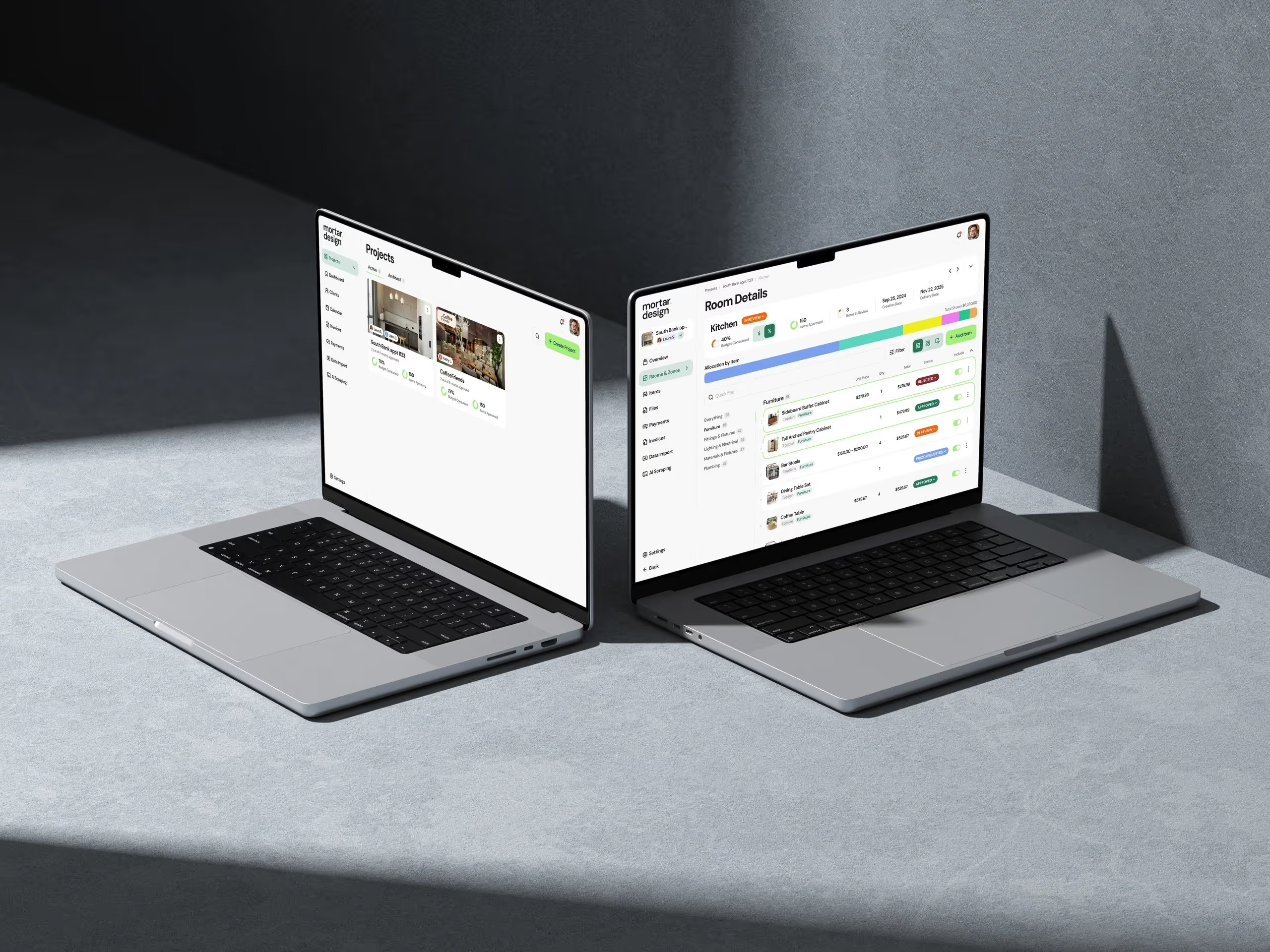
When we built TaliCMS for interior designers, the final product looked clean and simple. What the screenshots don't show is the complex workflow engine underneath that handles project approvals across multiple stakeholders. Or the custom billing system that eliminated 80% of payment disputes for one of our pilot users. Those aren't sexy features you can capture in a screenshot, but they're what actually moves the needle for businesses.
Look for Depth, Not Breadth
Most studios showcase work across every possible industry — healthcare apps next to e-commerce platforms next to social networks. That's usually a red flag. Building great software requires deep domain knowledge that you can't fake.
When you're evaluating portfolios for development studio selection, look for patterns. Do they repeatedly work in similar spaces? Have they solved variations of the same problem multiple times? That's where real expertise develops.
We focus on vertical SaaS products for specific niches — interior design software, HR tech, real estate tools. Why? Because after the third interior design project, you start to understand the real workflow problems. You know that designers don't just need pretty mood boards; they need approval workflows that handle indecisive clients. You know that fabric samples need specific metadata that generic e-commerce systems don't support. This kind of knowledge doesn't come from building one project in twenty different industries.
The best studios can tell stories about discovering non-obvious insights in their domain. They should be able to explain why seemingly simple features are actually complex, or why their approach differs from the "obvious" solution. If they can't, they probably don't have the depth you need.
The Three Questions That Actually Matter
Forget asking about their "process" or "methodology." Every studio has a pretty diagram with arrows showing discovery, design, development, and deployment. Instead, ask these three questions that cut through the BS:
1. "What happened with your worst project?"
How a studio handles failure tells you everything about how they'll handle your project when things go sideways (and things always go sideways). Good studios will have specific stories about projects that went wrong and what they learned. They'll own their mistakes without throwing clients under the bus.
We had a recruiting platform project that nearly imploded because we assumed HR managers wanted maximum automation. Turns out, they wanted control over the AI's decisions, not to be replaced by it. We had to rebuild core features three months in. Now we always prototype the human-in-the-loop interactions first. A studio that claims they've never had a project go badly is either lying or hasn't built anything challenging.
2. "Show me the code from this portfolio piece"
You'd be amazed how many studios can't or won't show you actual code from their portfolio projects. Sometimes it's legitimately under NDA, but often it's because they outsourced the development or the code is a mess they're embarrassed to show.
You don't need to be technical to evaluate this. Look for how they talk about the code. Do they mention specific technical decisions? Can they explain trade-offs they made? Good studios will proudly show you their GitHub contributions, talk about their testing approach, or explain why they chose certain technologies.
3. "What features did you talk clients out of building?"
Any studio can build whatever you ask for. Great studios push back when you're about to waste money on the wrong things. They should have stories about features they killed, scope they reduced, or completely different approaches they recommended.
Half our initial conversations involve talking clients out of building custom software at all. Sometimes the right solution is a well-configured off-the-shelf tool with some integrations. If a studio says yes to everything, they're optimizing for billable hours, not your success.
Red Flags Hidden in Plain Sight
Some warning signs are subtle but devastating if you know what to look for:
The "We Built Uber for X" Portfolio — If half their case studies are described as "Uber for dogs" or "Airbnb for boats," run. This usually means they're building superficial clones without understanding what made the original successful. Real innovation requires understanding why existing solutions fail, not just copying successful patterns into new domains.
No Live Products — Click through to the actual products in their portfolio. How many are still live and actively used? How many domain names now redirect to nothing? A graveyard of dead projects suggests they're good at launching but terrible at building sustainable software. We still maintain relationships with products we launched years ago because real software needs to evolve.
The Musical Chairs Team — Check their team page on Archive.org over the past two years. If it's completely different people every six months, you'll be dealing with juniors learning on your dime. Stable teams build better software because they've learned to work together and carry institutional knowledge from project to project.
Platform Propaganda — Studios that are religiously devoted to one technology stack usually make technical decisions for their convenience, not your needs. We've built products in React, Vue, Rails, Django, and half a dozen other stacks. The right choice depends on your team, your constraints, and your goals — not what the studio prefers to work with.
What Excellence Actually Looks Like
When you find a studio worth working with, their portfolio tells a different story. Instead of a grab bag of random projects, you'll see evolution. They solve increasingly complex versions of similar problems. Their recent work builds on lessons from earlier projects.
Look for case studies that mention specific metrics and outcomes, not vague success claims. "Increased user engagement" means nothing. "Reduced time-to-first-invoice from 6 days to 30 minutes" means they understood and solved a real business problem.
Great studios talk about the unglamorous parts of software development. They'll mention database migrations, API versioning strategies, and how they handled scaling issues. They understand that sustainable software is about more than pretty interfaces — it's about building systems that can evolve with your business.
They should also demonstrate business acumen, not just technical skills. Can they explain why certain features drove revenue? Do they understand unit economics? The best development partners think like co-founders, not contractors.
The Portfolio Review Checklist
Here's my actual checklist when I'm evaluating studios for potential partnerships or recommending them to others:
Domain Expertise Signals:
- Multiple projects in similar spaces
- Deep understanding of industry-specific challenges
- Opinions about how things should be built (not just following requirements)
- Connections to other players in the space
Technical Excellence Indicators:
- Willing to show and discuss code
- Clear explanations of technical trade-offs
- Experience with your specific technical constraints
- Understanding of maintenance and scaling challenges
Business Partnership Qualities:
- Stories about pushing back on bad ideas
- Focus on outcomes over outputs
- Long-term client relationships
- Products that are still live and growing
Cultural Fit Markers:
- Honest about failures and learnings
- Team stability and growth
- Communication style matches your needs
- Values align with your organization
Beyond the Portfolio
The best indicator of future performance isn't past work — it's how they think about your current problem. Any competent studio should offer to dive deep into your specific challenges before talking about solutions. They should ask uncomfortable questions about your business model, your users, and your constraints.
When we're exploring a new project, we often spend the first few conversations trying to understand why existing solutions aren't working. What have you already tried? What are the political or organizational constraints that killed previous attempts? What does success actually look like for your users, not just your executives?
A portfolio shows capability, but the discovery process shows judgment. And judgment is what separates great studios from merely competent ones.
The right development partner doesn't just build what you ask for — they help you figure out what you should be asking for in the first place.
If you're looking for a studio to build your next product, stop looking at screenshots. Start looking at how they think, how they've learned from failure, and whether they have the domain expertise to be a true partner, not just a vendor.
At Dazlab.digital, we're selective about the projects we take on because we know that great software comes from deep partnership, not transactional relationships. If you're building something in our wheelhouse — vertical SaaS for specific industries, AI-native applications, or products that need both technical excellence and go-to-market strategy — let's talk about what you're trying to build and whether we're the right fit.
But even if we're not the right studio for you, use these criteria to find one that is. Your project's success depends on it.
Frequently Asked Questions
What are the most important factors when evaluating a development studio's portfolio?
Focus on depth over breadth — look for studios with multiple projects in similar domains rather than scattered work across industries. Check if their products are still live and successful, ask about failed projects to understand how they handle challenges, and request to see actual code or technical documentation rather than just screenshots.
What red flags should I watch for in a development studio portfolio?
Major warning signs include portfolios full of "Uber for X" clones, no live products (just dead links), constantly changing team members, and religious devotion to a single technology stack. Also be wary of studios that can't show code, won't discuss failures, or say yes to everything without pushing back on bad ideas.
How can I tell if a studio has genuine domain expertise?
Studios with real domain expertise show patterns in their portfolio — multiple projects solving variations of similar problems. They can explain non-obvious insights about the industry, understand why standard solutions fail, and have opinions about how things should be built based on experience, not just following requirements.
What questions should I ask beyond looking at portfolio pieces?
Ask three key questions: "What happened with your worst project?" to understand how they handle failure; "Show me the code from this portfolio piece" to verify technical capability; and "What features did you talk clients out of building?" to see if they're a strategic partner or just a yes-man vendor.
How important are big-name clients in a portfolio?
Big-name clients matter far less than successful outcomes and deep expertise. A studio that's built three successful products for small interior design firms likely understands that space better than one who built a single app for a Fortune 500 company. Look for sustained relationships and evolved solutions rather than impressive logos.
Related Reading

Dazlab is a Product Studio_
Our products come first. Consulting comes second. Whichever path you take, you’ll see how a small team can deliver outsized results.