
I should have written this newsletter earlier this week. Instead, I found myself knee-deep in code, adding features to Ember that I wasn't supposed to be building.
It's Thursday, and I'm only just starting my week - between Australia Day and the kids going back to school, plus getting completely absorbed in development work when I should have been marketing.
But hey, that's the reality of running a product studio when you're wired to build rather than promote.

The Builder's Trap: When Coding Becomes Procrastination
Here's the thing about developers who run businesses - we gravitate toward what we know best. For me, coding is a green light activity. It's where I excel, where I find flow, where hours disappear without notice. Marketing and social media? That's my red light zone. I don't hate it, but it's hard. Really hard.
This week perfectly encapsulated this struggle. I started out intending to write the newsletter, but then I thought, "Let me just add this one feature to mber.ai first." Before I knew it, I was implementing comparison pages, pillar pages, and landing page generation capabilities. Then I needed to finish QA on Handle. Then we were looking to hire, so naturally I had to update arbeo.jobs to handle that specific job type.
"I think that's the problem with someone that wants to build versus market - I want to spend time building new things, fine-tuning software and adding extra features."
The irony isn't lost on me. We're building tools like mber.ai specifically to automate content creation and make marketing easier, yet I still struggle to prioritize the human side of engagement and distribution.
It's a pattern I see repeatedly in the developer community - we'll spend days perfecting a feature that saves five minutes, but avoid the two hours of social media engagement that could actually grow our user base.

What We Actually Built While I Was Procrastinating
Despite my marketing procrastination, the development work has been substantial. mber.ai now has the ability to create comparison pages, pillar pages, and landing pages in bulk. This isn't just about individual content pieces anymore - we're talking about creating 25 pillar pages and comparing against 15 competitors in one batch process.
The game-changer is our new product knowledge feature. You can now upload documentation, link directly to GitHub to pull from release notes or pull requests, or - and this is the part I'm most excited about - record a video demo of your SaaS product. mber.ai uses this to understand how your product actually works, then uses that knowledge to create accurate, detailed comparison content.
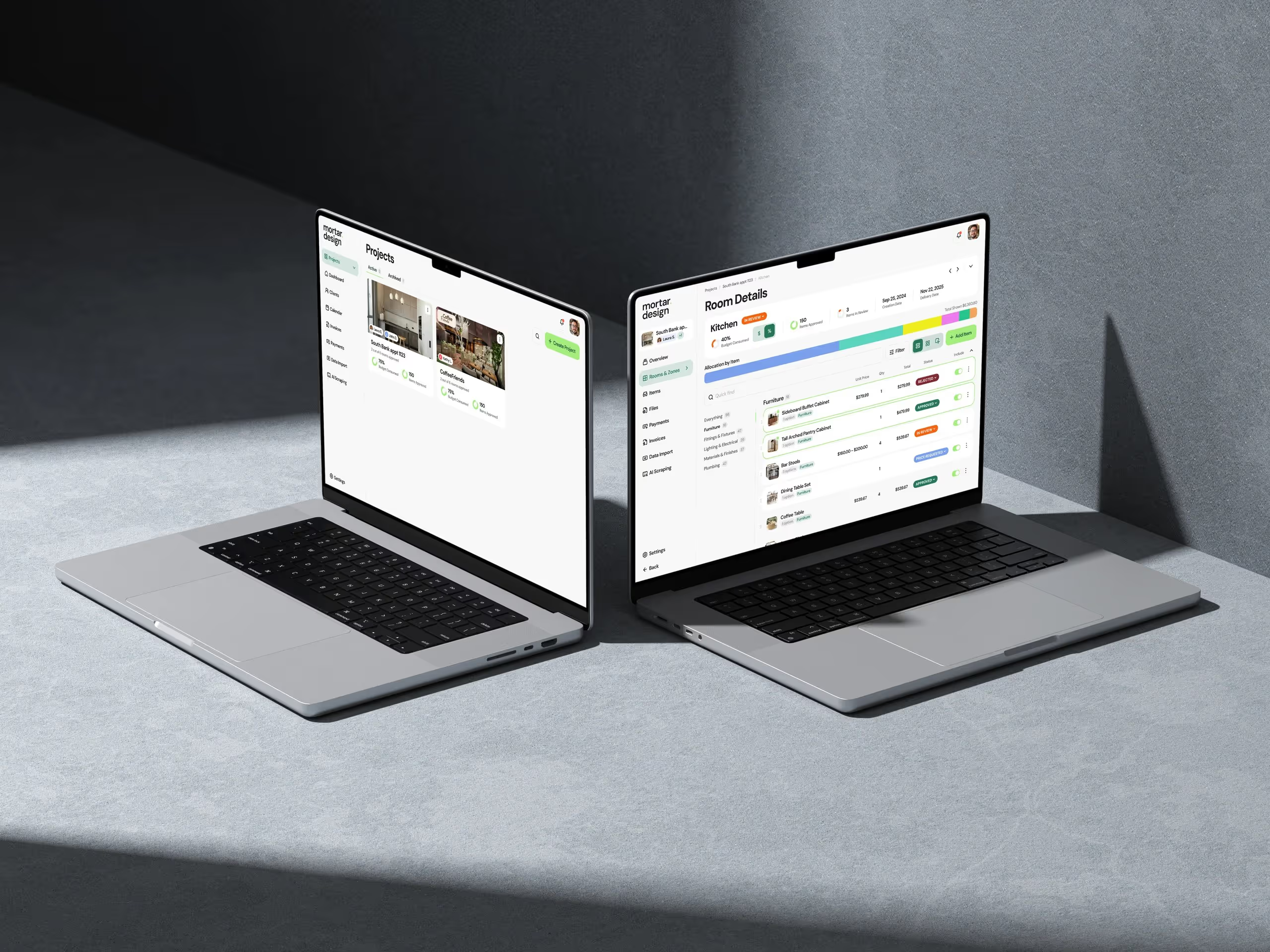
We needed this functionality to create content for all our products - Handl Billing, Mortar, Tally, Dazlab.digital itself. It was extra work I didn't schedule for, but it's the kind of infrastructure that makes everything else possible. Sometimes you have to build the tools to build the business, even when your calendar says you should be doing something else.
Handl has emerged from its first round of QA with design amendments being applied. We're targeting the second round of QA next week, and if all goes well, we'll start using it with our own clients the week after. The anticipation is killing me - there's nothing quite like finally using your own product in production after months of development.
The AI Revolution Is Moving Too Fast to Track
Then there's Clawbot, which just launched and has completely taken over everyone's Twitter and LinkedIn feeds. Security concerns aside, I'm fascinated by the concept of personal AI agents. The challenge is figuring out what you actually want from your own AI - you need use cases first, and those emerge from experimentation.
"I find it easier to learn to use new technology if there's examples of how other people are doing it. So I'm going to get stuck into Clawbot and start using it for myself and see if it could help me out."
My immediate use case? We're trying to grow an audience in the US, but I'm asleep during their peak hours. Clawbot could potentially handle first-round responses to tweets, post updates at optimal times, maybe even engage with simple interactions. I'm not looking to fake conversations, just to maintain presence when I be awake at that time. Though from what I've read, I'll probably lose five days just setting it up properly.
Jeff Turner, a friend of mine, posted on LinkedIn recently that AI is moving extremely fast. I couldn't agree more. What amazed me, tech that existed six months ago is now just baseline functionality. The sheer volume of new tools, capabilities, and platforms is overwhelming. Everyone's struggling to keep up with what tools they should be using.
"From a software development point of view, developing software has never been easier, but at the same time, it has never been harder."
You can create software incredibly fast now, but the paradox is that the abundance of choices - frameworks, services, platforms, deployment options - makes every decision more complex.
Knowing which to use, implementing it, testing it, deploying it, and supporting it... the cognitive load has exploded even as individual tasks have gotten easier.
Why Distribution Is the Real Challenge
Here's what I'm learning firsthand: the whole "ship a SaaS in 48 hours" narrative is complete nonsense. Building a product has never really been the problem - it's always been about how much money you had to throw at development.
Yes, AI has made development cheaper and faster, but creating a real product still takes significant time. And that's before you even think about marketing materials and social media presence.
Distribution remains extraordinarily difficult. Distribution early, often and everywhere is whats needed now to make a digital business work.
Building has always been achieved if you had the right team, cough *Dazlab *, But getting these products in front of the right people at the right time? That's where the real work begins. It's why I've finally admitted I need help.
Accepting the Need for Help
This week, we started looking for a social media manager - or growth person, content growth hacker,whatever you want to call it.
Someone who genuinely loves engagement, who can hunt down digital communities, monitor Reddit subreddits, find relevant forums and directories.
Someone for whom social media isn't a rabbit hole but a playground.
"My best time is much better spent coding because I'm better at coding and I enjoy coding. It's a green light activity versus spending time on socials, which is a rabbit hole for me and a red light."
We don't need someone to create content - mber will handle the base content creation across all our platforms. What we need is someone who can repurpose that content, put it in front of our target audiences at the right time, and actually engage with the communities where our potential users hang out.The job posting should go live today, starting part-time, but we'll see how it evolves.
I spent way too much time on Twitter this week trying to break into the "building in public" space. You go in planning to spend half an hour, and suddenly an hour and a half has vanished. It reinforced what I already knew - this isn't where my strengths lie, and fighting against that reality isn't helping anyone.
The Excitement Outweighs the Challenges
Despite all the challenges, the time sinks, the constant battle between building and marketing - this is an incredibly exciting time to be in software development.
Yes, keeping up with the rapid pace of change is exhausting.
Yes, the paradox of choice can be paralyzing.
But we're living through a fundamental shift in how software gets built and distributed.
At Dazlab.digital, we're not just riding this wave - we're building the tools that help others navigate it. Whether it's mber automating content creation, Handl Billing streamlining project management, auto invoicing and payment collection, or our various vertical SaaS products solving real problems for real industries, we're in the thick of this transformation.
The key is accepting what you're good at and finding ways to complement your weaknesses. For me, that means embracing my love of building while bringing in people who thrive where I struggle. It means using our own tools to automate what we can, while recognizing that human connection and distribution still require human effort.
Maybe I'll always struggle with the building versus marketing balance. Maybe I'll always find myself deep in code when I should be writing newsletters. But at least now I'm building systems and hiring people to help bridge that gap. And honestly? Getting to build cool stuff while figuring out these challenges - that's exactly where I want to be.
thanks for now!
Daz
If you need anything, reach me at darren@dazlab.io

Frequently Asked Questions
Why does Dazlab.digital focus on niche SaaS products instead of broader markets?
We build SaaS products where we believe we can make a real difference. With AI making development cheaper and faster, the real challenge isn't building products - it's distribution. By focusing on specific industries like real estate associations and HR tech, we can create targeted solutions and more effectively reach our users.
What makes Ember different from other content creation tools?
Ember (M-B-R.ai) goes beyond individual content pieces. It can create comparison pages, pillar pages, and landing pages in bulk - imagine creating 25 pillar pages and comparing against 15 competitors in one batch. The product knowledge feature lets you upload documentation, link to GitHub, or record video demos so Ember understands how your product actually works.
Is the '48-hour SaaS' development timeline realistic with AI tools?
No, it's complete nonsense. While AI has made development cheaper and faster, creating a real product still takes significant time. You still need proper QA, design iterations, marketing materials, and social media presence. The abundance of frameworks and platforms actually makes decisions more complex, even as individual tasks get easier.
Why is Dazlab.digital hiring a social media manager when they have Ember for content?
Ember handles base content creation, but distribution remains extraordinarily difficult. We need someone who loves engagement, can find digital communities, monitor Reddit, and put content in front of the right people at the right time. Building products and effective distribution require different skill sets - it's about accepting what you're good at and complementing your weaknesses.
How is Dazlab.digital handling the rapid pace of AI development?
We're embracing it while staying focused on solving real problems. What amazed us six months ago is now baseline functionality, so we're constantly evaluating new tools like Clawbot for specific use cases. The key is finding tools that fill immediate needs rather than chasing every new development. It's overwhelming but exciting - we're building infrastructure that helps others navigate this transformation too.